

Tweaking flu-shot priorities
Health staff removed over worries about timing
Advertisement
Read this article for free:
or
Already have an account? Log in here »
To continue reading, please subscribe:

Digital Subscription
One year of digital access for only $205*
- Enjoy unlimited reading on winnipegfreepress.com
- Read the E-Edition, our digital replica newspaper
- Access News Break, our award-winning app
- Play interactive puzzles
*First annual payment billed as $205.00 + GST for one year. This annual subscription will automatically renew at $233.00 + GST every 52 weeks (10% off the regular annual price of $259.35). Offer available to new and qualified returning subscribers only. Cancel any time.
To continue reading, please subscribe:
Add Free Press access to your Brandon Sun subscription for only an additional
$1 for the first 4 weeks*
- Enjoy unlimited reading on winnipegfreepress.com
- Read the E-Edition, our digital replica newspaper
- Access News Break, our award-winning app
- Play interactive puzzles
*Your next Brandon Sun subscription payment will increase by $1.00 and you will be charged $17.95 plus GST for four weeks. After four weeks, your payment will increase to $24.95 plus GST every four weeks.
Read unlimited articles for free today:
or
Already have an account? Log in here »
Hey there, time traveller!
This article was published 06/10/2009 (6206 days ago), so information in it may no longer be current.
Health-care workers have been dropped from the list of people recommended to receive the seasonal flu vaccine because of new concerns it could make them more vulnerable to the H1N1 virus.
The Winnipeg Regional Health Authority said Monday it narrowed its priority list of those groups who should get the seasonal flu vaccine before the H1N1 vaccine in compliance with Manitoba Health recommendations to ensure the most vulnerable are protected.
"When we have a pandemic situation we have to be as adaptable and as flexible as we can," Dr. Sande Harlos, a medical officer of health with the WRHA, said.
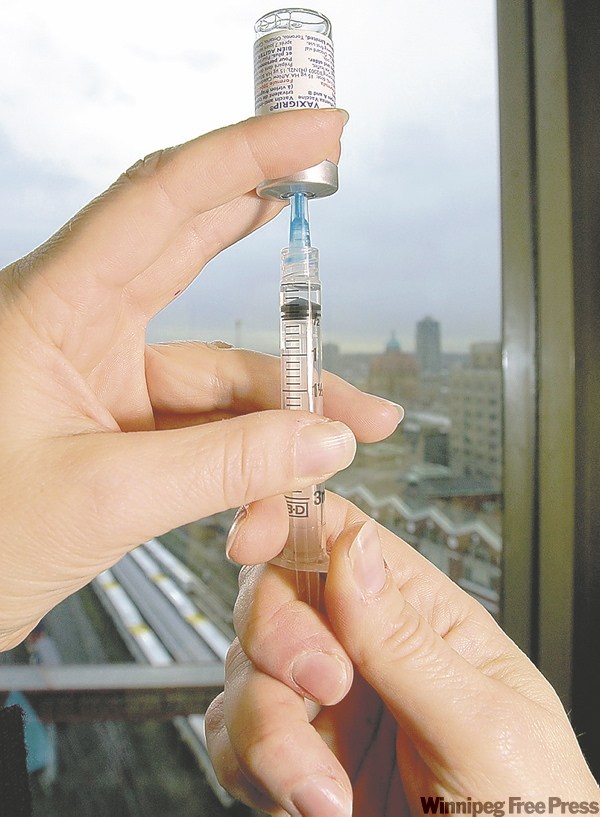
Harlos said Manitoba Health announced last week that only those groups of people most at risk of the seasonal flu should get that vaccine first.
"Our major focus is the groups of people… who need (the seasonal flu vaccine) the most (will get it) as quickly as possible before we start the H1N1 campaign later in the fall," Harlos said. That vaccine is expected to become available in Canada in November.
Harlos said Manitoba and other provinces have responded to new research that suggests people who receive the seasonal flu vaccine are more likely to get the H1N1 virus.
Harlos said health-care workers will receive the seasonal flu vaccine after they receive the H1N1 vaccine, adding there will be a delay of only a few weeks compared with when they received the vaccine in previous years.
"So at this point in time, the recommendation is for people not at a high risk for seasonal influenza would be better off to get the H1N1 vaccine first and address the seasonal influenza later," Harlos said.
Harlos said there has been no change in the date, time and location of the seasonal flu vaccination clinics, which were announced two weeks ago.
The WRHA will continue with its planned three-day, community seasonal flu vaccination campaign next week — Oct. 14, 15 and 16 — at 12 locations and 36 clinics across Winnipeg.
Caregivers and individuals living with people who have chronic health conditions were also removed from the seasonal flu vaccine priority list.
Harlos said those who are considered high-risk for the seasonal flu are not considered high-risk for H1N1, adding they shouldn’t be concerned about getting the seasonal flu vaccine.
The WRHA said the most vulnerable groups for the seasonal flu who should get the vaccine first include: individuals 65 years of age and older; those living in personal-care homes and other long-term facilities; children between the ages of six months and 23 months and individuals with chronic health conditions and weakened immune systems.
aldo.santin@freepress.mb.ca
Seasonal flu
immunization clinics

Oct. 14, 15, 16
9 a.m. – 9 p.m.
No appointment necessary. Individuals must present their Manitoba Health card.
- Assiniboine South: St. Demetrios Greek Orthodox Church, 2255 Grant Ave., at Shaftesbury.
- Downtown: Portage Place, Edmonton Court, Portage Avenue.
- Fort Garry: St. Maurice School, 1639 Pembina Hwy.
- Inkster: Cross Church, 1787 Logan Ave.
- Point Douglas: North End Wellness Centre, 363 McGregor St., at Mountain.
- River East: Holy Eucharist Parish Centre, 460 Munroe Ave.
- River Heights: Grant Park Shopping Centre, 1120 Grant Ave.
- Seven Oaks: Destination Centre Garden City, 2100 McPhillips.
- St. Boniface: Centre culturel franco-manitobain, 340 Provencher Blvd.
- St. James: St. James Collegiate, 1900 Portage Ave.
- St. Vital: Louis Riel School Division, 900 St. Mary’s Rd.
- Transcona: DeFehr Logistics buildings, 770 Pandora Ave. East.
What is
seasonal flu?
Human influenza is a respiratory infection caused by the influenza virus. Strains circulate every year, making people sick. Influenza typically starts with a headache, chills and cough, followed rapidly by fever, loss of appetite, muscle aches and fatigue, running nose, sneezing, watery eyes and throat irritation.
Nausea, vomiting and diarrhea may also occur, especially in children.
Most people will recover from influenza within a week to 10 days, but some — including those older than 65 and adults and children with chronic conditions such as diabetes and cancer — are at a greater risk of more severe complications, such as pneumonia. Between 4,000 and 8,000 Canadians can die of influenza and its complications annually, depending on the severity of the season.