

Body-bag report cites simple error
But First Nations still not prepared for H1N1: top chief
Advertisement
Read this article for free:
or
Already have an account? Log in here »
To continue reading, please subscribe:

Digital Subscription
One year of digital access for only $205*
- Enjoy unlimited reading on winnipegfreepress.com
- Read the E-Edition, our digital replica newspaper
- Access News Break, our award-winning app
- Play interactive puzzles
*First annual payment billed as $205.00 + GST for one year. This annual subscription will automatically renew at $233.00 + GST every 52 weeks (10% off the regular annual price of $259.35). Offer available to new and qualified returning subscribers only. Cancel any time.
To continue reading, please subscribe:
Add Free Press access to your Brandon Sun subscription for only an additional
$1 for the first 4 weeks*
- Enjoy unlimited reading on winnipegfreepress.com
- Read the E-Edition, our digital replica newspaper
- Access News Break, our award-winning app
- Play interactive puzzles
*Your next Brandon Sun subscription payment will increase by $1.00 and you will be charged $17.95 plus GST for four weeks. After four weeks, your payment will increase to $24.95 plus GST every four weeks.
Read unlimited articles for free today:
or
Already have an account? Log in here »
Hey there, time traveller!
This article was published 08/10/2009 (6204 days ago), so information in it may no longer be current.
A federal review has found there was no ill will behind Ottawa’s decision to send a large number of body bags to a northern reserve, but the head of Manitoba First Nations insists those communities remain ill-prepared for the looming pandemic.
"The pandemic plan is ready but there are no resources to implement the plan," Grand Chief Ron Evans said during a news conference Wednesday at the Assembly of Manitoba Chiefs downtown Winnipeg offices.
Evans said he believes federal Health Minister Leona Aglukkaq honestly feels Ottawa has adequately prepared First Nations communities for an expected outbreak of H1N1, but added he believes she’s being misled by her regional officials.
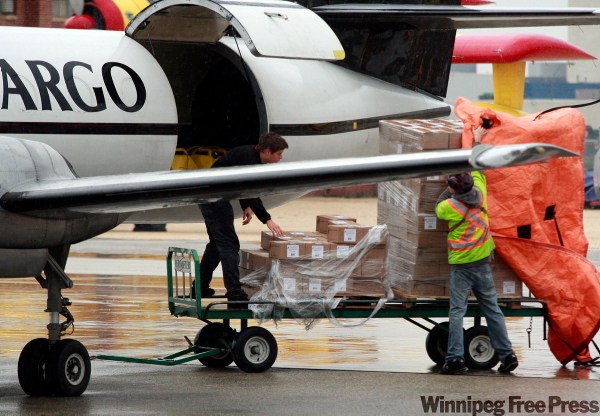
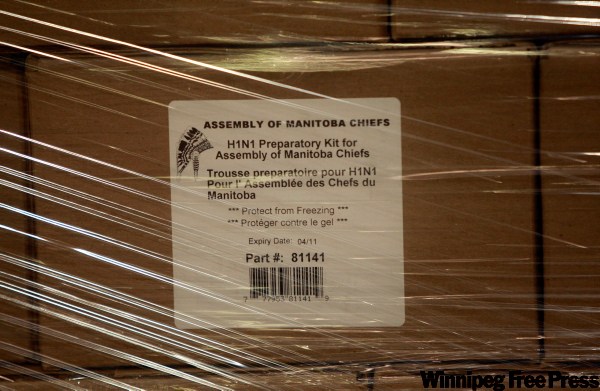
Evans said the AMC sent 5,000 flu kits to 20 northern fly-in bands and another 10,200 kits will be trucked out next week. Evans said the kits contain basic materials Ottawa has failed to provide to First Nation communities.
"What’s important to us is there is action behind words," Evans said. "We don’t want to make this political. We want our communities to get ready for the pandemic."
Manitoba’s First Nations were the hardest-hit by the outbreak of H1N1 flu last spring. The AMC says it is taking a proactive stance on community care for the fall.
The flu kits, paid for by the province and private donations, are designed to help a family cope with an H1N1 outbreak. They include hand sanitizer, sanitizing wipes, Tylenol for infants, children and adults and a flexible digital thermometer. There is also information on caring for a child with a fever and self-care for flu patients.
"Typically, a shipment of this magnitude would take months to accomplish," Evans said. "We’ve made it happen in weeks."
AMC officials say the kits and medical information may ease the demand on health-care facilities that were overwhelmed when H1N1 broke out in First Nations communities earlier this year.
"(The kits) are meant to be a starter kit for the flu season… meant to be the first line of defence for homes," said Glen Sanderson, the AMC’s pandemic policy analyst.
"We have very little access to health care, to medical supplies, not like we have here in the city of Winnipeg. I can run down 24/7 to any pharmacy and buy what I need, but not on a First Nation, there is no such thing. The nursing stations do supply things like that… but there’s no need to do that if you have things like these at home as a starter kit."
Aglukkaq said earlier in the day an internal probe into why dozens of body bags were sent to Wasagamack uncovered no malice.
Aglukkaq released a report on the investigation she ordered last month into the body-bag shipments after chiefs from the Island Lake region in Manitoba said their nursing stations had been sent dozens of body bags amid other supplies to battle H1N1 influenza.
According to the report, the body bags were part of orders made by nurses in charge at the northern nursing stations who had been ordered by the regional office to order enough drugs and medical supplies to fight H1N1 to last three to four months. They were told to "order big" and err on the side of ordering too much.
A nurse in Wasagamack ordered 100 body bags. Nurses in four other reserves also ordered body bags. Only 38 of the 100 Wasagamack order were ever delivered because of a back order. No other reserves received any body bags.
Aglukkaq said ordering 100 was "a clear overestimation" but that it was not done with malice.
"There was no evidence of ill will," she said.
Evans said the body-bag incident shows the deep-rooted lack of understanding by federal officials and their employees who deal with First Nation communities.
"It all boils down to not enough communication," Evans said.
Meanwhile, other Manitoba chiefs said Wednesday they are dissatisfied with the report the federal health minister released.
"The minister’s findings regarding the body bags needs to be carefully analyzed; to me it’s a coverup," said Chief Oliver Okemow of Manto Sipi Cree Nation.

Added Manitoba Keewatinowi Okimakanak Grand Chief David Harper: "We will not accept anything less than an apology from the minister and for her to act on this apology by properly funding our First Nations’ pandemic preparedness and response needs."
— With files from Alison Mayes and Mia Rabson in Ottawa
aldo.santin@freepress.mb.ca