

Aboriginal grandmothers march
Advertisement
Read this article for free:
or
Already have an account? Log in here »
To continue reading, please subscribe:
Monthly Digital Subscription
$0 for the first 4 weeks*
- Enjoy unlimited reading on winnipegfreepress.com
- Read the E-Edition, our digital replica newspaper
- Access News Break, our award-winning app
- Play interactive puzzles
*No charge for 4 weeks then price increases to the regular rate of $19.95 plus GST every four weeks. Offer available to new and qualified returning subscribers only. Cancel any time.
Monthly Digital Subscription
$4.99/week*
- Enjoy unlimited reading on winnipegfreepress.com
- Read the E-Edition, our digital replica newspaper
- Access News Break, our award-winning app
- Play interactive puzzles
*Billed as $19.95 plus GST every four weeks. Cancel any time.
To continue reading, please subscribe:
Add Free Press access to your Brandon Sun subscription for only an additional
$1 for the first 4 weeks*
*Your next subscription payment will increase by $1.00 and you will be charged $16.99 plus GST for four weeks. After four weeks, your payment will increase to $23.99 plus GST every four weeks.
Read unlimited articles for free today:
or
Already have an account? Log in here »
Hey there, time traveller!
This article was published 21/09/2010 (5589 days ago), so information in it may no longer be current.
The fourth annual Grandmothers Protecting Our Children Sacred Walk took place today.
The walk, which was initiated three years ago as a means of raising awareness about the abuse and sexual exploitation of all children in Winnipeg and across the country, started at the Circle of Life Thunderbird House at the corner of Main Street and Higgins Avenue at 10 a.m. and was to conclude at The Forks Market.
There will also be sister walks today in Thompson, Roseau River, Waywayseecappo and Keeseekoowenin Ojibway nations.
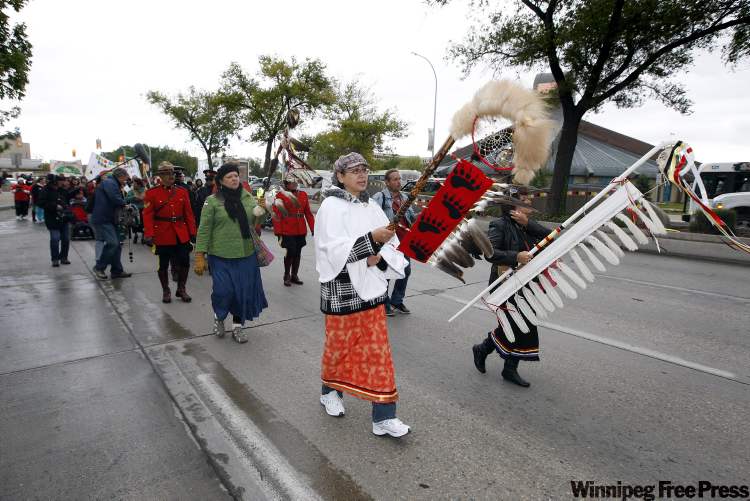
Margaret Lavallee, elder and sacred walk organizer, said she and her fellow grandmothers want to take back their traditional roles in society.
“We lost that role because of the horrors of the residential schools system, the colonization of our lands and people and the purposeful destruction of our culture. We want to take back that role, what was ours, and to protect our children and the generations to come,” she said.
History
Updated on Tuesday, September 21, 2010 11:17 AM CDT: Updated with new information and headline
Updated on Tuesday, September 21, 2010 1:43 PM CDT: Fixes typo