

Transit rides a silver wave
Committee approves extension of eligibility for Handi-Transit
Advertisement
Read this article for free:
or
Already have an account? Log in here »
To continue reading, please subscribe:
Monthly Digital Subscription
$1 per week for 24 weeks*
- Enjoy unlimited reading on winnipegfreepress.com
- Read the E-Edition, our digital replica newspaper
- Access News Break, our award-winning app
- Play interactive puzzles
*Billed as $4.00 plus GST every four weeks. After 24 weeks, price increases to the regular rate of $19.95 plus GST every four weeks. Offer available to new and qualified returning subscribers only. Cancel any time.
Monthly Digital Subscription
$4.99/week*
- Enjoy unlimited reading on winnipegfreepress.com
- Read the E-Edition, our digital replica newspaper
- Access News Break, our award-winning app
- Play interactive puzzles
*Billed as $19.95 plus GST every four weeks. Cancel any time.
To continue reading, please subscribe:
Add Free Press access to your Brandon Sun subscription for only an additional
$1 for the first 4 weeks*
*Your next subscription payment will increase by $1.00 and you will be charged $16.99 plus GST for four weeks. After four weeks, your payment will increase to $23.99 plus GST every four weeks.
Read unlimited articles for free today:
or
Already have an account? Log in here »
Hey there, time traveller!
This article was published 24/11/2010 (5596 days ago), so information in it may no longer be current.
Winnipeg Transit is bracing for what one city councillor calls a “silver tsunami” — a wave of seniors who will place new demands on Handi-Transit as baby boomers age and require more assistance.
On Tuesday, city council’s public works committee approved changes to Handi-Transit eligibility that will allow people with Alzheimer’s disease or other dementias to be eligible for rides, following an assessment by an occupational therapist.
The move will likely lead about 700 more people to use a Handi-Transit program that had 9,239 registrants at the end of 2009, client services manager Catherine Caldwell said in an interview.
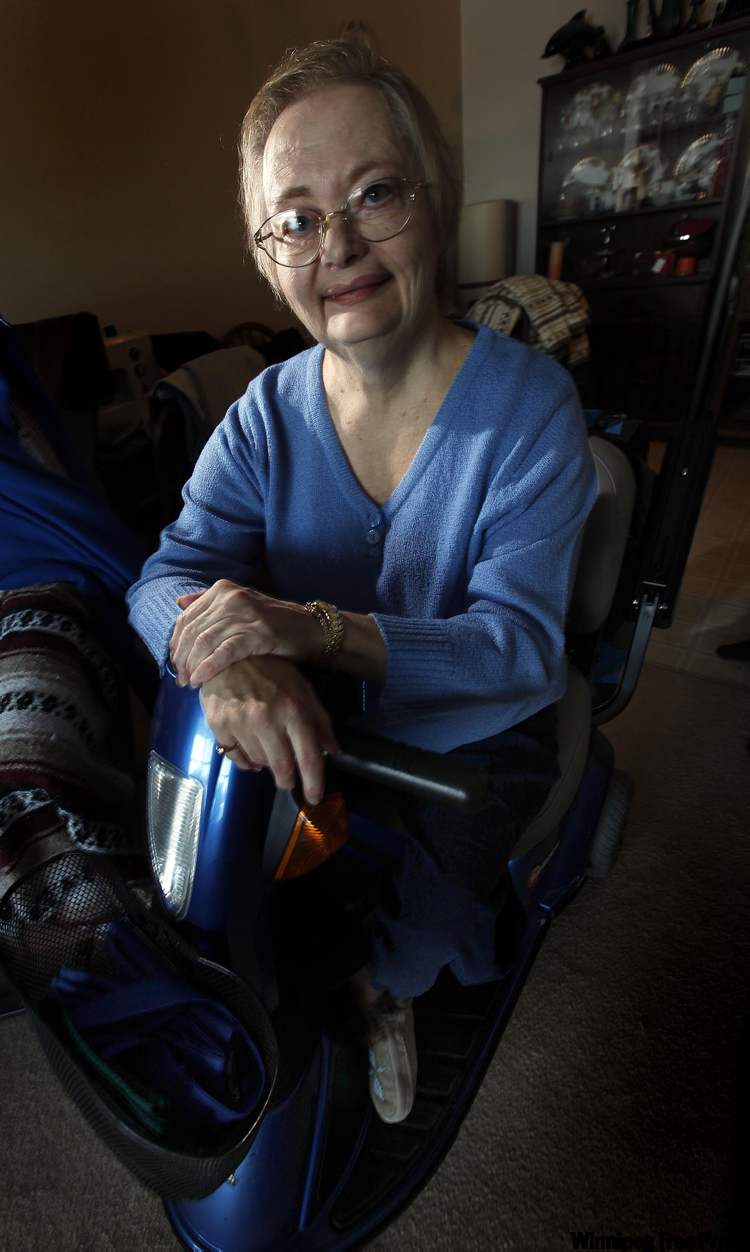
That increase, she suggested, is modest compared to the demand for Handi-Transit expected over the next 10 to 15 years, as the baby boomers who started to retire this year enter their 70s and 80s.
Earlier this year, a demographic forecast prepared by city economist Georges Chartier depicted the baby boomers as a bulge. By 2031, that bulge is expected to nearly double the number of seniors in Winnipeg.
“There’s a silver tsunami on the way,” said St. Charles Coun. Grant Nordman, who sits on the public works committee. It authorized the city to spend $132,000 more next year to hire 2.5 more Handi-Transit staff to handle the assessments.
The changes, which face approval from executive policy committee and council in December, also formalize Handi-Transit eligibility rules introduced in 2006, when some registrants complained the service was being abused by able-bodied riders.
That year, Winnipeg Transit started offering free rides on regular transit buses to people with Handi-Transit passes. It also started requiring all registrants to be screened by Handi-Transit staff — and then get reassessed every three years.
Assessments by occupational therapists are preferred to doctors’ notes, Caldwell said. For example, some patients with arthritis may need the service, while others with the same condition do not — a distinction only an assessment can determine, she said.

“We were hopeful in 2006 we could get a better analysis of someone’s functioning,” she said. “In many cases, it’s pretty obvious, (such as) if you’re legally blind or you have an ongoing disability. In others, it’s not as obvious.”
Nick Ternette, a longtime activist who uses a wheelchair, said he does not believe occupational therapists can replace doctors. “They’re trying to knock people out of Handi-Transit because that’s their job,” he said, claiming Winnipeg Transit has made “subtle changes” to Handi-Transit’s new eligibility rules without discussing them with the Manitoba League of Persons with Disabilities.
Ternette said seniors who use Handi-Transit plan to challenge the fact there are no discount fares comparable to the ones offered to seniors who use regular transit. Offering such discounts would cost the city $257,000 a year, he said.
Caldwell said Handi-Transit has only received a single complaint about the fact the service doesn’t offer discounts to seniors. Nonetheless, Winnipeg Transit is reviewing its rate structures, director Dave Wardrop said.
bartley.kives@freepress.mb.ca
Who’s got a ticket to ride?
Eligibility requirements for Handi-Transit registrants:
People using wheelchairs or scooters — or who can’t walk 175 metres without assistance — are eligible indefinitely.
People who can’t walk 175 metres without assistance only during winter conditions will be eligible from Oct. 1 to March 31.
People who use wheelchairs or scooters or can’t walk 175 metres following dialysis treatment will only be eligible to use the service on their way to and from the hospital. They need authorization from a dialysis unit.
Legally blind people are eligible indefinitely. They require authorization from the CNIB, an optometrist or an ophthalmologist.
Pending council approval in December, people with Alzheimer’s disease or related dementias may be eligible as well, following an assessment. Council’s public works committee approved the change Tuesday.
All prospective riders must register with Handi-Transit and re-register every three years. They’ll be required to undergo a functional assessment at the Handi-Transit branch.
Handi-Transit users with unlimited eligibility can ride regular transit buses for free if they show a CNIB or Handi-Transit pass. Attendants must pay the full fare.
Who’s spending your cash?
Other decisions made by council’s public works committee on Tuesday:
Water and sewer rates: Couns. Dan Vandal (St. Boniface), Grant Nordman (St. Charles), Jenny Gerbasi (Fort Rouge) and Devi Sharma (Old Kildonan) voted unanimously to approve a 3.2 per cent rate hike in 2011, the city’s eighth straight increase.
Active transportation: The committee voted unanimously to authorize additional spending of $3 million to complete the city’s 2010 schedule of bike-and-pedestrian upgrades.
Related Articles
Abuse of Handi-Transit services rankles users
Advertisement Advertise With Us
Advertisement Advertise With Us