

Judge erred in letting officers walk: appeal
Prosecutor fights controversial ruling

Advertisement
Read this article for free:
or
Already have an account? Log in here »
To continue reading, please subscribe:

Digital Subscription
One year of digital access for only $205*
- Enjoy unlimited reading on winnipegfreepress.com
- Read the E-Edition, our digital replica newspaper
- Access News Break, our award-winning app
- Play interactive puzzles
*First annual payment billed as $205.00 + GST for one year. This annual subscription will automatically renew at $233.00 + GST every 52 weeks (10% off the regular annual price of $259.35). Offer available to new and qualified returning subscribers only. Cancel any time.
To continue reading, please subscribe:
Add Free Press access to your Brandon Sun subscription for only an additional
$1 for the first 4 weeks*
- Enjoy unlimited reading on winnipegfreepress.com
- Read the E-Edition, our digital replica newspaper
- Access News Break, our award-winning app
- Play interactive puzzles
*Your next Brandon Sun subscription payment will increase by $1.00 and you will be charged $17.95 plus GST for four weeks. After four weeks, your payment will increase to $24.95 plus GST every four weeks.
Read unlimited articles for free today:
or
Already have an account? Log in here »
Hey there, time traveller!
This article was published 11/03/2011 (5627 days ago), so information in it may no longer be current.
A Manitoba judge has been accused of making numerous legal errors in allowing two Winnipeg police officers to walk free on perjury charges based on a technicality.
Special prosecutor Robert Tapper filed an appeal Thursday seeking to overturn the decision by Queen’s Bench Justice Brenda Keyser and have a new trial ordered against the two accused. No date for a hearing has been set.
Const. Peter O’Kane and Const. Jess Zebrun were cleared last month of any criminal wrongdoing in a decision that likely saved their careers. Their lawyers successfully filed a motion for a dismissal of the case, saying Tapper failed to have any of his witnesses properly identify the two accused in court, as required by law.
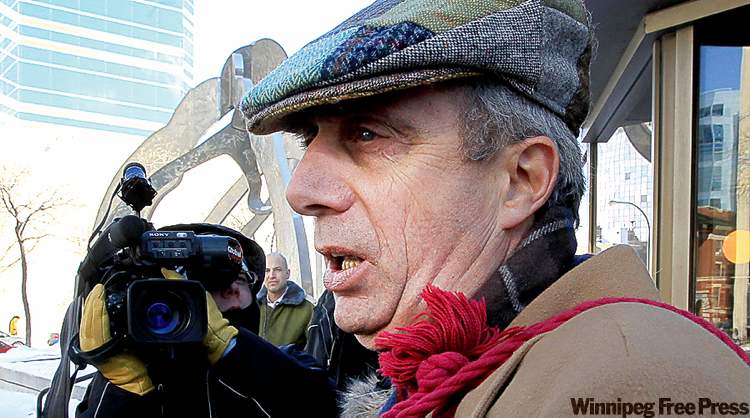
Keyser agreed, saying not identifying the accused was reason enough to acquit both constables.
In documents filed Thursday, Tapper said Keyser denied him the right to make a formal submission on the controversial issue of the identity of the two accused. He claims the judge should have allowed him to reopen his case and set the record straight about identification of the two police officers charged. He argues no damage was done because it was clear to everyone the officers at the centre of the controversy were indeed O’Kane and Zebrun.
“(Keyser) erred in law by not allowing the Crown to reopen its case for the limited purpose of formal in-dock identification of the accused… based on a misapprehension by Crown attributable to conduct of counsel for the accused,” Tapper wrote.
He also said Keyser should have accepted that identification had already been proven because defence lawyers had agreed to notebooks and phone records of O’Kane and Zebrun being tendered as exhibits. Tapper said the judge didn’t accept “or appreciate that by agreeing to the admission of certain exhibits… that identification of the accused had been admitted.”
The police officers’ defence teams said Keyser’s decision likely only delayed the not-guilty verdict they expected the jury to return.

The charges stemmed from an allegedly improper search of a downtown hotel room and the seizure of nearly a kilogram of cocaine and $18,000 cash. O’Kane, 40, and Zebrun, 33, were arrested in January 2008 after they allegedly took an illegal shortcut to arrest a known drug dealer. The internal investigation of the officers’ actions started in November 2006 after the Crown stayed drug-trafficking charges against the suspect and an accomplice when questions were raised at a preliminary hearing about the validity of a police search warrant.
O’Kane and Zebrun were alleged to have lied to a magistrate to obtain a search warrant, which they used to enter a room at the Fairmont hotel and seize the drugs and cash.
When they testified at the accused drug dealer’s preliminary hearing, O’Kane and Zebrun claimed their suspicions about the hotel room weren’t based on an illegal sneak-and-peek, but rather on the information of a mysterious informant. The pair told a judge they never entered Room 1707 at the Fairmont until after they obtained a search warrant. They also gave different accounts in court of when they first went to the hotel the day of the July 2005 arrests.
A night manager from the Fairmont told jurors during the trial he couldn’t be sure either accused entered the suite prior to obtaining a search warrant. Michael Hrechka said the officers arrived at the hotel saying they were searching for a missing girl. He said one of the officers who might have gone into 1707 introduced himself as Const. Peter O’Kane. Hrechka said he then filled out a hotel incident report, including the names of both O’Kane and Const. Jess Zebrun in it. However, Tapper never directly asked the manager to identify Zebrun and O’Kane in court —- an oversight Keyser ruled proved fatal to the Crown’s case.
www.mikeoncrime.com
Mike McIntyre is a sports reporter whose primary role is covering the Winnipeg Jets. After graduating from the Creative Communications program at Red River College in 1995, he spent two years gaining experience at the Winnipeg Sun before joining the Free Press in 1997, where he served on the crime and justice beat until 2016. Read more about Mike.
Every piece of reporting Mike produces is reviewed by an editing team before it is posted online or published in print — part of the Free Press‘s tradition, since 1872, of producing reliable independent journalism. Read more about Free Press’s history and mandate, and learn how our newsroom operates.
Our newsroom depends on a growing audience of readers to power our journalism. If you are not a paid reader, please consider becoming a subscriber.
Our newsroom depends on its audience of readers to power our journalism. Thank you for your support.
Mike McIntyre is a sports reporter whose primary role is covering the Winnipeg Jets. After graduating from the Creative Communications program at Red River College in 1995, he spent two years gaining experience at the Winnipeg Sun before joining the Free Press in 1997, where he served on the crime and justice beat until 2016. Read more about Mike.
Every piece of reporting Mike produces is reviewed by an editing team before it is posted online or published in print — part of the Free Press‘s tradition, since 1872, of producing reliable independent journalism. Read more about Free Press’s history and mandate, and learn how our newsroom operates.
Our newsroom depends on a growing audience of readers to power our journalism. If you are not a paid reader, please consider becoming a subscriber.
Our newsroom depends on its audience of readers to power our journalism. Thank you for your support.
Advertisement Advertise With Us
Advertisement Advertise With Us