

The deadly journey
Refugees perish fleeing Libya for Canada

Advertisement
Read this article for free:
or
Already have an account? Log in here »
To continue reading, please subscribe:
Digital Subscription
One year of digital access for only $75*
- Enjoy unlimited reading on winnipegfreepress.com
- Read the E-Edition, our digital replica newspaper
- Access News Break, our award-winning app
- Play interactive puzzles
*Billed as $5.77 plus GST every four weeks. After 52 weeks, price increases to the regular rate of $19.95 plus GST every four weeks. Offer available to new and qualified returning subscribers only. Cancel any time.
Monthly Digital Subscription
$4.99/week*
- Enjoy unlimited reading on winnipegfreepress.com
- Read the E-Edition, our digital replica newspaper
- Access News Break, our award-winning app
- Play interactive puzzles
*Billed as $19.95 plus GST every four weeks. Cancel any time.
To continue reading, please subscribe:
Add Free Press access to your Brandon Sun subscription for only an additional
$1 for the first 4 weeks*
- Enjoy unlimited reading on winnipegfreepress.com
- Read the E-Edition, our digital replica newspaper
- Access News Break, our award-winning app
- Play interactive puzzles
*Your next Brandon Sun subscription payment will increase by $1.00 and you will be charged $17.95 plus GST for four weeks. After four weeks, your payment will increase to $24.95 plus GST every four weeks.
Read unlimited articles for free today:
or
Already have an account? Log in here »
Hey there, time traveller!
This article was published 30/04/2011 (5497 days ago), so information in it may no longer be current.
On her application to come to Canada, the 24-year-old new mother wrote: “I’d rather die than return home” to Eritrea.
Last month, she did, along with her baby.
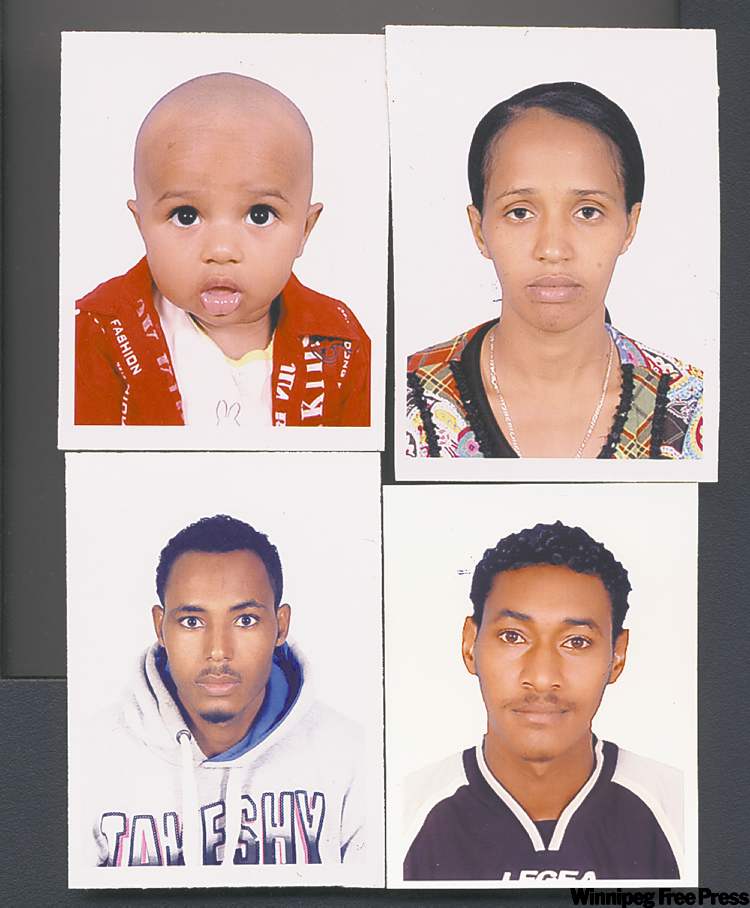
The mom and her infant son were among six Winnipeg-sponsored refugees who drowned leaving Libya within the last six weeks.
Hundreds of refugees from troubled African countries have either drowned or are missing after failed attempts to reach the safety of Europe, the United Nations High Commission on Refugees reports.
In Winnipeg, family and friends are mourning their loss, and that people so young and full of potential had to spend their final years without a safe place to call home.
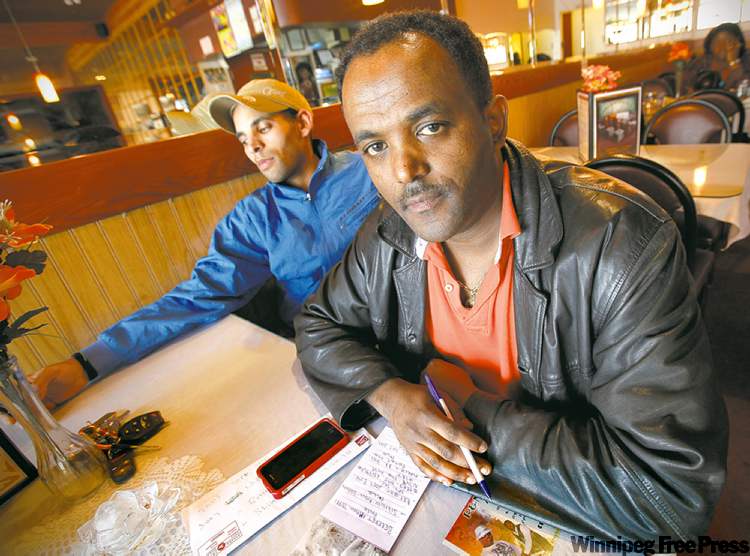
“It is very sad,” said Yonas Zewude. He was helping to sponsor two young Eritrean refugees stuck in Libya, with no means of support, and no right to work or go to school.
Rahwa Teklegergish, 24, and her nine-month-old baby, Esey, were being sponsored privately through Hospitality House in Winnipeg.
They never made it to Canada.
“They’re lost souls… it’s a huge human tragedy,” said Hospitality House co-ordinator Tom Denton, holding a stack of sponsorship application files that tell the stories of refugees who no longer can.
“I would rather die than return home,” wrote Teklegergish. After Grade 12, she was assigned to a life of military service and ended up as an unpaid maid, cook and cleaner for members of the Department of Defence.
“I felt I was a slave,” she printed neatly with impeccable spelling.
When one of the authorities made sexual advances and threatened to have her killed or sent to “the front,” she fled Eritrea. She went to a refugee camp in Shegerab, Sudan, then to the capital Khartoum, then Tripoli where she was jailed in the Jedida detention centre with other refugees.
She got out and gave birth to her son. When chaos erupted in Tripoli, they boarded a boat that she hoped would take them to safer shores.
So did another young Eritrean with hopes of getting to Winnipeg one day.
Zeresnay Tekeste, 22, ended up a refugee on the deadly voyage because he dared to question authority when he was in high school.
On his application to come to Canada, he wrote about spending Grade 12 like other Eritrean kids — doing forced military training. After a lengthy speech by a commander who condemned minority religions, the Pentecostal youth asked him why the authorities were so concerned about personal religious beliefs. That night, the military police arrested him.
After two months in jail, a guard set Tekeste free, and they both fled to Sudan, then he headed for Benghazi, Libya, then to Tripoli. But there, he was locked up with other refugees. When he got out and was able to earn a little cash under the table, he was robbed by street gangs and police, he said. Just when he thought his life couldn’t get worse, the fighting in Libya began.
“They were in a very dangerous situation,” said Tekeste’s Winnipeg sponsor, Zewude. The Winnipeg businessman has been in Canada for 13 years and has helped many who’ve come after him.
“His goal was to come to a safe country and get a better life,” said Zewude. He didn’t even come close.
“Tekeste died on a boat.”
So did another young man sponsored by Zewude. Bereket Teferi, 25, and Yemane Zerom, 25 also died at sea, said Denton.
Tekali Weldemichael, 26, drowned as well. His Winnipeg cousin remembers the last time they spoke.
“He phoned me in March when they started the war,” said Berhe Habteyohanes. “I said, ‘If you can get away, transfer to another country — Tunisia or Morocco.'”

The Canadian government was able to meet privately sponsored Eritrean refugees in Tunisia and get them to Canada — if they could escape fighting in Libya. A group arrived safely in Winnipeg earlier this month. Weldemichael wasn’t among them, although it was confirmed he started out on the boat.
There were 335 Eritrean refugees aboard when the ship left Libya on Mar. 22, said Habteyohanes. He first heard the news in his native tongue, Tigrinya, on a Voice of America broadcast.
“I was shocked — he’s my cousin,” said Habteyohanes who came to Canada in 2008, and has been working to bring his relatives to safety here. His cousin wanted to study and work in Winnipeg and was full of hope and potential, he said.
“He was very young and healthy.”
carol.sanders@freepress.mb.ca
Carol Sanders
Legislature reporter
Carol Sanders is a reporter at the Free Press legislature bureau. The former general assignment reporter and copy editor joined the paper in 1997. Read more about Carol.
Every piece of reporting Carol produces is reviewed by an editing team before it is posted online or published in print — part of the Free Press‘s tradition, since 1872, of producing reliable independent journalism. Read more about Free Press’s history and mandate, and learn how our newsroom operates.
Our newsroom depends on a growing audience of readers to power our journalism. If you are not a paid reader, please consider becoming a subscriber.
Our newsroom depends on its audience of readers to power our journalism. Thank you for your support.
Carol Sanders
Legislature reporter
Carol Sanders is a reporter at the Free Press legislature bureau. The former general assignment reporter and copy editor joined the paper in 1997. Read more about Carol.
Every piece of reporting Carol produces is reviewed by an editing team before it is posted online or published in print — part of the Free Press‘s tradition, since 1872, of producing reliable independent journalism. Read more about Free Press’s history and mandate, and learn how our newsroom operates.
Our newsroom depends on a growing audience of readers to power our journalism. If you are not a paid reader, please consider becoming a subscriber.
Our newsroom depends on its audience of readers to power our journalism. Thank you for your support.
Advertisement Advertise With Us
Advertisement Advertise With Us