

Ancient wooden rail bridge at city aqueduct to be replaced
Rotting structure no longer protects main water pipe
Advertisement
Read this article for free:
or
Already have an account? Log in here »
To continue reading, please subscribe:

Digital Subscription
One year of digital access for only $205*
- Enjoy unlimited reading on winnipegfreepress.com
- Read the E-Edition, our digital replica newspaper
- Access News Break, our award-winning app
- Play interactive puzzles
*First annual payment billed as $205.00 + GST for one year. This annual subscription will automatically renew at $233.00 + GST every 52 weeks (10% off the regular annual price of $259.35). Offer available to new and qualified returning subscribers only. Cancel any time.
To continue reading, please subscribe:
Add Free Press access to your Brandon Sun subscription for only an additional
$1 for the first 4 weeks*
- Enjoy unlimited reading on winnipegfreepress.com
- Read the E-Edition, our digital replica newspaper
- Access News Break, our award-winning app
- Play interactive puzzles
*Your next Brandon Sun subscription payment will increase by $1.00 and you will be charged $17.95 plus GST for four weeks. After four weeks, your payment will increase to $24.95 plus GST every four weeks.
Read unlimited articles for free today:
or
Already have an account? Log in here »
Hey there, time traveller!
This article was published 20/07/2011 (5527 days ago), so information in it may no longer be current.
THE City of Winnipeg is about to spend $700,000 to replace a troubled bridge over its drinking water.
A wooden rail bridge that crosses the Shoal Lake Aqueduct, just east of the city, has rotted to the point where it no longer protects the city’s main water pipe from the weight of railcars passing overhead on the city-owned Greater Winnipeg Water District Railway.
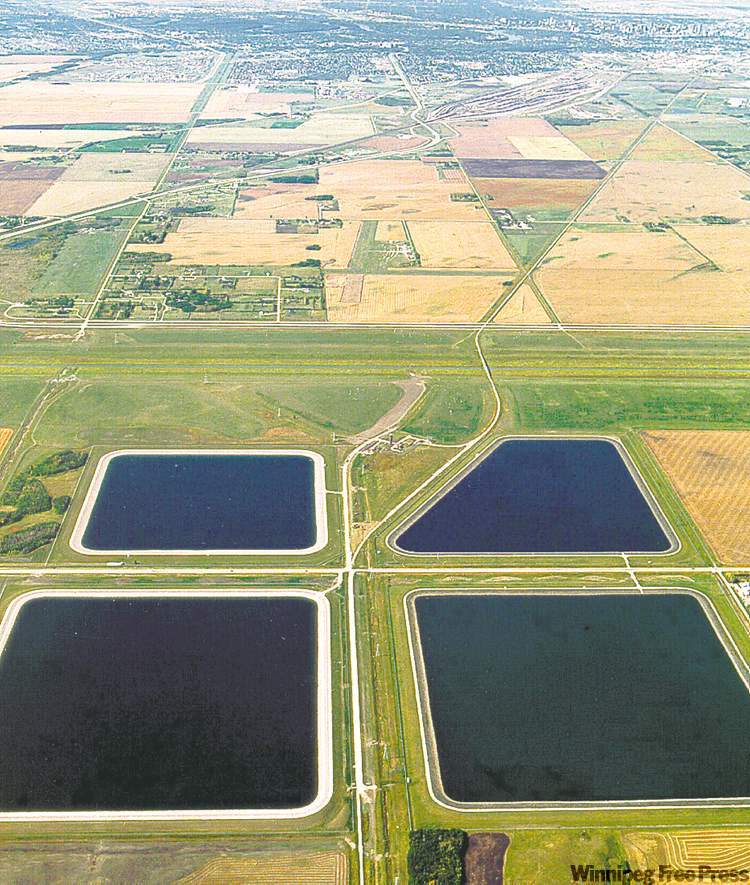
The 93-year-old bridge is buried underground at the Deacon Reservoir site in the RM of Springfield, between the Red River Floodway and Provincial Road 207.
In 2008, engineering firm Stantec found the wooden structure was no longer doing anything to support the weight of the trains that run once a week between the city and the aqueduct intake site at Shoal Lake, near the Ontario border.
“The timber is currently not providing any structural resistance to live loads induced by the railway, or any other loading. The rot has likely been in existence for a considerable amount of time,” Stantec engineer Kevin Amy wrote in a letter to the city’s water and waste department in October 2008.
Since there was no apparent damage to the railbed, Stantec did not recommend emergency repairs. But the firm concluded the aqueduct was not designed to support a railway crossing and advised building a new bridge “no later than early spring 2009.”
The work will finally be done this year at a cost of $700,000, according to budget documents. The city is taking bids on the work until Friday, according to city documents.
The two-year wait did not put the aqueduct at any risk, said Duane Griffin, the acting manager of the water and waste department’s engineering division.
For starters, Stantec was not aware this section of the concrete aqueduct is reinforced with steel, Griffin said. “They weren’t commissioned to look at the actual pipe,” he said.
“We know the bridging structure is past its useful life, but we’re not in immediate danger, with any risk to our drinking water.”
As well, this section of the aqueduct was repaired in the 1990s, when the city spent $58 million fixing the entire water pipe, which runs 155 kilometres from the Shoal Lake intake to Winnipeg.

Finally, the contentious section of pipe sits to the west of the point where water enters Deacon Reservoir on its way to the adjacent, two-year-old Winnipeg Water Treatment Plant. Other pipes carry treated water from the plant across the floodway and into the city.
But this section of the aqueduct does carry some recycled water from the plant back to the reservoir, Griffin said. It also needs to be in good condition in the event some form of emergency forces the city to send untreated water across the floodway.
“We’re never going to take it out of service,” Griffin explained.
The Shoal Lake Aqueduct was completed in 1919 and remains able to fulfil Winnipeg’s drinking-water needs, as a drop in per-capita water consumption since the late 1980s has offset population growth within the city.
bartley.kives@freepress.mb.ca