

Backcountry ban ‘draconian’
Manitoba outfitters lose money as adventure-seekers head east
Advertisement
Read this article for free:
or
Already have an account? Log in here »
To continue reading, please subscribe:
Digital Subscription
One year of digital access for only $1.44 a week*
- Enjoy unlimited reading on winnipegfreepress.com
- Read the E-Edition, our digital replica newspaper
- Access News Break, our award-winning app
- Play interactive puzzles
*Billed as $5.77 plus GST every four weeks. After 52 weeks, price increases to the regular rate of $19.95 plus GST every four weeks. Offer available to new and qualified returning subscribers only. Cancel any time.
To continue reading, please subscribe:
Add Free Press access to your Brandon Sun subscription for only an additional
$1 for the first 4 weeks*
- Enjoy unlimited reading on winnipegfreepress.com
- Read the E-Edition, our digital replica newspaper
- Access News Break, our award-winning app
- Play interactive puzzles
*Your next Brandon Sun subscription payment will increase by $1.00 and you will be charged $17.95 plus GST for four weeks. After four weeks, your payment will increase to $24.95 plus GST every four weeks.
Read unlimited articles for free today:
or
Already have an account? Log in here »
Hey there, time traveller!
This article was published 18/08/2011 (5428 days ago), so information in it may no longer be current.
Manitoba’s decision to ban backcountry travel in parched southeastern regions of the province is sending tourism dollars into Ontario, where fire officials only restrict travel around actual fires.
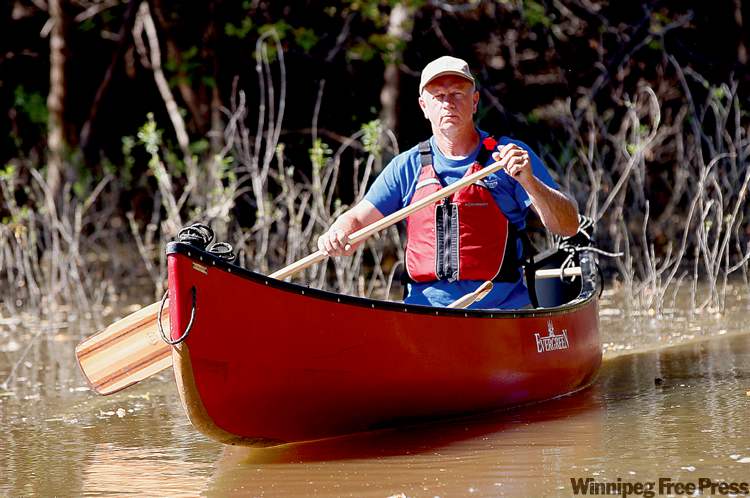
On Aug. 5, Manitoba Conservation banned all backcountry hiking, paddling and cycling in a vast swath of land that stretches from the U.S. border to Bissett.
Since then, Ontario’s Ministry of Natural Resources has been deluged with inquiries from ecotourists eager to take their outdoor vacations east of the border, where the fire risk is just as great but backcountry travel restrictions only apply to box-like zones around active fires.
“We’ve been inundated by calls from Manitoba,” said Gabby Rivard, the Dryden-based spokeswoman for northwestern Ontario’s fire program. “People say, ‘We have a backcountry travel restriction and we want to go on holidays.’ We say, ‘Sure, come on over’ and show them where they need to stay away from to enjoy their vacation.’ “
Although 80 wildfires are burning in northwestern Ontario, the Ministry of Natural Resources continues to encourage backcountry travel in the region, Rivard said.
“We generally close out just in proximity to the fire,” she said. “We have a lot of tourism in this area and a lot of industry. We try to work with all tourism operators. Restricting travel is our last resort.”
Manitoba Conservation takes the opposite tack. While there are no major wildfires burning in southeastern Manitoba, backcountry travel is restricted in the area as part of an effort to reduce the risk of people causing wildfires, said Duane Feely, supervisor of aviation and field services for Manitoba’s fire program.
The ban is in place both to prevent fires and to eliminate the need to extract backcountry travellers from fire-affected areas, he said. So far, 25 people have been charged with violating the ban.
“It’s unfortunate it does prevent everybody from going into the backcountry, because not everybody is going to start a fire,” he said.
Unlike Ontario, where provincial parks such as Quetico and Woodland Caribou issue backcountry travel permits to keep track of the tourists, Manitoba has no means of keeping track of travellers. In any case, the mandate of Manitoba’s fire program is to control fires, not promote tourism, Feely said.
But some lodge, campground and tour operators in southeastern Manitoba are annoyed by the blanket travel ban, claiming it presumes all backcountry users are irresponsible while it drives their business across the border.
“I think it’s far too draconian. It’s tourist-unfriendly. It takes the lowest-common-denominator view that given the chance, everybody will screw up,” said Adrian Storimans, who operates Wild Harmony Canoe Adventures out of Seven Sisters Falls, on the outskirts of Whiteshell Provincial Park. “We take the dim view. In Ontario, they rely on education.”
Storimans’ first-year operation, which usually offers short paddling trips along the Black, Whiteshell, Birch, Whitemouth, Brokenhead and other rivers, is currently restricted to routes that begin and end in developed areas of southeastern Manitoba. That means his customers can’t stop along the way, even to stretch their legs or relieve themselves, he said.

“We have to do everything we can to prevent fires. (But) their noses are being cut off to spite their faces,” he said.
Cam White, who runs Northern Soul Wilderness Canoeing Adventures and Red River Outfitters, which offer longer trips in more remote regions, said backcountry travel bans are not necessarily a bad idea. “It’s a question of where and when the ban is applied,” he said. “I think we need to use discretion. At times, the ban may be applied when there is no present danger.”
Neither Ontario nor Manitoba keeps track of how many tourists have flocked across the border because of the travel ban. In 2006, the last time a ban was enacted, some outfitters suggested the economic impact ran in the millions when float-plane flights, hotel and campground stays, equipment rentals and restaurant sales were taken into account.
Travel Manitoba, however, supports the backcountry travel ban, vice-president Linda Whitfield said in a statement. “We certainly support (Manitoba) Conservation’s decision to protect the areas and not place them further at risk,” she wrote. “It is first and foremost a conservation issue.”
bartley.kives@freepress.mb.ca