

Muslims help feed remote reserve
Shamattawa gets meat from charity in sharing tradition

Advertisement
Read this article for free:
or
Already have an account? Log in here »
To continue reading, please subscribe:

Digital Subscription
One year of digital access for only $205*
- Enjoy unlimited reading on winnipegfreepress.com
- Read the E-Edition, our digital replica newspaper
- Access News Break, our award-winning app
- Play interactive puzzles
*First annual payment billed as $205.00 + GST for one year. This annual subscription will automatically renew at $233.00 + GST every 52 weeks (10% off the regular annual price of $259.35). Offer available to new and qualified returning subscribers only. Cancel any time.
To continue reading, please subscribe:
Add Free Press access to your Brandon Sun subscription for only an additional
$1 for the first 4 weeks*
- Enjoy unlimited reading on winnipegfreepress.com
- Read the E-Edition, our digital replica newspaper
- Access News Break, our award-winning app
- Play interactive puzzles
*Your next Brandon Sun subscription payment will increase by $1.00 and you will be charged $17.95 plus GST for four weeks. After four weeks, your payment will increase to $24.95 plus GST every four weeks.
Read unlimited articles for free today:
or
Already have an account? Log in here »
Hey there, time traveller!
This article was published 10/11/2011 (5362 days ago), so information in it may no longer be current.
In remote communities where jobs are few and groceries cost a lot, most folks rarely have lamb chops and sirloin steaks in the fridge.
But this week in Shamattawa, struggling families won’t be asking, “Where’s the beef?”
A Winnipeg charity has given 90 kilograms of lamb, 31 kg of beef and 200 loaves of bread to the fly-in First Nation 1,200 kilometres northeast of Winnipeg.
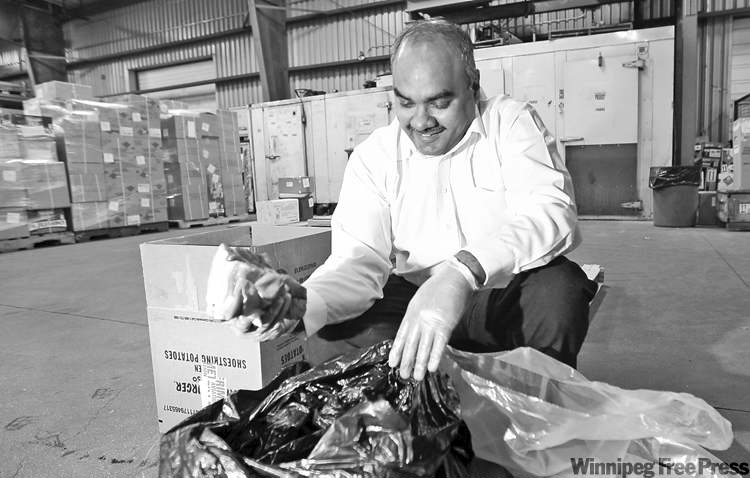
“Last year, we donated mostly to newcomer refugees downtown,” said Hussain Guisti, general manager of the Zubaidah Tallab Foundation. The Muslim charity arranges for families to get a good deal on halal meat, buying the animals and having them butchered at cost and fulfilling a religious requirement to share and help the needy.
“You have to give a third of it to the poor, a third to friends and family and a third goes to you,” said Guisti. “It’s an act of giving — it teaches you to give.”
This year, they’re donating 450 kg of meat — and two freezers in which to store it — to the Canadian Muslim Women’s Institute. It distributes the meat to local families in need.
“The whole thing is about sacrifice to give to the poor and the needy,” said Guisti.
This year, the charity made sure there was a surplus to share the meat with First Nations people in need, said Guisti.
“I don’t think there are people more needy than the First Nations,” he said.
“There are several families back home who don’t have enough when they’re between cheques,” said Shamattawa Chief Jeff Napoakesik on his way back to the community of 1,100. “Groceries at the Northern Store are quite expensive.”
On Wednesday, a four-litre jug of milk sold for $13.49 and a 907-gram frozen package of lean ground beef cost $12.99 at the community’s grocer.
Next week, the Muslim charity based in Winnipeg plans to ship another 115 kg of meat. Perimeter Airlines has agreed to move the food when it has room on flights to Shamattawa, said Guisti.
Napoakesik said he’s appreciative of the donation and had no idea what halal meat is or its significance.
Like observant Jews’ requirement for food to be kosher, Muslims eat food that is halal. When it comes to meat, there are rules for its preparation.
“There are certain things you have to do,” said Guisti, who was there for the slaughter, where animals don’t see the one before them being killed.

“You have to butcher the animal very fast so the animal’s not in pain. You can’t shoot it or hang it. In less than a second, you have to cut off the trachea.”
At the same time, a prayer for the animal is said.
“When you butcher, you have to dedicate its soul to God: ‘In the name of God, most gracious, most merciful.’ That is what makes it halal.”
Two years ago, the charity delivered 110 kg of chicken and 450 loaves of bread to Garden Hill First Nation.
carol.sanders@freepress.mb.ca
Carol Sanders
Legislature reporter
Carol Sanders is a reporter at the Free Press legislature bureau. The former general assignment reporter and copy editor joined the paper in 1997. Read more about Carol.
Every piece of reporting Carol produces is reviewed by an editing team before it is posted online or published in print — part of the Free Press‘s tradition, since 1872, of producing reliable independent journalism. Read more about Free Press’s history and mandate, and learn how our newsroom operates.
Our newsroom depends on a growing audience of readers to power our journalism. If you are not a paid reader, please consider becoming a subscriber.
Our newsroom depends on its audience of readers to power our journalism. Thank you for your support.
Carol Sanders
Legislature reporter
Carol Sanders is a reporter at the Free Press legislature bureau. The former general assignment reporter and copy editor joined the paper in 1997. Read more about Carol.
Every piece of reporting Carol produces is reviewed by an editing team before it is posted online or published in print — part of the Free Press‘s tradition, since 1872, of producing reliable independent journalism. Read more about Free Press’s history and mandate, and learn how our newsroom operates.
Our newsroom depends on a growing audience of readers to power our journalism. If you are not a paid reader, please consider becoming a subscriber.
Our newsroom depends on its audience of readers to power our journalism. Thank you for your support.
Advertisement Advertise With Us
Advertisement Advertise With Us