

Blurred vision: Drunk drivers still don’t see stopping the carnage is up to them
Advertisement
Read this article for free:
or
Already have an account? Log in here »
To continue reading, please subscribe:

Digital Subscription
One year of digital access for only $205*
- Enjoy unlimited reading on winnipegfreepress.com
- Read the E-Edition, our digital replica newspaper
- Access News Break, our award-winning app
- Play interactive puzzles
*First annual payment billed as $205.00 + GST for one year. This annual subscription will automatically renew at $233.00 + GST every 52 weeks (10% off the regular annual price of $259.35). Offer available to new and qualified returning subscribers only. Cancel any time.
To continue reading, please subscribe:
Add Free Press access to your Brandon Sun subscription for only an additional
$1 for the first 4 weeks*
- Enjoy unlimited reading on winnipegfreepress.com
- Read the E-Edition, our digital replica newspaper
- Access News Break, our award-winning app
- Play interactive puzzles
*Your next Brandon Sun subscription payment will increase by $1.00 and you will be charged $17.95 plus GST for four weeks. After four weeks, your payment will increase to $24.95 plus GST every four weeks.
Read unlimited articles for free today:
or
Already have an account? Log in here »
Hey there, time traveller!
This article was published 20/11/2011 (5393 days ago), so information in it may no longer be current.
He told me he was OK to drive. “I’m fine, I didn’t drink that much,” he said. I believed him.
A group of us sat in his car trying to warm up before leaving the parking lot. It was cold outside and we were just happy to be getting a “safe” ride home.
He backed out smoothly. The drive started off slow. We turned out of the parking lot onto the road. That’s when it hit me: He was lying when he said he wasn’t drunk.
My house was only five minutes away but it felt like longer. He swerved in and out of parked cars, sped up to stop signs and turned so sharply I thought I was going to fly out the window.
We finally got to my house. I got out of the car. My heart was racing. I said to myself, “I’m never doing that again.”
Many young people do, though — every weekend. Jane, an 18-year-old college student, says she has gotten into a car with someone she knew was drunk. None of her friends ever volunteers to be the designated driver, she says.
“I’m too broke to take a taxi. Nobody ever wants to be the sober one. We usually walk but I did get in a car with someone I knew was drunk. Now that I think about it, it was scary. At the time, though, I didn’t feel like anything was wrong. I just wanted to get home.”
Brian, a 22-year-old university student, hasn’t only been in a car when the driver was drunk, he’s been the driver.
“I have driven drunk before,” he says. “It doesn’t matter how many drinks I have, as long as I feel in control I will still drive my car. If I don’t drive like an idiot, chances are I won’t get caught.”
He says he doesn’t feel guilty about driving impaired.
“I always get home safe when I drive after the bar,” he said. “I’ve never been in an accident and I don’t feel bad about it. Like I said, I always feel like I’m in control.”
His story is similar to others I’ve seen and heard. People don’t seem to be afraid of getting caught — especially when they still feel like they’re “in control.”
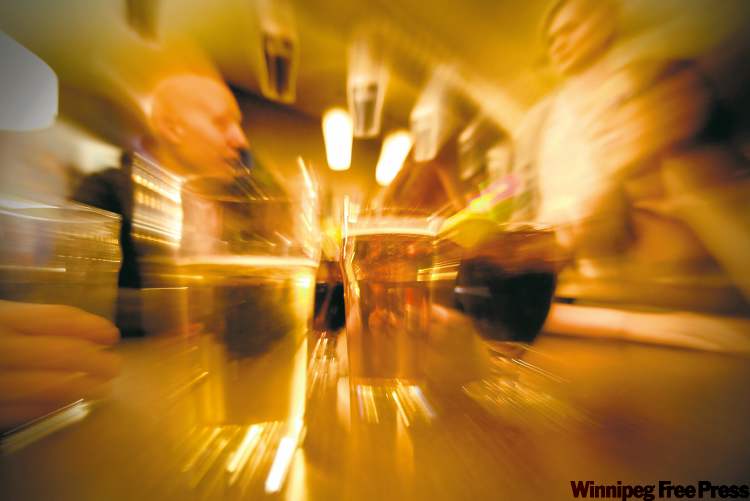
But how in control of your motor skills can you really be after having six or seven alcoholic drinks? As a 21-year-old social butterfly, I’ve been to the bar more times than I’d like to admit — and I’ve seen more people driving impaired than I’d like to admit.
I’ve witnessed people walking out of the bar with their keys in their hands, stumbling to their cars, getting in and driving away. I always wish that people would see the dangers and find another way home.
People often complain that taxis are expensive but that’s only one way to get home. Winnipeg Transit often runs until one or two in the morning and bus fare is less than $3. Operation Red Nose (which kicks in Friday: phone 947-6673) will pick you up and drive you home in your car for free during the holiday season.
It’s a good way to avoid another holiday tradition: the Winnipeg Police Service Checkstop program, which kicks off at the start of December. Officers set up random stops and pull cars over to screen for impaired driving.
Last holiday season, 98 people were charged with impaired driving — 72 per cent more than were charged in 2009.
But even the police checkstops don’t scare some people. I’ve overheard people at the bar talking about where checkstops are. They know which routes to drive home to avoid them.
People are always connected to each other through Twitter, Facebook, BBM and text messaging. These resources make it easy to find out where the police are stationed and how to avoid getting caught at a checkstop.
Shaylene Handford has the best solution to not getting caught: Don’t do it. She started Sober Ride this year, an awareness program to battle impaired driving in Winnipeg.
The program gets drivers to take the Sober Ride pledge and put a sticker in their car window. The decal is a representation of the car owner’s pledge only to allow sober driving in her or his car.
Handford said she started the program after being personally affected through her line of work and in her personal life.
“I want to help make a difference and take a stand on a topic that still some people don’t fully understand,” she said.

Since she started the program, more than 500 people have taken the Sober Ride pledge. Handford said the program is developing daily and she hopes the pledge makes a difference one person at a time.
Between awareness programs, MADD, police actions and stories of people dying because of drunk driving (two young people died last weekend in crashes in which alcohol was believed to be a factor), you’d think people would stop drinking and driving. But the initiatives don’t seem to be working.
I don’t know why they’re not working. The one thing I know that does work is enforcement. The only time I ever saw someone decide not to drive drunk by getting out of their car and calling for a ride was when the police were sitting at the front door of the bar. Perhaps police should keep the checkstop program running all year. But unfortunately, they can’t be everywhere. Some night after hitting the bar, Jane — and Brian — may have to make a responsible decision all on their own.
Terryn Shiells is a student at Red River College. Sunday Xtra asked her to weigh in on young people’s attitudes toward drunk driving after two young men were killed in crashes last weekend.
Related Articles
500+ cars stopped, 12 charges laid in city check stops
Advertisement Advertise With Us
Advertisement Advertise With Us