

Home, comfortable home
Developed world's problems can seem downright pleasant
Advertisement
Read this article for free:
or
Already have an account? Log in here »
To continue reading, please subscribe:
Digital Subscription
One year of digital access for only $1.44 a week*
- Enjoy unlimited reading on winnipegfreepress.com
- Read the E-Edition, our digital replica newspaper
- Access News Break, our award-winning app
- Play interactive puzzles
*Billed as $5.77 plus GST every four weeks. After 52 weeks, price increases to the regular rate of $19.95 plus GST every four weeks. Offer available to new and qualified returning subscribers only. Cancel any time.
To continue reading, please subscribe:
Add Free Press access to your Brandon Sun subscription for only an additional
$1 for the first 4 weeks*
- Enjoy unlimited reading on winnipegfreepress.com
- Read the E-Edition, our digital replica newspaper
- Access News Break, our award-winning app
- Play interactive puzzles
*Your next Brandon Sun subscription payment will increase by $1.00 and you will be charged $17.95 plus GST for four weeks. After four weeks, your payment will increase to $24.95 plus GST every four weeks.
Read unlimited articles for free today:
or
Already have an account? Log in here »
Hey there, time traveller!
This article was published 27/05/2012 (5137 days ago), so information in it may no longer be current.
So a Jewish guy and some Christians travel across a Muslim country. It sounds like a joke in search of a punchline, but it’s actually how I spent much of the month of May.
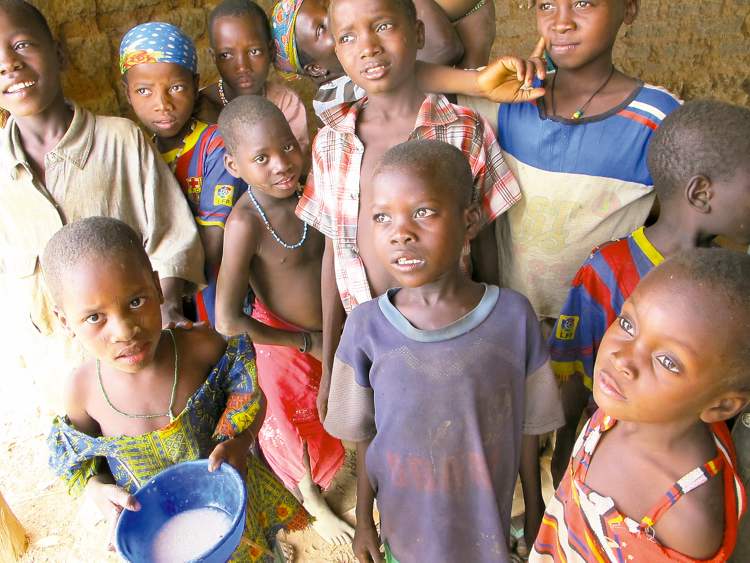
For 12 days, I found myself in the back of a Toyota Land Cruiser on a highway in Niger, one of Africa’s least developed countries, driving between isolated farming villages and the dusty capital, Niamey.
I was effectively embedded with two staffers from the Winnipeg-based Canadian Foodgrains Bank, an umbrella organization for 15 Canadian Christian charities. The CFGB finances food-aid and food-security programs across the Sahel region, where millions face malnutrition in the coming months due to a complex array of environmental, social and geopolitical factors.

Niger suffers from droughts, floods, crop failures, deforestation, soil erosion, rapid population growth, high child mortality and low education. The average Nigerien woman has 7.5 children. Wars or civil conflicts consume most of the neighbouring countries. The average daytime high in May is 42 C, a temperature even people living on the edge of the Sahara Desert do not consider comfortable.
The natural biodiversity in Niger has been replaced by a near-monoculture of millet, interspersed with native acacias, introduced neem trees and the occasional baobab. The gazelles are gone, replaced by goats that greedily consume what little biomass is left on the ground and in the bushes.
Those goats stand on their hind legs to reach the leaves the most desperate rural people sometimes gather and boil for hours in an effort to ward off hunger for a little while.
None of this will seem new if you happened to read the stories I filed from Niger. And very little of this will be of interest to Canadians who don’t like to think about a part of the planet that does not fit into the happy narrative of a developing planet where everyone’s standard of living is on the way up.
Depressing images out of Africa are among the worst possible media stereotypes: They only confirm deeply ingrained Western ideas about insurmountable problems that supposedly plague the entire continent.
As a reporter with some degree of self-awareness, I had no desire to go to Africa and perpetuate those stereotypes. But you can only write what you see and what I saw was not overly encouraging, even though I did not witness actual starvation or famine conditions.
With one exception, the villages I visited were all beneficiaries of some form of food-distribution program that was keeping people alive. Images out of neighbouring Chad during the same period illustrated a far more desperate situation in areas of the Sahel where no one appears to be distributing food just yet.
After I returned to Canada, a couple of colleagues and family members noted I wrote impersonally and dispassionately while I was in Niger. That was deliberate, as it would have been hubris to spend a few days on the ground and pretend to actually understand the place.
But now that I’m back, I feel comfortable digesting the experience in the most public way imaginable. And I’m not afraid to say it only confirmed two seemingly contradictory ideas — the limitless capacity for individual human beings to engage in selfless acts of kindness and generosity and the extremely limited capacity of this planet to handle so many human beings.
As a Jew, I am prone to cynicism about humanity. That is my ethnic imperative. As a secular humanist, I possess nothing that resembles what religious people of any background would identify as spirituality or faith.
Hence my emotional discomfort at experiencing almost no emotional discomfort whatsoever when my worst fears about the planet seem to have materialized, to some extent, in one dusty corner of the planet.
In Niger, the human population is growing more quickly than its ability to extract enough resources to sustain itself, at least not without the help of the outside world. This is the classic Malthusian nightmare: humanity doomed to an endless struggle to survive.
Such dark ideas were deemed laughable during the optimistic days when the green revolution reduced starvation in populous places such as India. But unhappy days are here again, exacerbated by dramatic climate change.
In the developed world, we have the luxury of entertaining the idea climate change is just a theoretical concept, even though only a tiny minority of serious academics and their acolytes dispute the notion.
In Niger, villager after villager spoke of shorter growing seasons, hotter temperatures, fewer trees and less ground cover. But those were just anecdotes. Satellite pictures, ground surveys and actual measurements have confirmed these phenomena across the Sahel. The cause — natural or anthropomorphic — is irrelevant.
As a result, aid and development agencies in Africa talk of adaptation to climate change. They are no longer planning to mitigate the effects of too much carbon dioxide in the atmosphere and are instead planning to deal with the effects.
Here on the Canadian Prairies, winter temperatures are growing milder, spring precipitation is intensifying and severe weather events appear to be increasing, although the latter phenomenon is not as well-established. But we remain wealthy enough to deal with our own new abnormal and haven’t really started talking about adaptation — because we don’t have to do so.
Human beings behave collectively like individual elementary school students. We don’t like to do our homework until the night before it’s due. We don’t like to do anything that’s uncomfortable or inconvenient if we don’t have to. And we certainly tend toward helping ourselves and the people around us rather than acting toward the greater good.

My Christian travelling partners in Niger have greater faith in humanity than I do. I would argue most observant Christians, Jews, Muslims and members of other faiths have greater hope for the future than do quasi-athiests such as myself. Depending on your perspective, that’s either the main benefit or encumbrance of religion.
But if you’ll permit me to be very personal and very passionate, unlike my reporting from Niger, I will confess I was ecstatic to return to the developed world.
While I was gone, the biggest news in my hometown was the misappropriation of professional hockey tickets and the death of a logic-devoid plan to sell a prime chunk of downtown land without entertaining rival bids.
Let’s build a water park along the Niger River and hand out Jets tickets in Niamey. The goats will rise on their hind legs in appreciation, gobble up the precious paper and then return to the dusty orange soil, padding about on all fours and dreaming goat dreams about green leaves to unfurl in future, better days.
bartley.kives@freepress.mb.ca