

Ashes to ashes, rust to rust
A merciful end to a troubled life
Advertisement
Read this article for free:
or
Already have an account? Log in here »
To continue reading, please subscribe:
Digital Subscription
One year of digital access for only $1.44 a week*
- Enjoy unlimited reading on winnipegfreepress.com
- Read the E-Edition, our digital replica newspaper
- Access News Break, our award-winning app
- Play interactive puzzles
*Billed as $5.77 plus GST every four weeks. After 52 weeks, price increases to the regular rate of $19.95 plus GST every four weeks. Offer available to new and qualified returning subscribers only. Cancel any time.
To continue reading, please subscribe:
Add Free Press access to your Brandon Sun subscription for only an additional
$1 for the first 4 weeks*
- Enjoy unlimited reading on winnipegfreepress.com
- Read the E-Edition, our digital replica newspaper
- Access News Break, our award-winning app
- Play interactive puzzles
*Your next Brandon Sun subscription payment will increase by $1.00 and you will be charged $17.95 plus GST for four weeks. After four weeks, your payment will increase to $24.95 plus GST every four weeks.
Read unlimited articles for free today:
or
Already have an account? Log in here »
Hey there, time traveller!
This article was published 29/07/2012 (5058 days ago), so information in it may no longer be current.
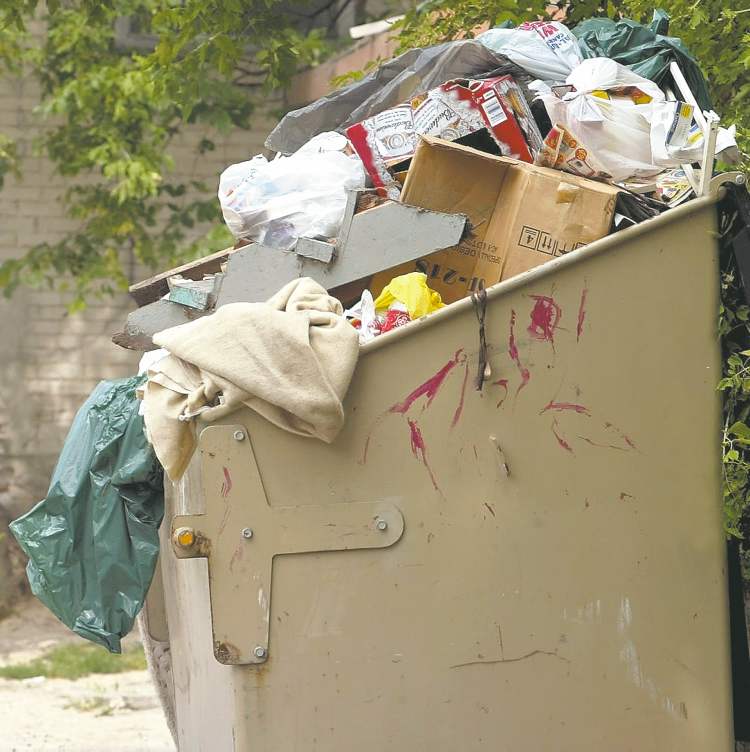
During the summer of 2012, the last Winnipeg autobin opened its plastic lid and swallowed its final, fetid-smelling breath. The well-known metal trash dispenser was 20 years old.
The autobin was born in 1992, at a time when the City of Winnipeg was struggling to figure out a cheaper way to collect what was then simply known as garbage.
After musing it would be more efficient to replace curbside trash collection with communal-use metal bins, officials decided to try out an autobin pilot project in the North End.
On May 27, 1992, the impending birth of the brave new device was proudly proclaimed on the front page of the Winnipeg Free Press.
“Hundreds of North End residents screamed defiance at city officials and [pelted them] with coffee cups as they condemned a new garbage-collection project,” wrote reporter Doug Thomas, noting former Mynarski Coun. Harry Lazarenko took the brunt of the abuse.
Undeterred, the city placed autobins near 9,500 North End homes in June 1992. The bins spread to other older sections of the city — the West End and Wolseley among them — in the ensuing years.
Eventually, the autobin would serve approximately 26,000 Winnipeg households.
The city attempted to convince its populace of the value of this new “automated refuse-collection system.” One early ad campaign touted it as being “cleaner, more secure and more economical than the current garbage-collection system.”
But not all North End residents were convinced. Former Point Douglas Coun. John Prystanski posed in a photo with McPhillips Street resident Russ Lobchuk, who was kicking the autobin behind his property. Lobchuk tried to get police to lay charges against the bin, but officers refused.
Other residents soon complained the bins were becoming dumping grounds for anything and everything.
“Before the bins existed, garbage stayed in the yard it came from,” a letter writer named L. Anderson complained in 1994, after she found everything “from dead ducks or unbagged dog feces, to drywall, paint and solvent containers, recyclables, furniture, you name it” in the bin adjacent her home.
In the early years of the autobin, this was considered youthful folly. But just like anyone else with a troubled childhood, the autobin soon wound up in a much more serious situation.
By 1999, when the autobin was only seven, Winnipeg’s arson strike force had identified the device as a problem. The annual cost of fighting autobin fires would climb to more than $1 million a year in the next decade, according to Winnipeg Fire Paramedic Service figures presented to the water and waste department.
But that was not the only stain on the autobin’s reputation. As more Winnipeggers grew concerned about recycling, the autobin was also blamed for encouraging people to throw as much refuse as they liked — recyclable or otherwise — in the trash.
It’s entirely possible the autobin simply wanted to be popular, like every other adolescent.
“They became everybody’s friend. You could count on throwing anything you wanted into it,” said Mynarski Coun. Ross Eadie. “That led to its demise, as the city couldn’t achieve its recycling goals.”
True enough, studies found residents in autobin areas were indeed throwing out higher volumes of trash, said Darryl Drohomerski, Winnipeg’s solid-waste manager.
As soon as he completed a waste-reduction strategy for the city last year, the autobin’s days were numbered — before its 20th birthday.
On July 25, the city began removing the first of 5,800 remaining autobins. Rolling-bin service will replace autobins during the first week of August, said Drohomerski, who is not sad to see the autobin go.
“They served a good purpose. In some applications, they’re great containers,” he said. “But there’s a reason there’s only us and Regina left with these things, and we’re both getting rid of them this year.”
The final weeks of the autobin’s life have been marked by desperation. Some of the autobin fans, it seems, have been paying their respects.
“We’re seeing bins that have never been full get completely full, because people are going ‘here’s my last chance to clean up my backyard,’ ” Drohomerski said.
The remains of the autobins will be sold for scrap and sent to metal recycling facilities. In an ironic twist, the autobin has wound up in the same place as all the metal cans they have swallowed over the years.
While few officials and politicians will miss the autobin, young arsonists may very well be in mourning.
“Every time I read a story about a garage burning, I think these guys must have moved on,” Drohomerski said.

“They’re going to go back to burning what they used to burn,” added Eadie.
The autobin is survived by its younger, more versatile nephew, the rolling garbage cart, as well as its more popular twin, the rolling blue bin. The rolling bins will replace curbside trash cans in every Winnipeg neighbourhood by October 2012.
Anyone wishing to catch a final glimpse of the autobin should look out in their back lane immediately.
In lieu of flowers, a donation to the planet can be made by allowing your grass clippings to decompose in your yard.
bartley.kives@freepress.mb.ca
Obituary
Winnipeg Autobin
June 1, 1992 – Aug. 1, 2012
Related Articles
Rush on to dump excess trash
Advertisement Advertise With Us
Advertisement Advertise With Us