

Frozen out by Canada’s One Per Cent
Advertisement
Read this article for free:
or
Already have an account? Log in here »
To continue reading, please subscribe:

Digital Subscription
One year of digital access for only $205*
- Enjoy unlimited reading on winnipegfreepress.com
- Read the E-Edition, our digital replica newspaper
- Access News Break, our award-winning app
- Play interactive puzzles
*First annual payment billed as $205.00 + GST for one year. This annual subscription will automatically renew at $233.00 + GST every 52 weeks (10% off the regular annual price of $259.35). Offer available to new and qualified returning subscribers only. Cancel any time.
To continue reading, please subscribe:
Add Free Press access to your Brandon Sun subscription for only an additional
$1 for the first 4 weeks*
- Enjoy unlimited reading on winnipegfreepress.com
- Read the E-Edition, our digital replica newspaper
- Access News Break, our award-winning app
- Play interactive puzzles
*Your next Brandon Sun subscription payment will increase by $1.00 and you will be charged $17.95 plus GST for four weeks. After four weeks, your payment will increase to $24.95 plus GST every four weeks.
Read unlimited articles for free today:
or
Already have an account? Log in here »
Hey there, time traveller!
This article was published 18/09/2012 (5133 days ago), so information in it may no longer be current.
True North Sports & Entertainment and the other National Hockey League franchisees locked out their players at midnight Saturday because the players would not agree to a pay cut. Winnipeg hockey fans who deliriously welcomed the Jets back a year ago are now stuck in the same boat with fans of the 29 other NHL teams, wondering when play will resume. Protracted labour disputes have become customary in the NHL, and as the economic stakes keep increasing, the economic struggle may grow more intense.
The NHL has enjoyed steady growth in revenue since the 2004-05 lockout. Revenues reached an eye-popping $3.3 billion last year despite a weak economy that kept unemployment high and economic growth slow in both Canada and the United States. The owners agreed to pay the players 57 per cent of revenues under the former agreement. Now they want to scale that figure back in their new labour agreement with the National Hockey League Players’ Association.
The owners are wealthy. The players pull down salaries far beyond the dreams of anyone who is not a corporate chief executive or an A-list entertainer. In the terms popularized by the Occupy Wall Street movement, this is a squabble among members of the One Per Cent. The 99 Per Cent — the fans who scrape together the money for hockey tickets — are offered no role in settling the matter.
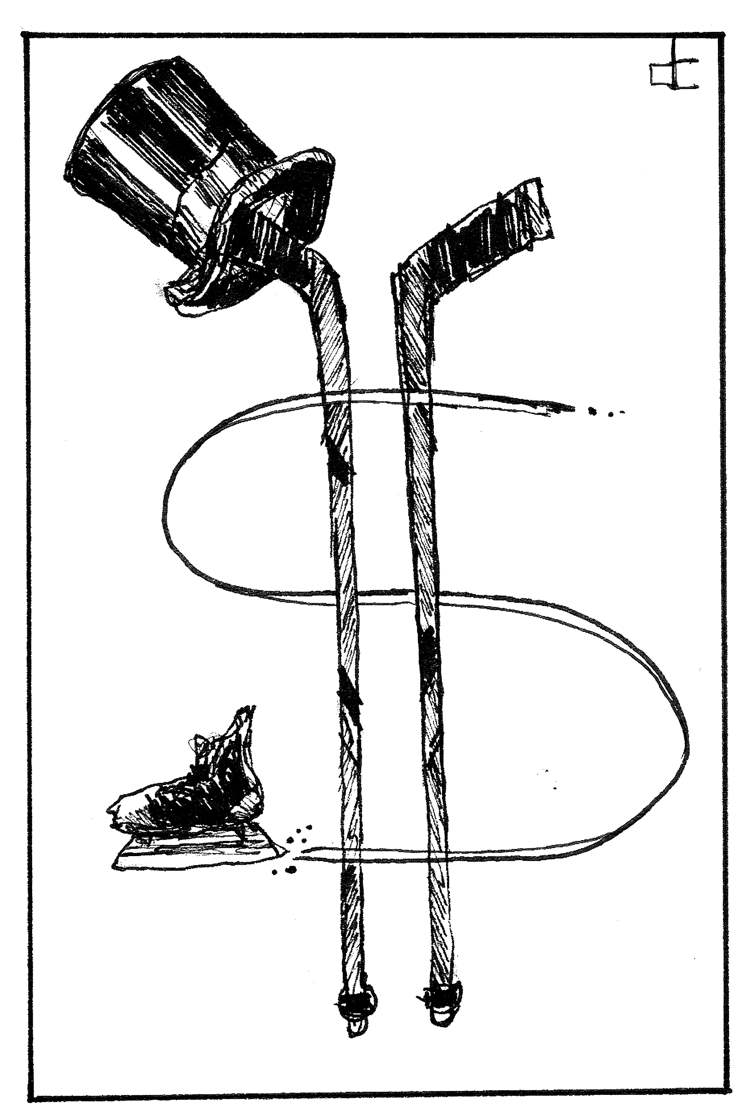
In the last days before the lockout deadline, the league and the players association did not even go through the motions of trying to reach an agreement. No all-night bargaining sessions. No appeals for third-party intervention. Neither side was desperate to reach an agreement. Many of the players have attractive offers from European hockey leagues. The owners have other businesses and will not be troubled by an interruption of hockey income. Both sides know the fans will be back begging for arena seats and hockey apparel once the dispute is settled. The loss of a few months or a whole season is a small thing for the parties to the dispute. It’s hard on the businesses that have grown up on the periphery of the hockey economy, but they have no say in the matter.
Seven years ago, after the last lockout, league revenue was $2.2 billion. Since then, ticket prices have been raised, which accounts for part of the revenue growth. But a promising avenue for growth is to move struggling franchises out of weak markets such as Long Island and Columbus and bring them before fans who are willing to pay, such as those in Hamilton, Quebec and perhaps Seattle.

Continued growth of hockey will come from the small-market teams such as Winnipeg. But the Jets, with annual revenues of $71 million, need a level playing field on which to meet the wealthiest teams such as the Canucks, with $146 million, the Canadiens with $165 million, the Rangers with $169 million and the Leafs with $193 million. Hockey does not have to achieve the kind of equality the Occupy movement dreams of, but it does have to show potential franchisees in smaller markets that they can hire some top talent and offer their fans a thrilling evening and the occasional winning season.
While the NHL and the players’ association wrestle with that problem, the Canadian Hockey League and the Manitoba Junior Hockey League have the chance to remind fans that there’s plenty of excellent hockey every Saturday night all over this country.
Related Articles
European leagues beckon
Advertisement Advertise With Us
Advertisement Advertise With Us