

Chiefs sign deal for casino
U.S. firm to manage, build Spirit Sands
Advertisement
Read this article for free:
or
Already have an account? Log in here »
To continue reading, please subscribe:

Digital Subscription
One year of digital access for only $205*
- Enjoy unlimited reading on winnipegfreepress.com
- Read the E-Edition, our digital replica newspaper
- Access News Break, our award-winning app
- Play interactive puzzles
*First annual payment billed as $205.00 + GST for one year. This annual subscription will automatically renew at $233.00 + GST every 52 weeks (10% off the regular annual price of $259.35). Offer available to new and qualified returning subscribers only. Cancel any time.
To continue reading, please subscribe:
Add Free Press access to your Brandon Sun subscription for only an additional
$1 for the first 4 weeks*
- Enjoy unlimited reading on winnipegfreepress.com
- Read the E-Edition, our digital replica newspaper
- Access News Break, our award-winning app
- Play interactive puzzles
*Your next Brandon Sun subscription payment will increase by $1.00 and you will be charged $17.95 plus GST for four weeks. After four weeks, your payment will increase to $24.95 plus GST every four weeks.
Read unlimited articles for free today:
or
Already have an account? Log in here »
Hey there, time traveller!
This article was published 02/11/2012 (5066 days ago), so information in it may no longer be current.
The Assembly of Manitoba Chiefs says a deal it signed with a Minnesota company to build and manage a First Nations casino in western Manitoba will be good for all the province’s aboriginal people.
Chief David Crate of the Fisher River Cree Nation said Thursday the deal with Hemisphere Gaming to develop the Spirit Sands Casino at Carberry includes a management fee system that’s “quite reasonable.”
Hemisphere Gaming will finance, develop and manage the Spirit Sands project for 10 years.
“If everything goes as planned, once the casino is completed and operational, we’ll be seeing distribution to the First Nations communities in year one,” said Crate, co-chairman of the assembly’s gaming committee.
Profits from the province’s third aboriginal casino are to be divided equally among the province’s 64 aboriginal bands. A conservative estimate is they will each receive $60,000 per year initially and more as the casino expands.
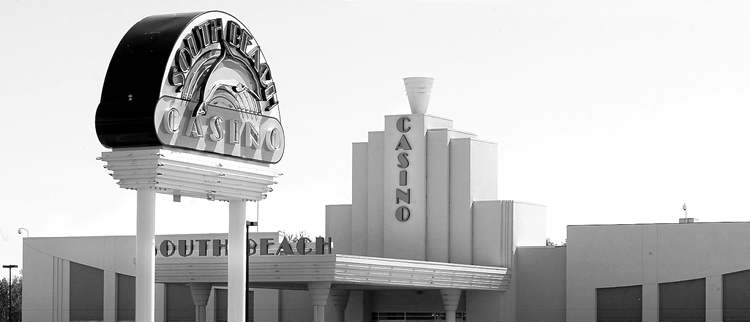
Crate said Hemisphere has a proven track record of managing the South Beach Casino on the Brokenhead First Nation north of Winnipeg, which opened in the spring of 2005.
“They’re familiar with the gaming market in Manitoba,” he said. “They also did a good job with the Brokenhead development. Plus they’re known to Manitoba Lotteries Corporation, so that has actually sped up the process here.”
Hemisphere earned management fees of $4.6 million at South Beach Casino in 2011-12, according to financial statements filed annually with the Manitoba Gaming Control Commission. Seven bands split $7.1 million as limited partners, with 14 remote bands each seeing payouts of $87,500.
“We felt comfortable with the fees that we identified as part of the management agreement,” Crate said. “We thought they were reasonable.”
Under the agreement, it’s possible for the AMC to renegotiate the deal after three years, he said.
It’s hoped ground will be broken for the project in the spring, he said.
The Spirit Sands Casino will be on the Swan Lake First Nation and will employ about 150 people when it’s fully operational late next year. Its cost is estimated at about $15 million for construction and the first year of operation.
Future plans for the casino and resort, to be built near Spruce Woods Provincial Park, include a 100-room hotel, two restaurants, a convention centre and entertainment facility and a golf course.
“We are delighted to be entrusted with bringing the Spirit Sands project to fruition,” Hemisphere president Ali Alizadeh told the Brandon Sun. “We are confident we can deliver an exciting destination casino that will benefit not just the First Nations owners but also the Carberry area.”
Under a 20-year provincial gaming agreement, the casino will hold as many as 600 slot machines, Crate said. In the first year, 450 slot machines will be installed. Up to 12 gaming tables will also be installed.
“If the market supports more machines, then we’ll be able to do over and above the 600,” he added.
Two more aboriginal casinos are on the drawing board for Manitoba under an agreement the AMC negotiated with the province several years ago. The first, the Aseneskak Casino near The Pas, opened in February 2002.
bruce.owen@freepress.mb.ca
South Beach Casino by the numbers
$43,518,608 in total revenue in 2011-12
$33,560,179 in total expenses
$9,958,429 earnings before interest and amortization
$2,851,009 interest expense, depreciation and amortization

$7,107,420 net earnings
Net earnings are split equally among the casino’s limited partners: Brokenhead First Nation, Hollow Water First Nation, Black River First Nation, Poplar River First Nation, Little Grand Rapids First Nation, Pauingassi First Nation and Bloodvein First Nation.
14 remote First Nations receive an annual amount of $87,500 for a total annual payment of $1,225,000. The payments occur on Sept. 30 of each year for an eight-year period commencing on Sept. 30, 2009, and ending Sept. 30, 2016.
Paid management fees of $4,681,962 in 2011-12 (2010-11: $4,273,963)
— source: 2012 financial statement for South Beach Casino ending March 31