

Selinger ranked worst fiscal manager among premiers: think-tank
Advertisement
Read this article for free:
or
Already have an account? Log in here »
To continue reading, please subscribe:

Digital Subscription
One year of digital access for only $205*
- Enjoy unlimited reading on winnipegfreepress.com
- Read the E-Edition, our digital replica newspaper
- Access News Break, our award-winning app
- Play interactive puzzles
*First annual payment billed as $205.00 + GST for one year. This annual subscription will automatically renew at $233.00 + GST every 52 weeks (10% off the regular annual price of $259.35). Offer available to new and qualified returning subscribers only. Cancel any time.
To continue reading, please subscribe:
Add Free Press access to your Brandon Sun subscription for only an additional
$1 for the first 4 weeks*
- Enjoy unlimited reading on winnipegfreepress.com
- Read the E-Edition, our digital replica newspaper
- Access News Break, our award-winning app
- Play interactive puzzles
*Your next Brandon Sun subscription payment will increase by $1.00 and you will be charged $17.95 plus GST for four weeks. After four weeks, your payment will increase to $24.95 plus GST every four weeks.
Read unlimited articles for free today:
or
Already have an account? Log in here »
Hey there, time traveller!
This article was published 06/12/2012 (5037 days ago), so information in it may no longer be current.
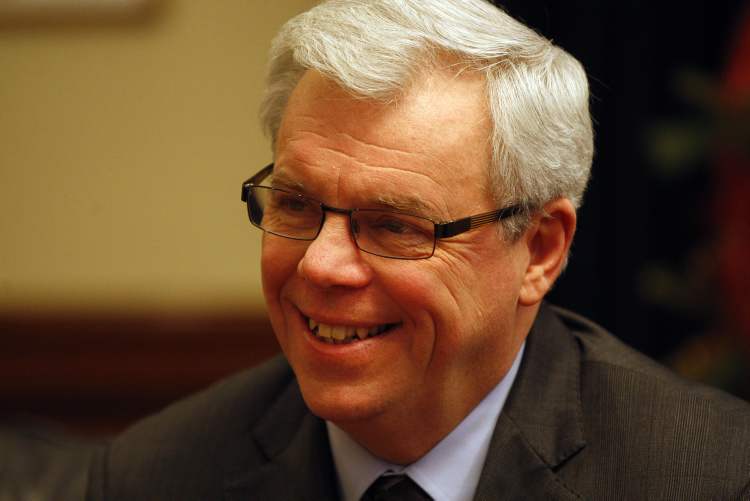
Manitoba premier Greg Selinger was ranked as the worst fiscal manager among provincial premiers in a new report released today by the Fraser Institute, Canada’s leading public policy think-tank.
Premier Kathy Dunderdale of Newfoundland and Labrador was ranked first as having governed with the best fiscal policy among 10 provincial premiers.
The report, called Measuring the Fiscal Performance of Canada’s Premiers 2012, is an assessment of how Canada’s premiers have managed the public finances of their provinces.
The 10 premiers, including eight current and two former premiers, were ranked on the three fiscal policy components of government spending, taxes, and debt and deficits.
Overall, Greg Selinger (Manitoba) was ranked last with a score of 19.2 out of a possible 100.
Dunderdale ranked first overall with a score of 71.4 out of 100 with David Alward of New Brunswick ranked second with a score of 70.4 and Saskatchewan’s Brad Wall was third with a score of 61.6.
Selinger was last overall with a score of 0.0 out of 100 in the component of government spending. This category reflected premiers who increased spending faster than economic growth and the rate needed to compensate for inflation and population growth.
Selinger was sixth in the taxes component scoring 44.8 and he was ranked last in tackling debt and deficits with a score of 12.7, both out of a possible 100.
“The pursuit of sound fiscal policy by our premiers is an important foundation for improving our economic well-being,” said Charles Lammam, Fraser Institute economist and co-author of the report, said in a media release.
“Sound fiscal policy means premiers have to manage government spending prudently, balance budgets, and avoid imposing a tax burden so heavy that it becomes a disincentive for people to work hard, save, invest, and be entrepreneurial. The economic record shows clearly that these factors help foster economic growth and prosperity.”
Each premier’s performance was measured over the time he or she held office up to the most recent year with available historical data (fiscal year 2011/12).
To see the full report click here.
A spokesman for Selinger said the report takes a limited look at Manitoba for two years: the year before and the year of the 2011 flood — a year he says the Manitoba government spent more than $1 billion for flood fighting and recovery.
Matt Williamson, associate director of Cabinet Communications, also said the rankings of provinces based on the current premier’s tenure is inherently faulty.
He said for some provinces (AB, ON, QC and PEI) it captures a period that preceded the economic downturn in 2008-09 after which the pace of tax reductions abated, and in the case of other provinces (BC, NB and NL) only one year (2011-12) is captured.
“Using the wildly divergent length of term for each of the premiers introduces significant analytical issues as their tenures will have covered different portions of the economic cycle and faced very different fiscal concerns; rendering relative analysis of their performances an “apples and oranges” comparison,” Williamson said in an email.
The Fraser Institute’s report was fodder for the Progressive Conservative Opposition in question period today, the last of the fall session. The house reconvenes when the NDP tables its new budget sometime this spring.

PC Leader Brian Pallister said the report was an indication of how poorly the Selinger government controls the province’s purse strings.
He also called on Selinger to come clean with Manitobans and say when his government will bring the province out of deficit. The government had first said by 2014, but more recently has said it may take them longer.
In his defence, Selinger said the Fraser Institute’s report covered the 2011 flood, which the province has said has so far cost more than $1 billion although under a cost-sharing formula, Ottawa will pick up some of those costs.
“We make no apology for spending the money on people affected by the flood,” Selinger said in the house.
After running up a $1-billion deficit in 2011-2012, due largely to the flood, the government projected a $460-million deficit for the current fiscal year. This past spring, the NDP projected a $176-million deficit for 2013-2014 and a small surplus in 2014-2015.
History
Updated on Thursday, December 6, 2012 12:10 PM CST: adds reaction criticizing report
Updated on Thursday, December 6, 2012 2:49 PM CST: updates with coverage of question period