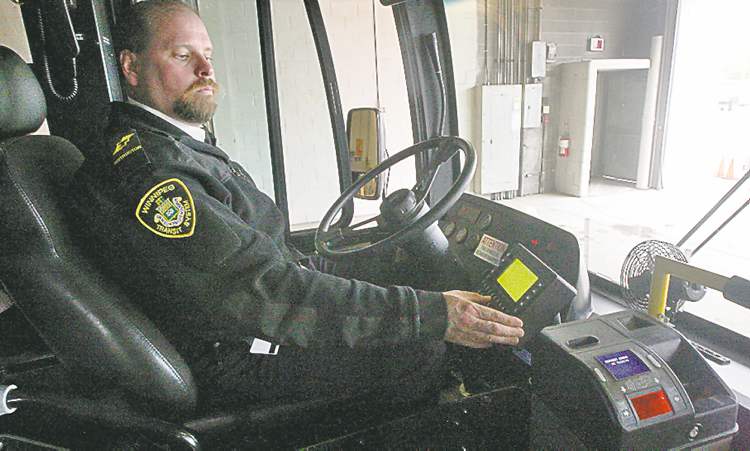
City buses get electronic fare boxes
Advertisement
Read this article for free:
or
Already have an account? Log in here »
To continue reading, please subscribe:
Digital Subscription
One year of digital access for only $1.44 a week*
- Enjoy unlimited reading on winnipegfreepress.com
- Read the E-Edition, our digital replica newspaper
- Access News Break, our award-winning app
- Play interactive puzzles
*Billed as $5.77 plus GST every four weeks. After 52 weeks, price increases to the regular rate of $19.95 plus GST every four weeks. Offer available to new and qualified returning subscribers only. Cancel any time.
To continue reading, please subscribe:
Add Free Press access to your Brandon Sun subscription for only an additional
$1 for the first 4 weeks*
- Enjoy unlimited reading on winnipegfreepress.com
- Read the E-Edition, our digital replica newspaper
- Access News Break, our award-winning app
- Play interactive puzzles
*Your next Brandon Sun subscription payment will increase by $1.00 and you will be charged $17.95 plus GST for four weeks. After four weeks, your payment will increase to $24.95 plus GST every four weeks.
Read unlimited articles for free today:
or
Already have an account? Log in here »
Hey there, time traveller!
This article was published 31/05/2013 (4752 days ago), so information in it may no longer be current.
THE first of Winnipeg Transit’s long-awaited electronic fare boxes will go online this morning.
Eight of the utility’s 565 buses have been equipped with the $20,000 machines that accept coins, issue transfers and, late this year, will begin reading programmable smart cards that will replace paper passes.
All Winnipeg Transit buses will have the new fare boxes by early July, said Tony Dreolini, the utility’s plant and equipment manager. The machines issue new, smaller transfers with time stamps and QR codes. They do not accept pennies and paper money.
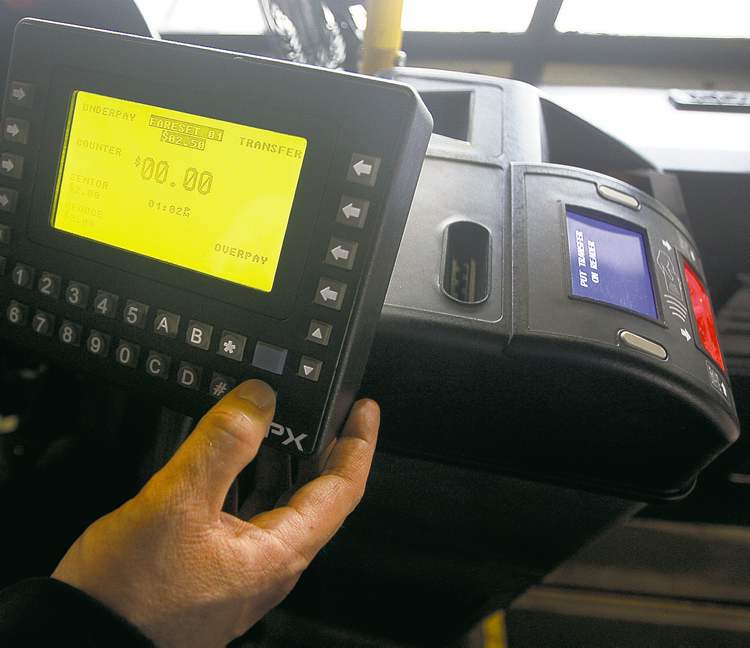
The smart-card readers will go online by December. Before they do, transfers and tickets will be accepted manually and riders with paper passes may continue to show them to drivers.
The entire technological upgrade, originally envisioned in 2003, cost $17.7 million.

Transit users will be able to reload the smart cards on the Internet, by phone or in person at retail stores.
Bus passengers will only have to tap the cards on the new readers, which will be programmed to only count a single fare in the event the cards are mistakenly tapped twice.