

Swim-and-scratch season here
Advertisement
Read this article for free:
or
Already have an account? Log in here »
To continue reading, please subscribe:
Monthly Digital Subscription
$0 for the first 4 weeks*
- Enjoy unlimited reading on winnipegfreepress.com
- Read the E-Edition, our digital replica newspaper
- Access News Break, our award-winning app
- Play interactive puzzles
*No charge for 4 weeks then price increases to the regular rate of $19.95 plus GST every four weeks. Offer available to new and qualified returning subscribers only. Cancel any time.
Monthly Digital Subscription
$4.99/week*
- Enjoy unlimited reading on winnipegfreepress.com
- Read the E-Edition, our digital replica newspaper
- Access News Break, our award-winning app
- Play interactive puzzles
*Billed as $19.95 plus GST every four weeks. Cancel any time.
To continue reading, please subscribe:
Add Free Press access to your Brandon Sun subscription for only an additional
$1 for the first 4 weeks*
*Your next subscription payment will increase by $1.00 and you will be charged $16.99 plus GST for four weeks. After four weeks, your payment will increase to $23.99 plus GST every four weeks.
Read unlimited articles for free today:
or
Already have an account? Log in here »
Hey there, time traveller!
This article was published 10/07/2013 (4564 days ago), so information in it may no longer be current.
It’s as inevitable as the sun rising on a summer day. Swimmer’s itch is back at Manitoba’s lakes.
Cases of swimmer’s itch have been confirmed in the past week at Winnipeg Beach and Moose Lake Provincial Park.
This occurs when humans choose to swim where animals and plants live.
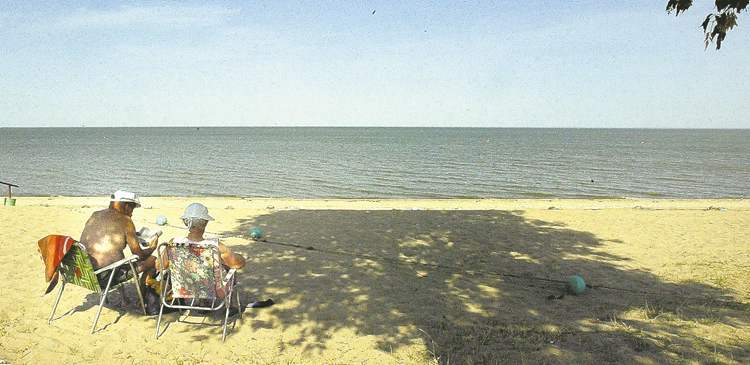
“It’s a natural phenomenon. It happens fairly regularly in a number of Manitoba lakes, so it’s really not unusual. It happens every year,” said Nicole Armstrong, director of Manitoba Conservation and Water Stewardship’s water science and management branch.
There are swimmer’s-itch reports from three to 17 lakes a year in Manitoba.
Advisory signs have been posted at Winnipeg Beach and Moose Lake park and will remain up all summer.
“We can’t test for swimmer’s itch, so it’s impossible to know if it has completely cleared the area, so we find the signs give the public some basic information,” Armstrong said.
She said the province’s protocol is to post advisory signs when even one case has been confirmed by a medical professional.
Swimmer’s itch manifests as an itchy red rash that shows up after swimming in water containing the parasite that causes it.
The parasite is a worm that originates in the intestines of waterfowl and aquatic mammals such as beavers. Its eggs are passed into the water through the host creature’s feces.
After a short stay with snails, the eggs hatch into worms that seek out the waterfowl or aquatic mammal host. People get swimmer’s itch when these worms, or cercariae, penetrate the skin. The worms die soon after.
Swimmer’s itch usually shows up in hot weather, as warm water assists in the parasites’ development. It’s more common in lakes where there are a lot of aquatic plants, as that’s the home of the parasite-carrying snails. For that reason, Armstrong said, it’s rarer in Lake Winnipeg.

“We don’t typically see swimmer’s itch at large Winnipeg beaches where there are not aquatic plants, because snails really like weeds and aquatic plants and they are a critical part of the life cycle (of the parasite). If we don’t have snails, we don’t have swimmer’s itch,” she said.
To prevent swimmer’s itch, avoid going in the water if it has occurred there.
Rinse off right after being in the water and vigorously towel the water from the skin.
There are showers on many Manitoba beaches, such as Winnipeg Beach and Grand Beach.
ashley.prest@freepress.mb.ca
History
Updated on Wednesday, July 10, 2013 7:35 AM CDT: adds fact box, adds link