

Empathy for a shattered mind

Advertisement
Read this article for free:
or
Already have an account? Log in here »
To continue reading, please subscribe:
Digital Subscription
One year of digital access for only $1.44 a week*
- Enjoy unlimited reading on winnipegfreepress.com
- Read the E-Edition, our digital replica newspaper
- Access News Break, our award-winning app
- Play interactive puzzles
*Billed as $5.77 plus GST every four weeks. After 52 weeks, price increases to the regular rate of $19.95 plus GST every four weeks. Offer available to new and qualified returning subscribers only. Cancel any time.
To continue reading, please subscribe:
Add Free Press access to your Brandon Sun subscription for only an additional
$1 for the first 4 weeks*
- Enjoy unlimited reading on winnipegfreepress.com
- Read the E-Edition, our digital replica newspaper
- Access News Break, our award-winning app
- Play interactive puzzles
*Your next Brandon Sun subscription payment will increase by $1.00 and you will be charged $17.95 plus GST for four weeks. After four weeks, your payment will increase to $24.95 plus GST every four weeks.
Read unlimited articles for free today:
or
Already have an account? Log in here »
Hey there, time traveller!
This article was published 03/08/2013 (4680 days ago), so information in it may no longer be current.
The human brain is a wonderful machine, but like all machines, it can break, and sometimes the shrapnel of a breaking mind rips out tragedy.
Sometimes, we understand this with all the depth of our empathy, even when the facts scratch the limits of comprehension. I am a psychologist’s daughter, so perhaps it’s natural to me to understand consciousness as fallible, but it is in our law as well. We observe the difference between a mind that can intend to harm, and a mind shattered in a storm that no one else can see, empty of intent and gripped by what was once called “insanity.”
If we’ve lived long enough, hurt enough, weathered our own storms enough, sometimes we think — it could have been me.
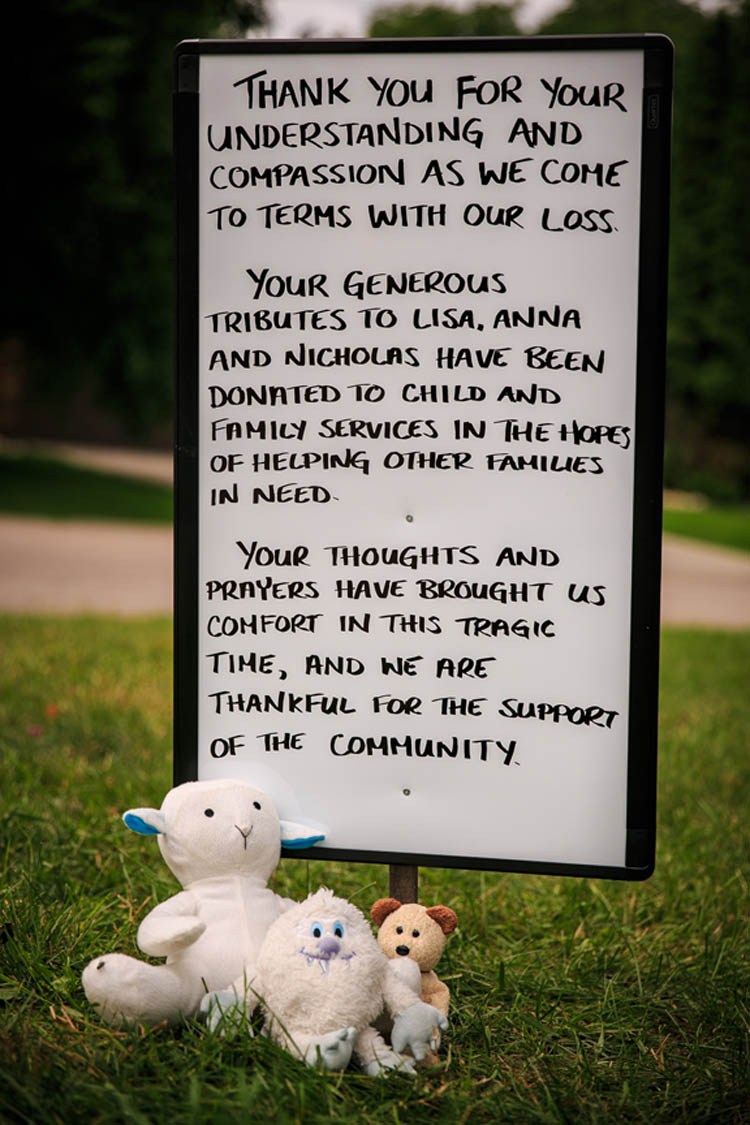
So when a mother fled a Westwood home, her two children lifeless and only the river left to bear witness to what final thing she may have said or done, for the most part we understood. Before police said much of anything about Lisa Gibson, we knew. Before Free Press reporter Mike McIntyre confirmed that Gibson had been diagnosed with postpartum illness days before the tragedy, that was what we guessed.
We guessed it was that nature of illness, and then some of us wept, because for some of us it struck close enough to home.
Oh, most of the weight of this tragedy is intensely private, pushed so suddenly on one family’s shoulders, and those of Gibson’s friends and all who knew and loved her. In the final accounting, the deaths may go down as a double homicide, but the public is not and never was in danger. So for those who never knew the people involved, our right to the story only goes as far as what it can tell us about ourselves.
Above all else, the first lesson is this: Sometimes, there are no villains. Sometimes everything just goes very, very wrong.
Recognizing that, the public response to last week’s news was rich with nuance, shaded in grey. Neighbours gathered at vigils to share words welling up from empathy. Police tiptoed the line of information gently, emphasizing that they hoped to locate Lisa Gibson safe and sound, just to talk. Reporters interviewed experts about postpartum depression and postpartum psychosis. Thousands of people talked about it with each other, and shared crisis support links on Twitter.
It is not to minimize the sadness of it to say all of this sensitivity was a little beautiful to see.
And yet against all the thoughtful softness pulled the tension of a sharper question: How much of that public empathy was specific to the situation? In other words: How would the public response have been different if the person who fled into the river did not look like Lisa Gibson?
What if the police tape that rose in Westwood was instead wrapped around a North End rooming house, where a mother lived alone and brought her new baby home to poverty? What if she was not white? What if the body in the water was a father, and what if his diagnosis days before the deaths was schizophrenia? What if it was someone else entirely, not the children’s parent but a stranger — one no less sick, and every bit as suffering?
These are not rhetorical questions. They are an exercise to explore the knotted cords of our own incredible but flawed machine-minds.
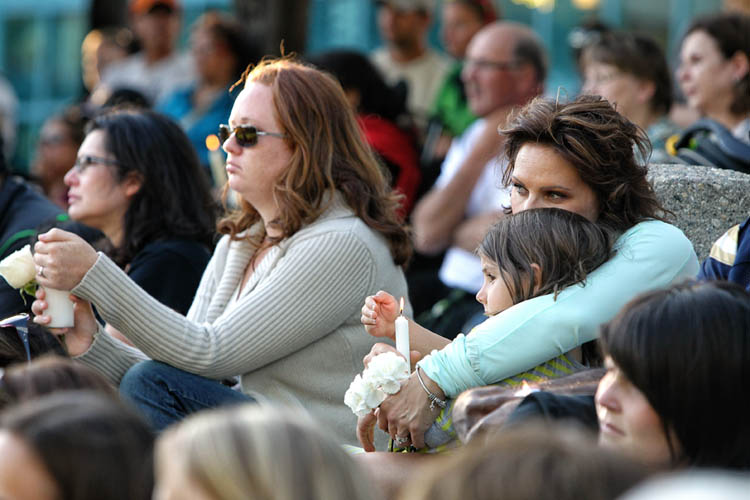
To put it bluntly, there are assumptions hung on certain social privileges that shape who we are drawn to care for, and who just makes us afraid.

This is not hypothetical. In this city, we have seen incredible public anger directed at one extremely sick person who killed a man on a bus — a rage now largely (and rightfully) spared from the memory of a middle-class white mother. The incidents were very different, but their architecture was more or less the same: a shattered mind driving a body to the unthinkable, leaving a very public trail of intensely private pain.
So the story often goes.
I don’t know. All I have is this: I wish for Lisa Gibson and her children peace, after whichever fashion in which she believed. For her family, I wish the grace to face what she left — and didn’t leave — behind. And for the rest of us, I hope we can see how we saw this tragedy through the depths of our empathy, and how we can do the same for every sick and suffering mind.
melissa.martin@freepress.mb.ca
Melissa Martin
Reporter-at-large
Melissa Martin reports and opines for the Winnipeg Free Press.
Every piece of reporting Melissa produces is reviewed by an editing team before it is posted online or published in print — part of the Free Press‘s tradition, since 1872, of producing reliable independent journalism. Read more about Free Press’s history and mandate, and learn how our newsroom operates.
Our newsroom depends on a growing audience of readers to power our journalism. If you are not a paid reader, please consider becoming a subscriber.
Our newsroom depends on its audience of readers to power our journalism. Thank you for your support.
Melissa Martin
Reporter-at-large
Melissa Martin reports and opines for the Winnipeg Free Press.
Every piece of reporting Melissa produces is reviewed by an editing team before it is posted online or published in print — part of the Free Press‘s tradition, since 1872, of producing reliable independent journalism. Read more about Free Press’s history and mandate, and learn how our newsroom operates.
Our newsroom depends on a growing audience of readers to power our journalism. If you are not a paid reader, please consider becoming a subscriber.
Our newsroom depends on its audience of readers to power our journalism. Thank you for your support.
Advertisement Advertise With Us
Advertisement Advertise With Us