

A treasure trove of artifacts
Archeological dig offers exciting historical insight
Advertisement
Read this article for free:
or
Already have an account? Log in here »
To continue reading, please subscribe:
Digital Subscription
One year of digital access for only $1.44 a week*
- Enjoy unlimited reading on winnipegfreepress.com
- Read the E-Edition, our digital replica newspaper
- Access News Break, our award-winning app
- Play interactive puzzles
*Billed as $5.77 plus GST every four weeks. After 52 weeks, price increases to the regular rate of $19.95 plus GST every four weeks. Offer available to new and qualified returning subscribers only. Cancel any time.
To continue reading, please subscribe:
Add Free Press access to your Brandon Sun subscription for only an additional
$1 for the first 4 weeks*
- Enjoy unlimited reading on winnipegfreepress.com
- Read the E-Edition, our digital replica newspaper
- Access News Break, our award-winning app
- Play interactive puzzles
*Your next Brandon Sun subscription payment will increase by $1.00 and you will be charged $17.95 plus GST for four weeks. After four weeks, your payment will increase to $24.95 plus GST every four weeks.
Read unlimited articles for free today:
or
Already have an account? Log in here »
Hey there, time traveller!
This article was published 29/08/2013 (4662 days ago), so information in it may no longer be current.
Hundreds of years before the first Europeans set foot in Manitoba, what’s now Winnipeg appears to have been a much busier place than archeologists and historians ever imagined.
An archeological dig conducted at the site of the Canadian Museum for Human Rights has revealed one of the largest concentrations of pre-European encampments anywhere in Canada.
A block excavation of land below the CMHR at The Forks — as well as archeological monitoring conducted during the four-year construction of the museum — uncovered 191 separate hearths and approximately 400,000 artifacts, museum officials and contracted archeologists announced on Wednesday.
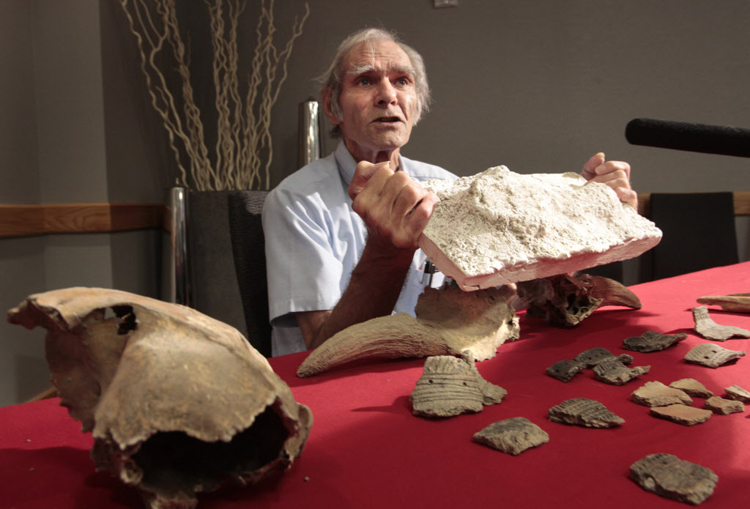
This finding suggests the heart of Winnipeg was more than just an occasional meeting and gathering place for the indigenous inhabitants of the Red River Valley 600 to 900 years ago, a time frame regarded by scholars as the Late Woodland Period.
It also further aligns the academic picture of early Manitoban history with First Nations oral history, as the excavation also yielded firm evidence of long-distance trade, more evidence of indigenous agriculture and a suggestion of an Anishinabe presence in the Red River Valley centuries earlier than academics previously believed.
“This adds a couple of paragraphs to a largely empty book about the history of Western Canada,” said archeologist Sid Kroker, who led the block excavation of about two per cent of the museum site.
The three-metre-deep dig uncovered eight layers of settlement between the years 1100 and 1400, based on radiocarbon dating. The integrity of the upper layers of the excavation site were destroyed by railway development, mostly obliterating any record of the fur trade era.
The remains of a horse that was likely used as a draft animal in an 1840s Hudson’s Bay Company experimental farm was one of the only significant findings from the post-contact period, said Mirielle Lamontagne, the museum’s education-programming manager.
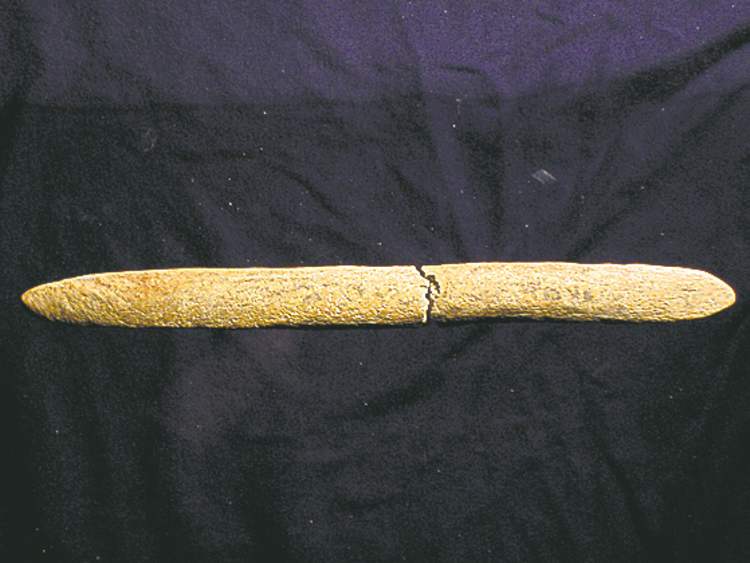
Artifacts from the pre-contact period included tools made of stone, bone, sinew and shell, including some constructed from materials gathered hundreds of kilometres from The Forks.
Some of the stone tools — or “lithics” to archeologists — were made of Knife River flint from central North Dakota and Denbigh chert from the north shore of Lake Winnipegosis. Archeologists also recovered an Oneida-culture pipe similar to those fashioned thousands of kilometres to the southeast at the time, in what’s now the United States.
The dig also revealed hoe fragments and residues of both beans and maize, two of the three main crops grown by Mississippian peoples in pre-European times. Lamontagne said it is not clear whether agriculture was actually practised at The Forks or whether agricultural implements and crops were carried to the Red River Valley.
But this discovery adds to the evidence agriculture was practised in the area: The Kenosewun site at Lockport has revealed the presence of maize, corn and beans in the Red River Valley in the early 1400s.
Archeologists are even more excited by the recovery of shards of pottery bearing features of both the woodland Rainy River culture and plains-based Blackduck ceramics culture. This find is crucial because it suggests the intermingling of people or an exchange of cultural ideas between two broad cultural groupings that may have been the antecedents of Siouian and Anishinabe culture.
When La Verendrye became the first European to set foot at what’s now The Forks in 1738, he encountered the Siouian-speaking Nakoda, also known as the Assiniboine, and the Athapaskan-speaking Cree. Western academics believed the Ojibway — a subgrouping of the broader Anishinabe people — did not venture into Manitoba until the 1790s.
The presence of Rainy River-style pottery at the Red River Valley before 1400 could place Anishinabe in Manitoba centuries earlier, as Ojibway have always maintained, based on oral history.

“We’ve always known we were here,” said Barb Nepinak, an Ojibway elder who attended Wednesday’s announcement and blessed it with a traditional prayer. The alignment of archeology with oral history offers nothing in the way of validation, she said, adding it’s not important for academia to discern the precise identity of the people who lived at The Forks in pre-contact times.
Doing so is almost impossible, regardless. Lamontagne and Kroker said inferences about identity cannot be made from artifacts alone. They also said no evidence of human burial sites were discovered, although two human footprints were uncovered, including one impression left by a moccasin.
The excavation also positively identified the presence of at least three animal species no longer found in the Red River Valley: sturgeon, which were fished out a century ago; pronghorn antelope, which only make rare forays into southwestern Manitoba today; and bighorn sheep, now entirely extirpated from the province.
All of the recovered artifacts are now the property of the province, which will decide what to do with the collection, said CMHR president and CEO Stuart Murray.
bartley.kives@freepress.mb.ca
History
Updated on Thursday, August 29, 2013 6:26 AM CDT: Replaces photo, adds slideshow