

NDP hit by tax-hike backlash
PCs likely to gain thanks to unpopular increase
Advertisement
Read this article for free:
or
Already have an account? Log in here »
To continue reading, please subscribe:
Digital Subscription
One year of digital access for only $1.44 a week*
- Enjoy unlimited reading on winnipegfreepress.com
- Read the E-Edition, our digital replica newspaper
- Access News Break, our award-winning app
- Play interactive puzzles
*Billed as $5.77 plus GST every four weeks. After 52 weeks, price increases to the regular rate of $19.95 plus GST every four weeks. Offer available to new and qualified returning subscribers only. Cancel any time.
To continue reading, please subscribe:
Add Free Press access to your Brandon Sun subscription for only an additional
$1 for the first 4 weeks*
- Enjoy unlimited reading on winnipegfreepress.com
- Read the E-Edition, our digital replica newspaper
- Access News Break, our award-winning app
- Play interactive puzzles
*Your next Brandon Sun subscription payment will increase by $1.00 and you will be charged $17.95 plus GST for four weeks. After four weeks, your payment will increase to $24.95 plus GST every four weeks.
Read unlimited articles for free today:
or
Already have an account? Log in here »
Hey there, time traveller!
This article was published 07/10/2013 (4627 days ago), so information in it may no longer be current.
Manitobans, including some New Democrats, think the PST hike was unnecessary, and many say they plan to vote that way in the next provincial election.
A new Probe Research poll done for the Winnipeg Free Press found 65 per cent of Manitobans aren’t buying Premier Greg Selinger’s argument the PST hike was needed to maintain key public services and repair infrastructure. Instead, most side with the Progressive Conservative Opposition, which has hammered the NDP over the recent one-point hike, saying the province ought to do a better job of managing existing tax revenue.
The new polling figures aren’t surprising — “People like a tax increase about as much as they like root canals,” said Probe’s senior research associate, Curtis Brown.
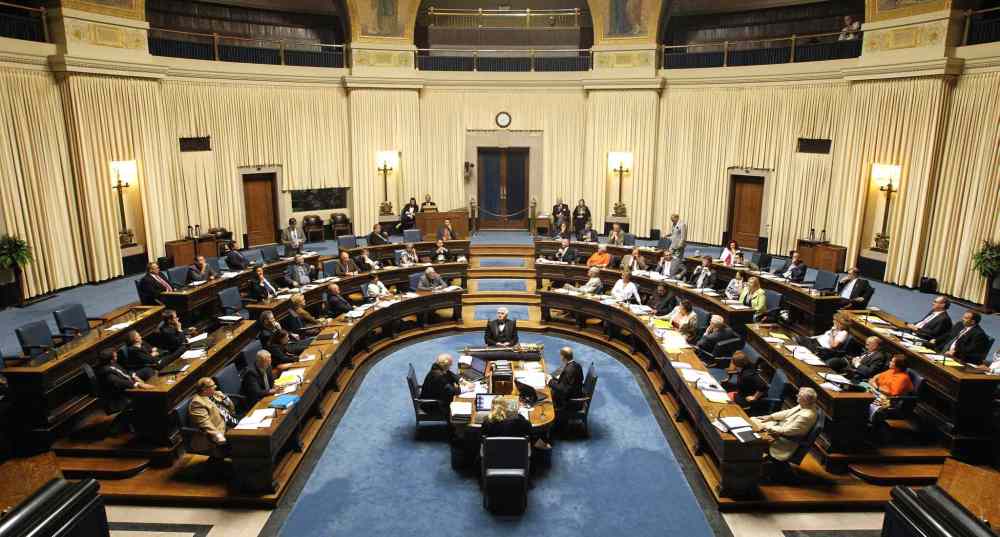
But the poll also carries a warning for the NDP, now halfway through an unprecedented fourth term and facing a stronger Tory Opposition and a Liberal party enjoying a mini-renaissance. Roughly half of those polled who voted NDP in the last election said the tax hike was a bad idea, and about half of all people polled said the tax hike will make them less likely to vote NDP in 2016.
In this year’s budget, the NDP surprised many by reversing a campaign pledge and increasing the PST by one point to eight per cent. The money is earmarked for infrastructure, though exactly what projects will be funded remains murky. The Selinger government has largely failed to offer a clear picture of exactly how much money will be spent on what projects in the coming years, prompting many to criticize not only the party’s decision to raise the PST, but also the way it sold the idea to citizens.
Veteran political scientist Paul Thomas said the public tends to be “blissfully unaware” how government revenues and spending operate or which taxes may be the most effective. Instead, voters often judge tax hikes based on the fairness of the process. In the NDP’s case, not only did Selinger break a campaign promise, he also eliminated legislation mandating a referendum on any tax increases.
“This breaking of a promise and the violation of what was seen as due process for gaining public consent undermine the legitimacy of the action and made it difficult to gain public support for even a ‘small’ tax increase,” said Thomas.
Meanwhile, the Tories continue to enjoy a substantial 14-point lead over the NDP, though a lot can change in the two-plus years before the next provincial election, likely slated for April 2016. Polling numbers between elections tend to be softer, and voters cranky over the PST hike may return to the NDP when a real ballot is placed in front of them.
“That’s the $64,000 question. Will it stick?” said Brown. The party may be able to weather PST anger now, take its lumps and win back some support over the next couple of years, he said.
Thomas agreed, saying specific issues such as the PST matter less during an election than more nebulous ones such as leadership and the general image of the party, despite what people say when pollsters call to ask about a hot topic.

“Under modern conditions, politics is highly volatile and voters are very fickle in their loyalty, which means that short-term events matter more and the barometer of voting intentions can swing widely in a short period of time,” said Thomas.
The new polling figures are in contrast to an online survey Probe conducted in early 2012 for the Association of Manitoba Municipalities, which has long battled for a dedicated sales tax for urban repairs.
Back then, almost two out of three Manitobans supported a one per cent municipal sales tax if funds were earmarked for infrastructure, guaranteed.
maryagnes.welch@freepress.mb.ca
Will the PST hike change your voting habits in the next election? Join the conversation in the comments below.
Manitobans weigh in on the PST hike
The Question
Manitoba’s provincial sales tax was increased from seven to eight per cent on July 1. The provincial NDP government says this sales tax increase was in order to fund important infrastructure projects and to maintain key public services. The Progressive Conservative Opposition, on the other hand, says the provincial government could have avoided this tax increase by doing a better job of managing public funds and spending existing tax dollars more effectively. Which of these two views comes closer to your own?
The Answer
No, the PST increase was not necessary — 65 per cent
Yes, the PST increase was necessary — 27 per cent
Unsure — 8 per cent
The Question
Could you please describe how the increase in the provincial sales tax is likely to influence how you will vote in the next provincial election?
The Answer
More likely to vote NDP — 18 per cent
Less likely to vote NDP — 50 per cent
Depends — 6 per cent
Unsure — 26 per cent
The Poll
Probe Research surveyed 1,002 adults by phone between Sept. 19 and Sept. 28. With a sample that size, one can say with 95 per cent certainty that the results are within +/- 3.1 percentage points of what they would be if the entire adult population of Manitoba had been interviewed.
Party standings
This may be as low as they go.
The NDP’s polling numbers, which have taken a nosedive this year, may have leveled off, says the latest quarterly poll.
Despite a long, hot summer at the Manitoba Legislature, where the Tories staged a political sit-in of sorts over the PST increase and other bills, the NDP’s support hasn’t eroded any more, staying steady at about 29 points.
“The NDP has been on this pretty steep, dipping roller coaster and now it’s leveled off,” said Probe’s Curtis Brown.
The Tories have also seen a small dip, though their support still eclipses that of the NDP by a healthy margin.
TOMORROW: Where are disgruntled New Democrat voters throwing their support? A new Probe poll has some clues.

Advertisement Advertise With Us
Advertisement Advertise With Us
History
Updated on Monday, October 7, 2013 9:22 AM CDT: Corrects that response to "Yes, the PST increase was necessary" was 27 per cent, not 2 per cent