

City budgeting $1M to remove diseased, dying chokecherry trees
Advertisement
Read this article for free:
or
Already have an account? Log in here »
To continue reading, please subscribe:

Digital Subscription
One year of digital access for only $205*
- Enjoy unlimited reading on winnipegfreepress.com
- Read the E-Edition, our digital replica newspaper
- Access News Break, our award-winning app
- Play interactive puzzles
*First annual payment billed as $205.00 + GST for one year. This annual subscription will automatically renew at $233.00 + GST every 52 weeks (10% off the regular annual price of $259.35). Offer available to new and qualified returning subscribers only. Cancel any time.
To continue reading, please subscribe:
Add Free Press access to your Brandon Sun subscription for only an additional
$1 for the first 4 weeks*
- Enjoy unlimited reading on winnipegfreepress.com
- Read the E-Edition, our digital replica newspaper
- Access News Break, our award-winning app
- Play interactive puzzles
*Your next Brandon Sun subscription payment will increase by $1.00 and you will be charged $17.95 plus GST for four weeks. After four weeks, your payment will increase to $24.95 plus GST every four weeks.
Read unlimited articles for free today:
or
Already have an account? Log in here »
Hey there, time traveller!
This article was published 03/12/2013 (4646 days ago), so information in it may no longer be current.
Schubert chokecherry trees are a $500,000 problem for Winnipeg.
The city has designated $1 million to the urban forestry budget in 2014. Approximately half of that money will be spent on the removal of diseased or dying chokecherry trees.
“When I got elected I don’t think I knew what the term Schubert chokecherry was,” Coun. Brian Mayes (St.Vital) said.
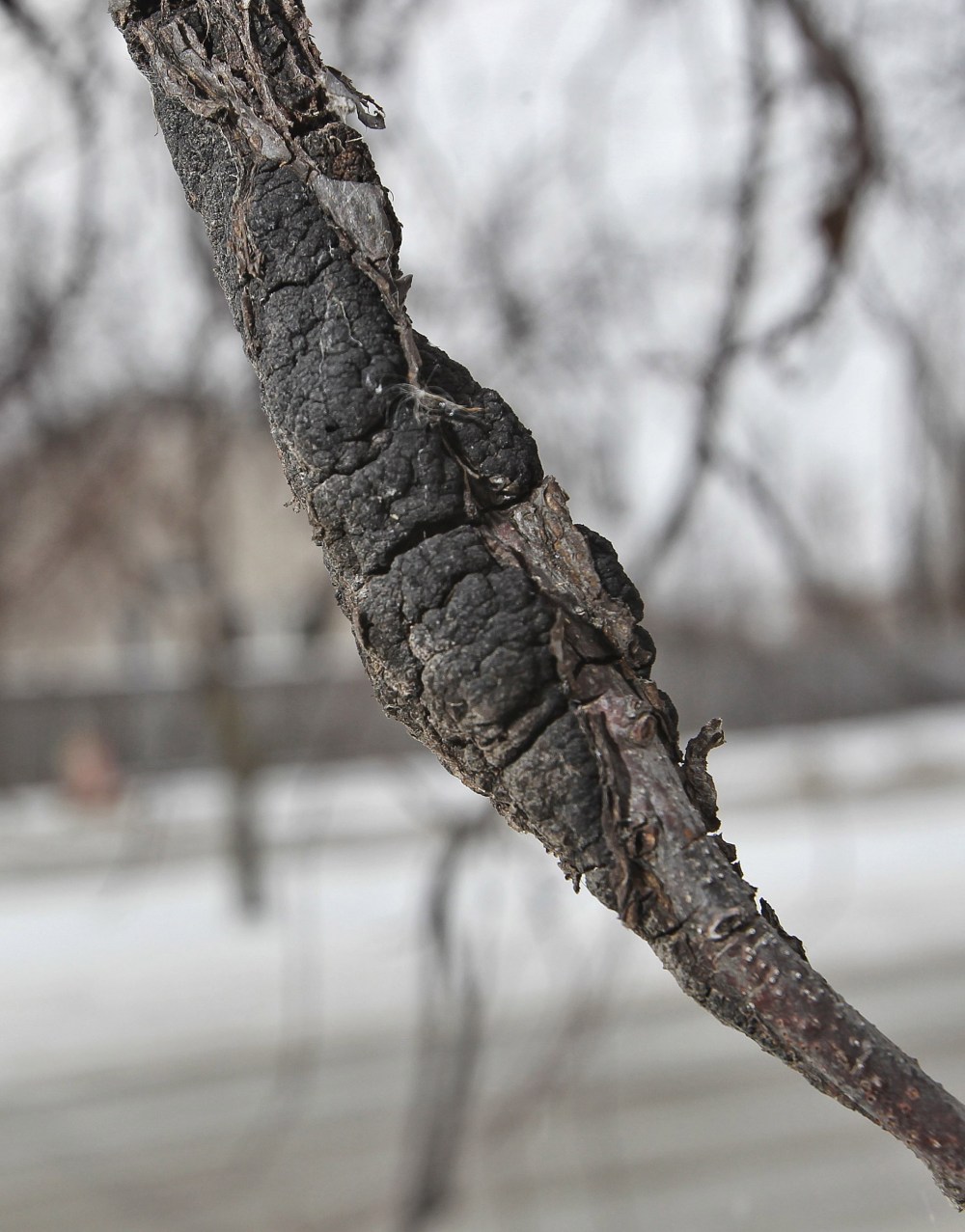
But he is now familiar with the term after two years of receiving comments and complaints from residents about the trees.
Schubert chokecherry trees are prone to a fungal disease called black knot. The disease is widespread across North America and causes black growths on tree branches.
Since 2007, the city has been removing select Schubert chokecherry trees with advanced stages of black knot, as budgets and resources permitted.
Mayes said he wasn’t expecting any room in the 2014 budget to allow for the removal of the trees but is pleased to see the money set aside.
In 2013, the budget allotted $383, 000 for reforestation initiatives. The 2014 preliminary budget is proposing a $617, 000 or 161 per cent increase to that allowance.
Martha Barwinsky, city forester, said the money will translate into hundreds of black knot affected trees being replaced across the city.

“It’s in the areas we have identified as high priorities, where we have the highest rate of infection and the largest volume of Schubert chokecherry trees,” Barwinsky said.
Those areas include Lindenwoods, Richmond West, Dakota Crossing, Norberry, north St. Boniface, Rossmere, Pulberry and Riverbend.
During the 1980s and 1990s Schubert chokecherry trees were rather popular and planted in neighbourhood developments, in parks, and on boulevards.
Aldgate Road in south St. Vital is one area of the city that’s been impacted. The boulevard is dotted with bright green stakes where Schubert chokecherry trees were cut down. The trees will be replaced come spring time.
Winnipeg owns approximately 10,000 Schubert chokecherry trees that are in need of removal. The trees will be replaced with a different species, and diseased trees are being chipped and taken to the Brady Road Landfill.
Related Articles
Councillors not given enough time with budget documents: Gerbasi
Advertisement Advertise With Us
Advertisement Advertise With Us