

A deep respect for facts, readers

Advertisement
Read this article for free:
or
Already have an account? Log in here »
To continue reading, please subscribe:
Digital Subscription
One year of digital access for only $1.44 a week*
- Enjoy unlimited reading on winnipegfreepress.com
- Read the E-Edition, our digital replica newspaper
- Access News Break, our award-winning app
- Play interactive puzzles
*Billed as $5.77 plus GST every four weeks. After 52 weeks, price increases to the regular rate of $19.95 plus GST every four weeks. Offer available to new and qualified returning subscribers only. Cancel any time.
To continue reading, please subscribe:
Add Free Press access to your Brandon Sun subscription for only an additional
$1 for the first 4 weeks*
- Enjoy unlimited reading on winnipegfreepress.com
- Read the E-Edition, our digital replica newspaper
- Access News Break, our award-winning app
- Play interactive puzzles
*Your next Brandon Sun subscription payment will increase by $1.00 and you will be charged $17.95 plus GST for four weeks. After four weeks, your payment will increase to $24.95 plus GST every four weeks.
Read unlimited articles for free today:
or
Already have an account? Log in here »
Hey there, time traveller!
This article was published 20/02/2014 (4488 days ago), so information in it may no longer be current.
John Dafoe was the grandson of a Canadian newspaper giant, who left his own considerable footsteps across the landscape of a profession he had strived for since kindergarten.
Before Dafoe was finished, the shy, award-winning yet humble master of opinion-making had achieved his dream job: editorial editor of the Winnipeg Free Press, the paper his grandfather, John Wesley Dafoe, edited from 1904 to 1944 (then the Manitoba Free Press).
Dafoe died Tuesday night at the age of 83 after battling Parkinson’s disease for several years.
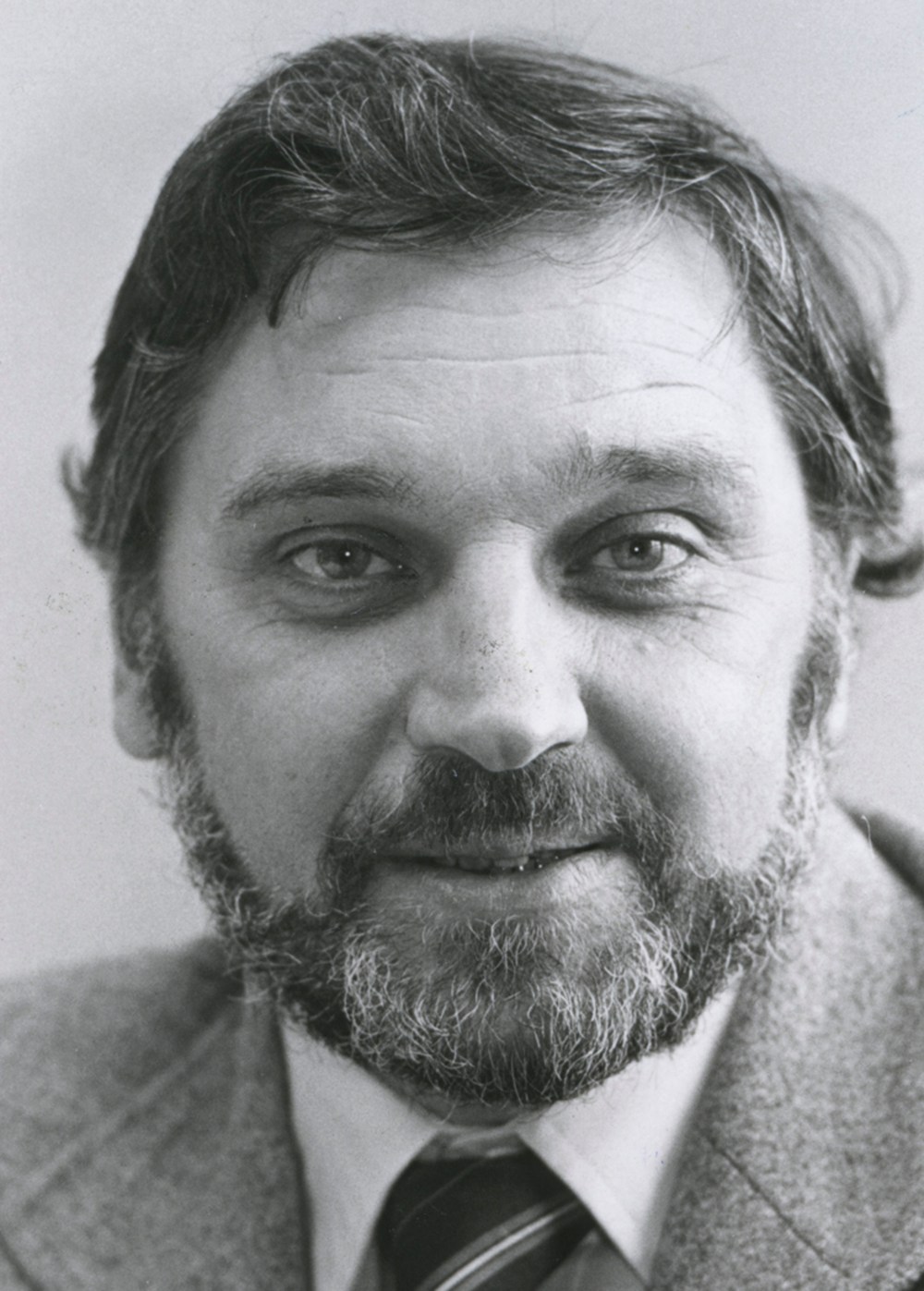
Dafoe’s motto — “Opinion is cheap, facts are sacred” — was the calling card of a career that saw him earn two National Newspaper Awards for editorial writing and another two nominations. But Dafoe was remembered as a newspaperman who based his work on a foundation of respect for colleagues, subjects and readers.
“He was a wonderful friend and mentor,” recalled Jim Carr, who served on the Free Press editorial pages from 1992 to 1997. “He taught me about balance, fairness and reflection, but never to shy away from controversy or boldly advancing an argument. And pay attention to every detail.
“He epitomized more than anyone else… the combination of discernment and persuasion,” Carr added. “He was humble, he was modest. He rarely talked about himself, because what mattered most was the argument. We were in the business of making a case.”
Dafoe had once written he wanted to be a newspaperman — “not just a newspaperman but a newspaper editorial writer” — since the age of five. His attempts to conquer London’s Fleet Street in his youth came up short, however, and Dafoe “kept from starving” with odd jobs at Haringey Circus and British Rails. For the former, Dafoe shovelled up after elephants. For the latter, he swept out first-class compartments of the Flying Scotsman.
After moving back to Canada, Dafoe began his career with the Lethbridge Herald and Edmonton Journal before joining the Free Press as a reporter in the 1970s. With the Free Press, Dafoe covered the legislature and then-premier Duff Roblin. The two would eventually become lifelong friends.
After a stint at the Ottawa bureau of the Globe and Mail, Dafoe became editorial editor of the Montreal Star at age 40. At the Star, Dafoe hired a young writer named Terence Moore for his editorial staff.
“He didn’t take himself too seriously,” Moore recalled of his old boss. “He didn’t get too full of himself. He didn’t feel like he had a God-given commission to be right. He gave people (editorial writers) their heads. What he wanted was interesting copy with vigorous opinion.”
In late 1979, the Star folded, and both Moore and Dafoe took up their respective positions at the Free Press. It was a homecoming, of sorts.
“That was cute, because my grandfather (Harold) had written editorials for his grandfather,” Moore said. “We moved into the chairs our grandfathers had occupied on Carlton Street.”
Although aware of his grandfather’s legacy, the grandson forged his own path but never forgot his family’s deep roots in the newspaper industry, Moore said.

“He had the unusual gift of a grandfather and family tradition that lay at the core of what a newspaper is supposed to do,” Moore said. “He understood the power and limits of the editorial page. He knew the Winnipeg Free Press mattered — but it didn’t run Winnipeg.”
Meanwhile, on most days Carr would pick up his boss — who rarely drove — and shuttle him to work, then home again. “There was an endless amount to learn,” Carr said. “He never lectured, never pontificated. He just told his stories.”
Carr said Dafoe, along with his late wife Arline, loved to adventure travel and made several trips to New York to experience their shared love of theatre.
Born on July 1, 1930, Dafoe retired on July 1, 1995 — his 65th birthday.
randy.turner@freepress.mb.ca
Randy Turner
Reporter
Randy Turner spent much of his journalistic career on the road. A lot of roads. Dirt roads, snow-packed roads, U.S. interstates and foreign highways. In other words, he got a lot of kilometres on the odometer, if you know what we mean.
Our newsroom depends on a growing audience of readers to power our journalism. If you are not a paid reader, please consider becoming a subscriber.
Our newsroom depends on its audience of readers to power our journalism. Thank you for your support.
Randy Turner
Reporter
Randy Turner spent much of his journalistic career on the road. A lot of roads. Dirt roads, snow-packed roads, U.S. interstates and foreign highways. In other words, he got a lot of kilometres on the odometer, if you know what we mean.
Our newsroom depends on a growing audience of readers to power our journalism. If you are not a paid reader, please consider becoming a subscriber.
Our newsroom depends on its audience of readers to power our journalism. Thank you for your support.
Advertisement Advertise With Us
Advertisement Advertise With Us