

Give Team Jones a street it can call its own
Advertisement
Read this article for free:
or
Already have an account? Log in here »
To continue reading, please subscribe:

Digital Subscription
One year of digital access for only $205*
- Enjoy unlimited reading on winnipegfreepress.com
- Read the E-Edition, our digital replica newspaper
- Access News Break, our award-winning app
- Play interactive puzzles
*First annual payment billed as $205.00 + GST for one year. This annual subscription will automatically renew at $233.00 + GST every 52 weeks (10% off the regular annual price of $259.35). Offer available to new and qualified returning subscribers only. Cancel any time.
To continue reading, please subscribe:
Add Free Press access to your Brandon Sun subscription for only an additional
$1 for the first 4 weeks*
- Enjoy unlimited reading on winnipegfreepress.com
- Read the E-Edition, our digital replica newspaper
- Access News Break, our award-winning app
- Play interactive puzzles
*Your next Brandon Sun subscription payment will increase by $1.00 and you will be charged $17.95 plus GST for four weeks. After four weeks, your payment will increase to $24.95 plus GST every four weeks.
Read unlimited articles for free today:
or
Already have an account? Log in here »
Hey there, time traveller!
This article was published 26/02/2014 (4547 days ago), so information in it may no longer be current.
A thousand years ago, the largest city in what’s now Vietnam went by a Khmer name, Prey Nòkòr. It later became Si Gon, Gia Dinh, Saigon and finally, in 1975, Ho Chi Minh City — though many locals still call the place Saigon.
In Russia, the city originally known as Saint Petersburg was renamed Petrograd in 1914, Leningrad a decade later and finally reverted to Saint Petersburg in 1991.
Even Winnipeg wasn’t always Winnipeg, but originally Fort Rouge, Fort Douglas, Fort Gibraltar and Fort Garry before 1873, when the city’s founders decided upon a monicker borrowed from nearby Lake Winnipeg, itself accidentally handed a name originally intended for Wisconsin’s Green Bay.
The only process more problematic than naming any street, city, country, building, bridge or body of water is the process of renaming the geographic feature in question.
Change a name and you’re guaranteed to enrage somebody, as names are not just collections of letters but abstract signifiers of identity — which is really just a wanky way of saying something people care about quite a lot.
Keep this in mind when you consider the City of Winnipeg’s ever-so-modest effort to honorarily rename a short section of a St. Vital street after gold-medal-winning Olympic curler Jennifer Jones.
When entire countries change names, it’s usually the result of massive political upheaval and new rulers eager to erase the identity of the nation that existed before they came to power. This is what happened when Congo became Zaire and back, Burma turned into Myanmar and Siam decided to be Thailand, to name but a few 20th-century changes.
When cities change names, at least in recent times, it’s often to replace a conqueror’s language with an older, indigenous monicker. That’s what happened when India’s Bombay went back to being Mumbai, Danzig in Poland reverted to Gdansk and Slovakia’s Bratislava shook off both the German name Pressburg and the Hungarian monicker Pozsony.
But when streets change names, it’s usually just at the whim of a mayor or city council trying to honour a celebrated local resident. While that wasn’t a big deal when North American cities were young, the recent parade of requests for street renamings has led to a much more cautious approach to pasting a new geographic marker over an old one.
When a city renames a street, all the businesses on that street suddenly find themselves subject to a virtual relocation. While ordering up new stationery is nowhere near as problematic as being forced to learn a new colonial language, it is a major inconvenience.
There’s also the not-so-inconsequential matter of the attack on memory that takes place when one famous person’s legacy is retired from public view in favour of celebrating someone else.
This is why jurisdictions such as Chicago and Winnipeg have dispensed with street renamings in favour of honorary namings, which amount to the placement of secondary street signs on short stretches of roads that get to hold on to their primary names.
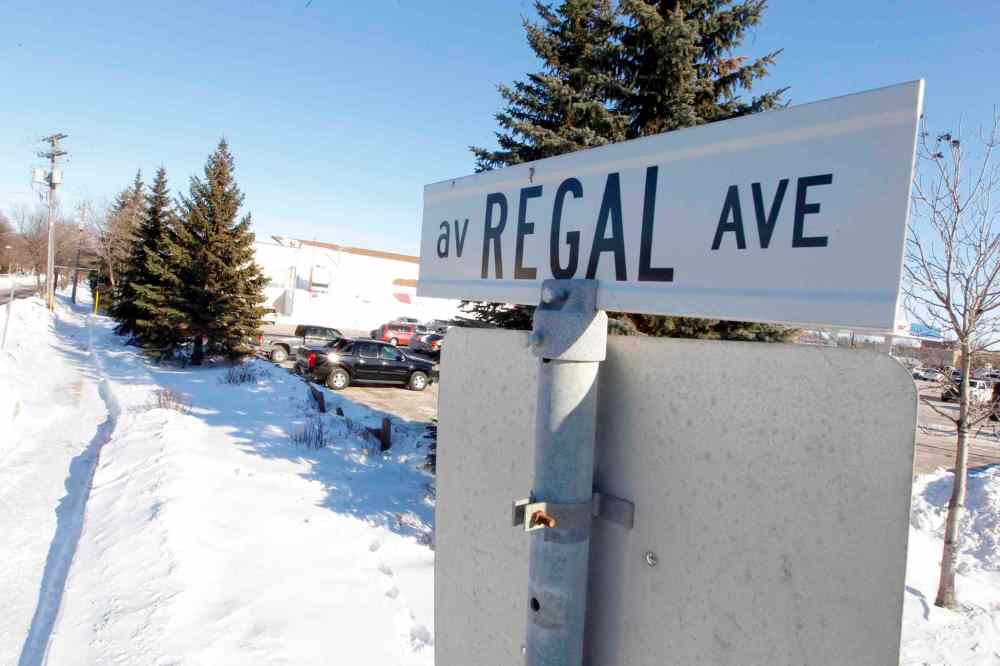
On Tuesday, for example, Mayor Sam Katz announced Regal Avenue, home of the St. Vital Curling Club, will also be known as Team Jones Way. The secondary “Team Jones” monicker will honour the 11-0 record posted by Jennifer Jones, Kaitlyn Lawes, Jill Officer and Dawn McEwen when they eviscerated the international competition on the way to capturing Olympic gold in Sochi.
Almost immediately after the mayor’s announcement, some Winnipeggers took to social media to blast the move, suggesting the city should do more to honour Jones and her team. Metro columnist Colin Fast noted how St. John’s, N.L., named a total of seven streets after Brad Gushue’s rink after it won Olympic curling gold in Turin in 2006.
If Winnipeg renamed one street of each member of Team Jones — plus the alternate, coach and group name — address-book chaos would ensue. It would be easier for the city to wait and name a cluster of new streets in a shiny subdivision after the Olympic curlers.
After all, streets in new subdivisions tend to have bland, generic names, like my own childhood haunt in Garden City, Forest Park Drive.

There’s something horribly Orwellian about changing the name of an existing street, bridge or building. Throwing away history in favour of celebrating the moment is a practice worthy only of conquerors and fascists.
Many people understand this on a visceral level. Remember the angry reaction to Jean Chrétien’s aborted effort to rename Mount Logan, the nation’s highest peak, after the late Pierre Trudeau?
The former prime minister wound up with a different peak that previously did not have a name. Jennifer Jones deserves the same treatment — a Winnipeg street of her own, unsullied by an act of paving over somebody else’s legacy.
bartley.kives@freepress.mb.ca
Did Winnipeg do enough to honour Jennifer Jones and her rink?
Join the conversation in the comments below.
View Larger Map
Archived video
Fans watch Team Jones win gold
Related Articles
Jones team mum on future


Advertisement Advertise With Us
Advertisement Advertise With Us
History
Updated on Wednesday, February 26, 2014 2:47 AM CST: Adds conversation question and tag
Updated on Wednesday, February 26, 2014 8:44 AM CST: Replaces photo
Updated on Wednesday, February 26, 2014 11:25 AM CST: Adds video.