

Bell of Batoche really the Bell of Frog Lake
CBC documentary 'conclusive'
Advertisement
Read this article for free:
or
Already have an account? Log in here »
To continue reading, please subscribe:

Digital Subscription
One year of digital access for only $205*
- Enjoy unlimited reading on winnipegfreepress.com
- Read the E-Edition, our digital replica newspaper
- Access News Break, our award-winning app
- Play interactive puzzles
*First annual payment billed as $205.00 + GST for one year. This annual subscription will automatically renew at $233.00 + GST every 52 weeks (10% off the regular annual price of $259.35). Offer available to new and qualified returning subscribers only. Cancel any time.
To continue reading, please subscribe:
Add Free Press access to your Brandon Sun subscription for only an additional
$1 for the first 4 weeks*
- Enjoy unlimited reading on winnipegfreepress.com
- Read the E-Edition, our digital replica newspaper
- Access News Break, our award-winning app
- Play interactive puzzles
*Your next Brandon Sun subscription payment will increase by $1.00 and you will be charged $17.95 plus GST for four weeks. After four weeks, your payment will increase to $24.95 plus GST every four weeks.
Read unlimited articles for free today:
or
Already have an account? Log in here »
Hey there, time traveller!
This article was published 14/04/2014 (4540 days ago), so information in it may no longer be current.
THE director of Le Musée de Saint-Boniface Museum said Sunday he’s satisfied the famed Bell of Batoche sitting in his museum is really the Bell of Frog Lake.
The far more renowned Bell of Batoche appears to have been lost in a fire.
Museum director Philippe Mailhot acknowledged a CBC documentary that aired late last week has convinced him the museum does not possess the fabled Bell of Batoche.
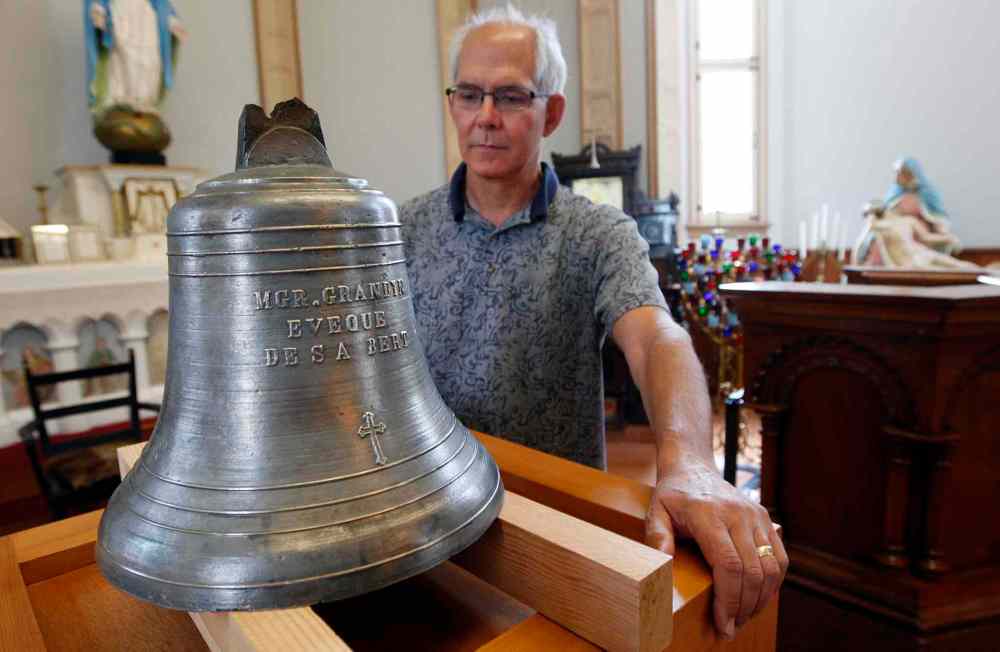
“The bell we have is the Frog Lake bell, the one from Millbrook (Ont.),” Mailhot said.
Both Batoche and Frog Lake were prominent sites that figured in the 1885 Northwest Rebellion that resulted in the hanging of Métis leader Louis Riel, though the Bell of Frog Lake is considerably less storied.
The CBC documentary that probed the fate of the bell has satisfied Mailhot the bell now housed at the museum is not from Batoche.
“It was fairly conclusive,” Mailhot said about the airing of the documentary The Mystery of the Bell.
He said the fate of the bell, and its possible return to Frog Lake First Nation in Alberta, is something that will have to be worked out by the Roman Catholic diocese in the region.
“What happens now? The museum doesn’t have much of a say in that… it depends on Frog Lake and whatever the diocese or parish (decide). They would become the owners of the bell,” Mailhot said.
As for the fate of the Bell of Batoche, the revered Métis symbol appears to have ended its days 20 years ago or more, when a fire destroyed the church where it had been housed.
Mailhot said he’s satisfied the Bell of Batoche was moved to St. Laurent de Grandin, located 12 kilometres from Batoche in the years after the Métis resistance of the 19th century. An important Métis wintering settlement then, it is known now for the Roman Catholic Shrine of Our Lady of Lourdes.
In 1892, the Bell of Batoche, christened the Marie Antoinette, was sent to the new church and Batoche received a bigger bell to replace it.
A century later, the church at St. Laurent burned in a fire that was so hot it melted the metal casing. All that is left now is the clanger and the casing, Mailhot said. “The documentary made a strong case,” he said.
Last week in Milbrook, a descendant of one of the soldiers who carried away the bell in 1885 confirmed his great-great-uncle was captain of the military company that brought the bell back from the Prairies after the resistance ended. A mistake in a historical overview in the 1960s referred to the Bell of Frog Lake as the Bell of Batoche.
Robert Winslow staged a play about the Frog Lake link to the bell in 2000, called Crossings: the Bell of Batoche that outlined the origins of the bell and his great-great-uncle’s role in it. That account tied the bell to Frog Lake, not Batoche.
Mailhot said it’s now up to the owners of the bell to reclaim it through the proper channels.
“The museum’s role in all this is, we housed the bell. It’s not like I can say, ‘No, we’re sending it back or we’re keeping it.’ That’s not the museum’s role, but we’re willing to co-operate with (whoever does decide),” Mailhot said.
Mailhot said there is no fault to find with the Métis men who took the bell from the Millbrook Legion and returned it to the Prairies.

They honestly believed the bell was the Bell of Batoche, he said.
“You may or may not agree with what they did, but they saw themselves as repatriating the Bell of Batoche,” Mailhot said.
The most common accounts have former Pine Creek First Nation chief BillyJo Delaronde as the mastermind behind the 1991 disappearance, driving secretly to Millbrook to remove the bell and bring it back to Manitoba.
One man who claims to have kept the Bell of Batoche under wraps told the Manitoba francophone paper La Liberté the 12-kilogram bell briefly ended up in his oven. He said he eventually gave it to the Union nationale Métisse Saint-Joseph du Manitoba (UNMSJM), and from there it went to the St. Boniface museum.
alexandra.paul@freepress.mb.ca
History
Updated on Monday, April 14, 2014 7:22 AM CDT: Replaces photo