

Capital region looking to the future
Bypassing highways, 15 cloverleafs part of blueprint, but cost estimates absent
Advertisement
Read this article for free:
or
Already have an account? Log in here »
To continue reading, please subscribe:
Monthly Digital Subscription
$1 per week for 24 weeks*
- Enjoy unlimited reading on winnipegfreepress.com
- Read the E-Edition, our digital replica newspaper
- Access News Break, our award-winning app
- Play interactive puzzles
*Billed as $4.00 plus GST every four weeks. After 24 weeks, price increases to the regular rate of $19.95 plus GST every four weeks. Offer available to new and qualified returning subscribers only. Cancel any time.
Monthly Digital Subscription
$4.99/week*
- Enjoy unlimited reading on winnipegfreepress.com
- Read the E-Edition, our digital replica newspaper
- Access News Break, our award-winning app
- Play interactive puzzles
*Billed as $19.95 plus GST every four weeks. Cancel any time.
To continue reading, please subscribe:
Add Free Press access to your Brandon Sun subscription for only an additional
$1 for the first 4 weeks*
*Your next subscription payment will increase by $1.00 and you will be charged $16.99 plus GST for four weeks. After four weeks, your payment will increase to $23.99 plus GST every four weeks.
Read unlimited articles for free today:
or
Already have an account? Log in here »
Hey there, time traveller!
This article was published 10/06/2014 (4316 days ago), so information in it may no longer be current.
In the first regional planning effort in more than a decade, Winnipeg and its surrounding bedroom communities have drawn up a list of highway-construction priorities for the next 25 years.
The Manitoba Capital Region, which includes representatives from Winnipeg and 15 surrounding municipalities, has drawn up a transportation-planning blueprint that’s supposed to dovetail with the city’s own transportation plan and help the province make decisions about what roads to build where and when.
In 2011, the city completed a Transportation Master Plan that called for the completion of the inner ring road and the construction of four rapid-transit corridors by 2031.
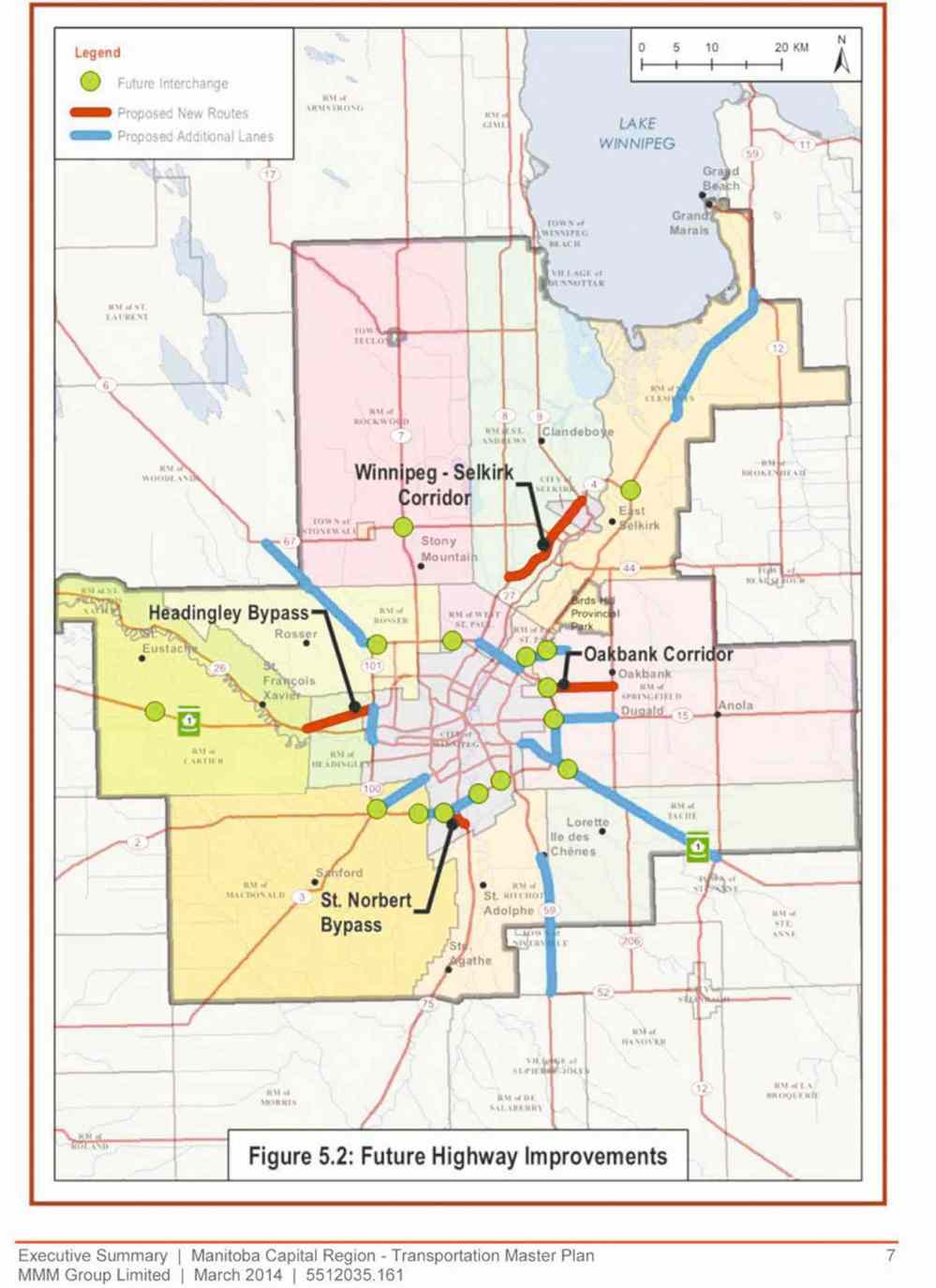
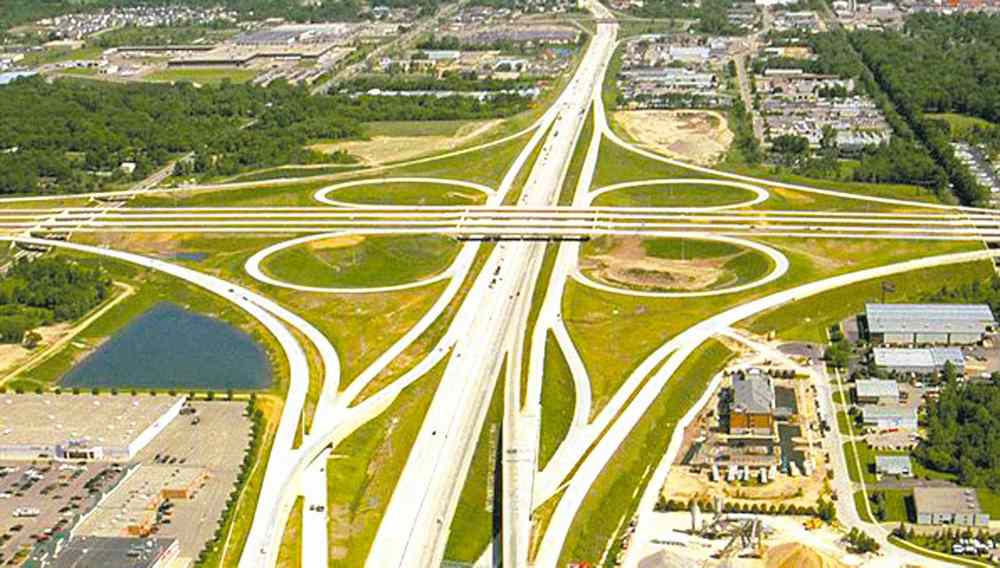
The Manitoba Capital Region’s version of the plan, which will be made public this morning, calls for the construction of highways bypassing Headingley and St. Norbert, new roads connecting Winnipeg to Oakbank and Selkirk, other Winnipeg-area road widenings and 15 new cloverleafs.
Unlike the city’s transportation-planning framework, which pencilled in potential costs for future freeways and transit corridors, the Capital Region transportation plan does not include cost estimates.
It nonetheless represents the first significant piece of joint planning between Winnipeg and its neighbours in decades, said St. Charles Coun. Grant Nordman, who chairs what’s officially known as the Partnership for the Manitoba Capital Region.
“If we don’t have a plan, which we haven’t up until this point, how do we go forward?” he asked, adding the city has to stop acting like “the big dog” that pushes its smaller neighbours.
“That hasn’t worked, so we’re making big strides in the other direction. This is the first document you can actually put your hands on and read.”
Like the city’s transportation plan, the capital-region plan does not ensure the amenities in question will be built. It also has even less proscriptive power than the city’s own plan, because Winnipeg and its neighbours pay directly for the construction of either highways or regional roads that run through municipalities outside the city.
Highway-construction decisions are ultimately made by the province, which pays for the work. The Selinger government has already promised to build some of the amenities on the capital-region wish list, such as the Headingley bypass and a new cloverleaf at the north Perimeter and Highway 59.
“In the broader context, they’ve mapped out what we’ve identified,” said Manitoba Infrastructure and Transportation Minister Steve Ashton. “It validates what we’re doing.”
But there are differences between the Capital Region transportation plans and the province’s own five-year highway-construction plan. For example, the Selinger government has no immediate plan to build a new road over the Red River Floodway to connect Winnipeg with Oakbank — or convert McPhillips Road and a portion of Highway 9 into a new Winnipeg-to-Selkirk freeway.

The Capital Region plan is subject to change, said Colleen Sklar, the organization’s executive director and a conflict-resolution facilitator by training.
“It could be 30 years into the future before some of these things happen,” she said. “And some of these things may not need to happen.”
The Capital Region’s transportation plan also calls for studying the idea of regional public transport, a concept that exists in Alberta cities. No one has crunched the numbers to see whether regional transit would work in the Winnipeg area, Sklar said.
“We’re at a really interesting spot right now in our growth in the capital region, because it’s going to be slow and steady,” she said, adding that constitutes good conditions for careful planning.
bartley.kives@freepress.mb.ca