

A Winnipeg scientist is headed to Africa to fight Ebola
Advertisement
Read this article for free:
or
Already have an account? Log in here »
To continue reading, please subscribe:

Digital Subscription
One year of digital access for only $205*
- Enjoy unlimited reading on winnipegfreepress.com
- Read the E-Edition, our digital replica newspaper
- Access News Break, our award-winning app
- Play interactive puzzles
*First annual payment billed as $205.00 + GST for one year. This annual subscription will automatically renew at $233.00 + GST every 52 weeks (10% off the regular annual price of $259.35). Offer available to new and qualified returning subscribers only. Cancel any time.
To continue reading, please subscribe:
Add Free Press access to your Brandon Sun subscription for only an additional
$1 for the first 4 weeks*
- Enjoy unlimited reading on winnipegfreepress.com
- Read the E-Edition, our digital replica newspaper
- Access News Break, our award-winning app
- Play interactive puzzles
*Your next Brandon Sun subscription payment will increase by $1.00 and you will be charged $17.95 plus GST for four weeks. After four weeks, your payment will increase to $24.95 plus GST every four weeks.
Read unlimited articles for free today:
or
Already have an account? Log in here »
Hey there, time traveller!
This article was published 28/09/2014 (4374 days ago), so information in it may no longer be current.
A Winnipeg scientist is on a mission to the Democratic Republic of Congo to try to curb the outbreak of the deadly Ebola virus.
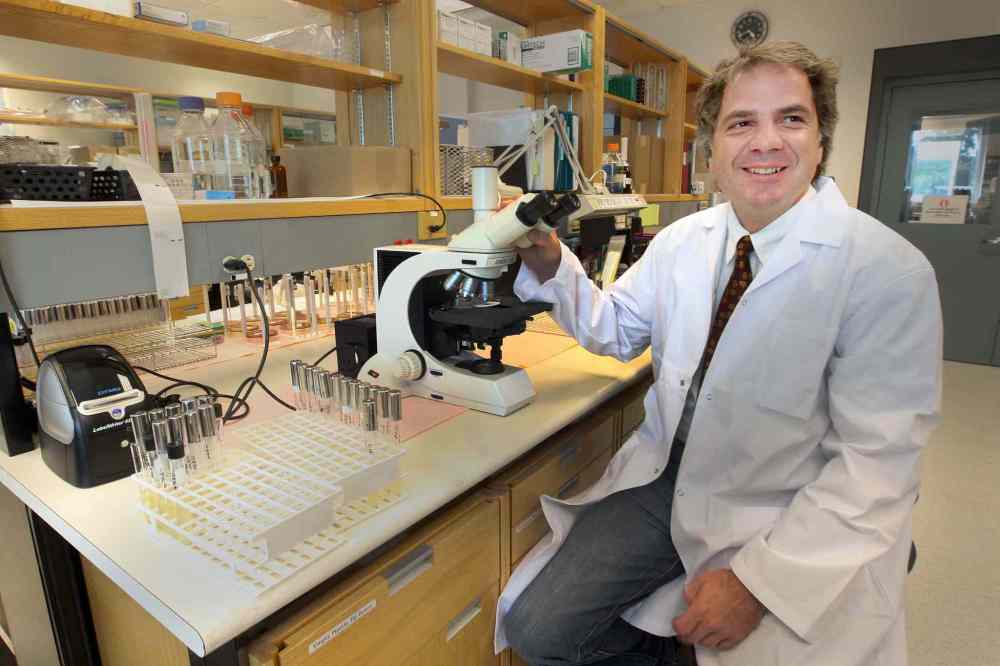
Dr. Gary Kobinger of the National Microbiology Laboratory is going there to help build laboratory capacity, federal Health Minister Rona Ambrose said in a tweet on Friday.
The World Health Organization was notified of an Ebola outbreak in the DRC on Aug. 26 by that country’s health ministry, unrelated to the Ebola virus that has killed some 3,000 in West Africa. A WHO report said the DRC outbreak started with a pregnant woman from the village of Ikanamongo who butchered a bush animal killed and given to her by her husband. She became ill with symptoms of Ebola, reported to a private clinic in a second village and died Aug. 11 of a then-unidentified haemorrhagic fever.
Local customs and rituals associated with death meant several health-care workers were exposed and presented with similar symptoms in the following week. There have since been 68 cases reported, with 41 deaths.
The Ebola outbreak is the latest of several in the Democratic Republic of Congo in the past decade. Kobinger, who heads the special pathogens unit at the National Microbiology Lab on Arlington Street, has conducted research before in the central African country.

His team came up with ZMapp, the first experimental Ebola drug used in an outbreak and considered the most promising of current experimental treatments.
The team developed an Ebola vaccine that may be useful both to prevent infection and stop it in its tracks, if given shortly after exposure. The Winnipeg lab also developed a mobile diagnostic lab that has changed the way testing is done.