

Top Heavy: It’s a golden era for Manitoba’s elite curling teams
But the grassroots level is not basking in the same shine
Advertisement
Read this article for free:
or
Already have an account? Log in here »
To continue reading, please subscribe:
Digital Subscription
One year of digital access for only $1.44 a week*
- Enjoy unlimited reading on winnipegfreepress.com
- Read the E-Edition, our digital replica newspaper
- Access News Break, our award-winning app
- Play interactive puzzles
*Billed as $5.77 plus GST every four weeks. After 52 weeks, price increases to the regular rate of $19.95 plus GST every four weeks. Offer available to new and qualified returning subscribers only. Cancel any time.
To continue reading, please subscribe:
Add Free Press access to your Brandon Sun subscription for only an additional
$1 for the first 4 weeks*
- Enjoy unlimited reading on winnipegfreepress.com
- Read the E-Edition, our digital replica newspaper
- Access News Break, our award-winning app
- Play interactive puzzles
*Your next Brandon Sun subscription payment will increase by $1.00 and you will be charged $17.95 plus GST for four weeks. After four weeks, your payment will increase to $24.95 plus GST every four weeks.
Read unlimited articles for free today:
or
Already have an account? Log in here »
Hey there, time traveller!
This article was published 29/11/2014 (4350 days ago), so information in it may no longer be current.
Is Manitoba in its Golden Age of Curling?
Or is it all Fool’s Gold, with the presence of a couple of high-flying teams based in this province papering over what is otherwise a shallow pool of competitive curlers and a shocking decline in the sport’s grassroots in Manitoba?
On the surface, there is nothing not to like about the state of this province’s competitive curlers. Consider: Winnipeg’s Jennifer Jones and her foursome are nothing less than the undisputed No. 1-ranked women’s team in the world right now, having accomplished in Sochi last February something no other Manitoba team before them — and no Canadian women’s team since 1998 — had pulled off: Olympic gold in curling.
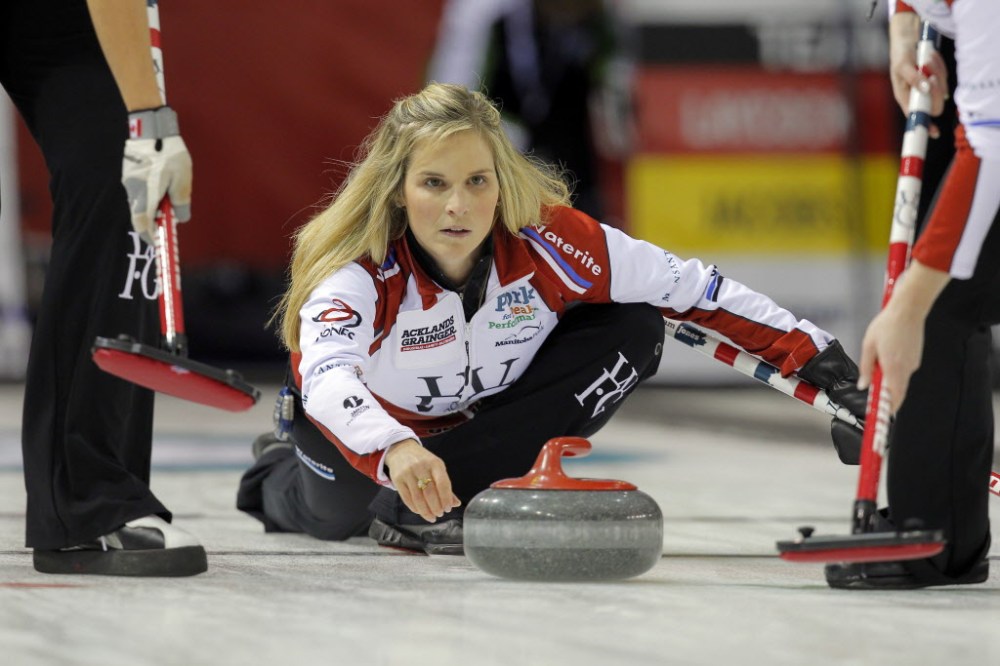
And Jones has picked up right where her team left off last spring, showing no sign of regression or a let-down on the fall cash tour this season. Her team leads the women’s money list with $51,154 in earnings already this season; they’ve won two of the five WCT events they’ve entered and made the final of one and the semifinals of two others; and they boast a cool 27-6 record on the cash tour this fall.
So you can say, without any equivocation, that Manitoba is home to the best women’s curling team in the entire world.
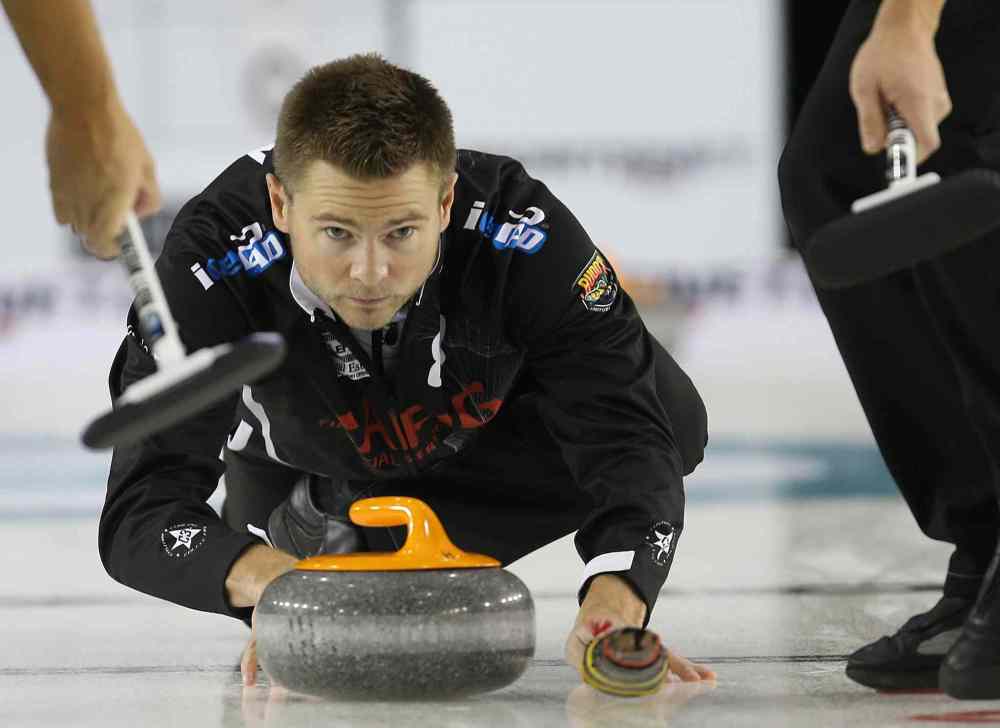
And you can probably also say the same thing about the best men’s team in the world. While Sault Ste. Marie is home to the reigning Olympic gold medallists in Brad Jacobs — with Winnipeg native Ryan Fry at third — it is Winnipeg’s Mike McEwen who currently leads both the men’s money list and the World Curling Tour’s ‘Order of Merit,’ a points-based ranking that ranks team based on their play over the last couple years.
Think about that for a moment — Jacobs won Olympic gold last February and the Brier the year before and McEwen still has more points than him. That, folks, is testimony to how utterly dominating McEwen’s foursome has been on the money tour over the past few years.
Yeah, but he cannot win the big one you’re saying? Well, yeah, that is the thing about McEwen alright. His might be the best team in the world — is the best team in the world, in fact — but until he can figure out a way to beat Jeff Stoughton in the Manitoba provincials, he is still just the second best team in Manitoba.
Try carrying that around in your broom bag all winter long, year after year. Still, for all his foibles and lost provincial finals in recent years, there is also no denying the absolutely unbelievable cash spiel season McEwen is putting together right now.
The numbers are staggering: With $86,000 in winnings already this fall, McEwen has almost double the earnings as the second place team on the money list, Jacobs with $46,500. McEwen’s record on tour this fall is an other-worldly 39-5 and with a win in last weekend’s The National, the squad has now won five of the six events they’ve entered and lost the final of the only one they didn’t win.
No, he cannot beat Stoughton in Manitoba. But still, just wow.
So, you’re saying, if Winnipeg is home to the best women’s team in the world in Jones and — even with the provincials asterisk — the best men’s team in the world in McEwen, what’s with all the hand-wringing and talk of fool’s gold?
Well, there’s a few worrying trends, both at the competitive level and at the grassroots.
Let’s start with the state of the province’s competitive curlers. While it’s true Jones and McEwen are as good as they come anywhere in the world, there’s a pretty dramatic drop off in Manitoba’s competitive game after you get past those two.
On the women’s side, the team that used to be second best in Manitoba to Jones — Chelsea Carey — is now disbanded, with Carey now skipping a team in Alberta. With Carey out of the picture, the next best women’s team in Manitoba, at least this fall, is Jill Thurston (third Brette Richards, second Briane Meilleur, lead Blaine DeJager), who has yet to win on tour but has made enough playoffs that she’s 11th on the women’s money list. Kristy McDonald (Carey’s former third, now skipping a team with third Kate Cameron, second Leslie Wilson-Westcott and lead Raunora Westcott) is 12th on the money list with a brand new team. And so it would be safe to say competitive women’s curling in Manitoba hasn’t been this much of a one-woman show — Jones, followed far behind by everyone else — since Connie Laliberte singularly dominated the women’s game in this province for the better part of the ’80s and ’90s.
As for the men’s competitive game, the days of the ‘Big 3’, when any one of Stoughton, Kerry Burtnyk or Vic Peters were capable of winning the province, the Brier and the Worlds in any given year has given way to something more closely resembling the ‘Big 1, plus 2’, with McEwen now the big dog followed by a newly configured Stoughton foursome and a new team being skipped this winter by Reid Carruthers.
Stoughton, with veteran Rob Fowler at third and a young front end in Alex Forrest and Connor Njegovan, has won just once on tour this fall, taking down a mid-tier event in Swan River a couple weeks ago. Stoughton headed into this week eighth on the WCT money list, the lowest ranking this deep into a cash spiel season for the three-time Brier champion in recent memory.
Carruthers, with third Braeden Moskowy, second Derek Samgalski and lead Colin Hodgson, also has just one tour win this fall, at a mid-tier event in Toronto. He’s ranked 10th on the tour money list this week.
After Stoughton and Carruthers, you’ve got to scroll down all the way to the 22nd spot on the WCT money list to find another Manitoba-based men’s team in Scott Ramsay.
So what gives? How come a province that holds the record for Brier titles and has long prided itself as being the home of the best teams in the world suddenly has such a shallow deep end? Well, a big part of it has to do with curling becoming an Olympic sport in 1998 and the ensuing ‘professionalization’ of the sport that has followed in lockstep.
With so much at stake every four years, the days of slapping together a club team and hoping to win it all has become an anachronism. With so much now at stake, curlers at the elite level are now forming super-teams that have nothing to do with club allegiances or friendships and everything to do with getting to the next Olympics. And the time those teams commit to the sport — in terms of fitness and travel and off-ice activities — are now such that the elite teams likes Jones’s squad now either curl entirely full time or, at most, hold down part-time jobs in the winter.
The days of a full-time auto mechanic taking down the Brier — like B.C.’s Greg McAulay did in 2000 — are mostly a thing of the past, in other words. And that has made the pool of elite teams not only shallower in Manitoba, but also around the curling world.
That, in turn, has translated into lower participation levels at the sport’s grassroots, including here in Manitoba. With the dream of turning a club team into a national champion now mostly a fantasy, the interest in curling at even a provincial level has also declined dramatically in recent years in this province.
Consider: The number of entries in the men’s and women’s ‘regionals’ — the first step toward competing at the provincials — was down over 50 percent last season in Manitoba as compared to 2005-06. It was the same story for junior men’s entries, while junior women’s entries were down over 40 percent.

It’s all having a big impact at the club level. With the closure this winter of Victoria Curling Club, there are now just 14 curling clubs in the Winnipeg area affiliated with Curl Manitoba, down from 21 just two decades ago.
So a Golden Age of Curling for Manitoba? It is if you’re Jennifer Jones or Mike McEwen — or even just a casual curling fan who wants to have a Manitoba team to cheer for in the televised events that occur all winter long now.
But look a little deeper and what you find is the ice the self-proclaimed World Capital of Curling is built upon has begun to get precariously thin.
paul.wiecek@freepress.mb.ca
Twitter: @PaulWiecek