

Endangered species: 90-year-old wooden barn one-of-a-kind in Western Canada
Advertisement
Read this article for free:
or
Already have an account? Log in here »
To continue reading, please subscribe:
Digital Subscription
One year of digital access for only $1.44 a week*
- Enjoy unlimited reading on winnipegfreepress.com
- Read the E-Edition, our digital replica newspaper
- Access News Break, our award-winning app
- Play interactive puzzles
*Billed as $5.77 plus GST every four weeks. After 52 weeks, price increases to the regular rate of $19.95 plus GST every four weeks. Offer available to new and qualified returning subscribers only. Cancel any time.
To continue reading, please subscribe:
Add Free Press access to your Brandon Sun subscription for only an additional
$1 for the first 4 weeks*
- Enjoy unlimited reading on winnipegfreepress.com
- Read the E-Edition, our digital replica newspaper
- Access News Break, our award-winning app
- Play interactive puzzles
*Your next Brandon Sun subscription payment will increase by $1.00 and you will be charged $17.95 plus GST for four weeks. After four weeks, your payment will increase to $24.95 plus GST every four weeks.
Read unlimited articles for free today:
or
Already have an account? Log in here »
Hey there, time traveller!
This article was published 06/12/2014 (4343 days ago), so information in it may no longer be current.
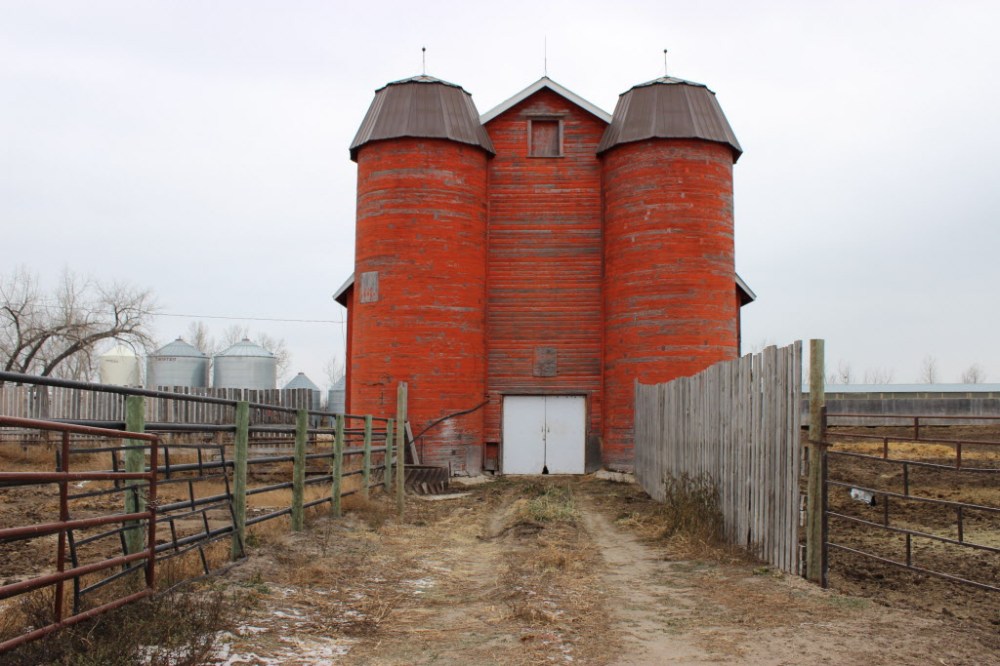
BROOMHILL — To rebuild Curtis Gervin’s 90-year-old barn today — believed to be the only two-siloed wooden barn still standing in Western Canada — would cost more than $1 million, he estimates.
But in 1924, two brothers from Chicago spared no expense.
Albert and Ephraim Ivers went to southwestern Manitoba and purchased 1,600 acres of crop land. That’s an extraordinary land holding, about 10 times the size of most farms back when people still cropped quarter sections (160 acres).

Then they built the most extravagant barn with top-of-line technology, including two built-in wood silos, a wooden air-duct system and a railing system for manually moving the feed bucket from stall to stall.
Then they went broke, as farms so often do when they are financed by investors from the city. But they left behind one amazing barn.
The barn near Broomhill, south of Virden and more than 300 kilometres southwest of Winnipeg, is featured in Bob Hainstock’s Barns of Western Canada, the definitive work on these pastoral works of architecture.
“You have to remember the 1920s were a boom time in agriculture. Adjusted for inflation, the price for a bushel of wheat was about $35,” said Gervin, of the Iver brothers’ attempt to capitalize on the farm economy. “Western Canada was opening up and investors had the idea to buy land and make a fortune when it appreciated.”
Many old barns have collapsed since being archived in Hainstock’s book from 1985, but not Gervin’s. He’s already spent $30,000 replacing the roof. It still had its original cedar shingles.
“This one’s lucky. I don’t know if it’s built better. I do believe what kills a building is not using it.”
His barn is still very functional, used for calving 800 cows. He has added some modern touches, such as three calving cameras to monitor for birthing problems.
It was originally a dairy barn, with cattle on one side and work horses on the other. The main floor is close to 5,000 square feet and the loft doubles that. It still has the original concrete floors.
Perhaps the most amazing feature are the built-in silos. They’re wood. How they curved the wood slats to form the cylinder shape is amazing. At first glance, they looked to be made of concrete because they are so smooth and the joints are so seamless, even 90 years later. There are outer rungs to climb up the silos.
Meantime, you can try to drive a nail into the 90-year-old Douglas fir timber that hold up the barn, but you might need an AK47 instead of a hammer. They’re like rock.
“Let’s face it. They’ll never build one of these again,” said Gervin.
The barn was obviously high-rent district for cattle. It’s not only spacious but floods with natural light from the 14 windows on each side — each a nine-paned mullion window — adding to the animal’s comfort.
Gervin plans to upgrade the barn by replacing them with PVC windows in the same mullion style. He also plans to put on corrugated metal siding to protect the interior wood. The metal will “stiffen the walls right up.” After that, only two things can flatten it, fire or a tornado, he maintained.
Why put in the money when he could buy a metal building barn for as little as $75,000 today?
“That’s got no character,” he said. “A barn used to signify a farm. The vast majority of farms now there is no barn. If there is, it’s just a metal, nondescript building. You’ve seen one, you’ve seen a million. No one will ever take a picture of that.”

That’s music to the ears of Ed Ledohowski, the recently retired heritage consultant for the province. “Barns are really becoming endangered. There are so few barns left,” he said.
When farmers realized their cattle could withstand winter, the barns became superfluous.
“The picture of a family farm with a barn in it is all gone. You only see that in butter commercials,” said Ledohowski.
The Iver brothers lost the farm within a few short years. Local lore has it many contractors went unpaid for their work on the barn and other construction. Then the Depression hit and the farm stayed in the hands of a mortgage company until it was bought in the 1940s. Gervin’s parents bought it in 1958.
bill.redekop@freepress.mb.ca