

Cat licence aims to cut euthanization
Half of fee will go toward neutering programs: city
Advertisement
Read this article for free:
or
Already have an account? Log in here »
To continue reading, please subscribe:

Digital Subscription
One year of digital access for only $205*
- Enjoy unlimited reading on winnipegfreepress.com
- Read the E-Edition, our digital replica newspaper
- Access News Break, our award-winning app
- Play interactive puzzles
*First annual payment billed as $205.00 + GST for one year. This annual subscription will automatically renew at $233.00 + GST every 52 weeks (10% off the regular annual price of $259.35). Offer available to new and qualified returning subscribers only. Cancel any time.
To continue reading, please subscribe:
Add Free Press access to your Brandon Sun subscription for only an additional
$1 for the first 4 weeks*
- Enjoy unlimited reading on winnipegfreepress.com
- Read the E-Edition, our digital replica newspaper
- Access News Break, our award-winning app
- Play interactive puzzles
*Your next Brandon Sun subscription payment will increase by $1.00 and you will be charged $17.95 plus GST for four weeks. After four weeks, your payment will increase to $24.95 plus GST every four weeks.
Read unlimited articles for free today:
or
Already have an account? Log in here »
Hey there, time traveller!
This article was published 09/12/2014 (4316 days ago), so information in it may no longer be current.
If what happened in Calgary occurs here, there will be a lot fewer Winnipeg cats euthanized after a new licensing bylaw begins Jan. 1.
Calgary implemented its cat licensing bylaw in 2006 and that city has euthanized 363 cats in the past two years. By comparison, the Winnipeg Humane Society reports 4,542 Winnipeg cats were euthanized in the same period.
Calgary uses licensing revenue to pay for spay-and-neuter programs, so fewer cats there are breeding unwanted litters.
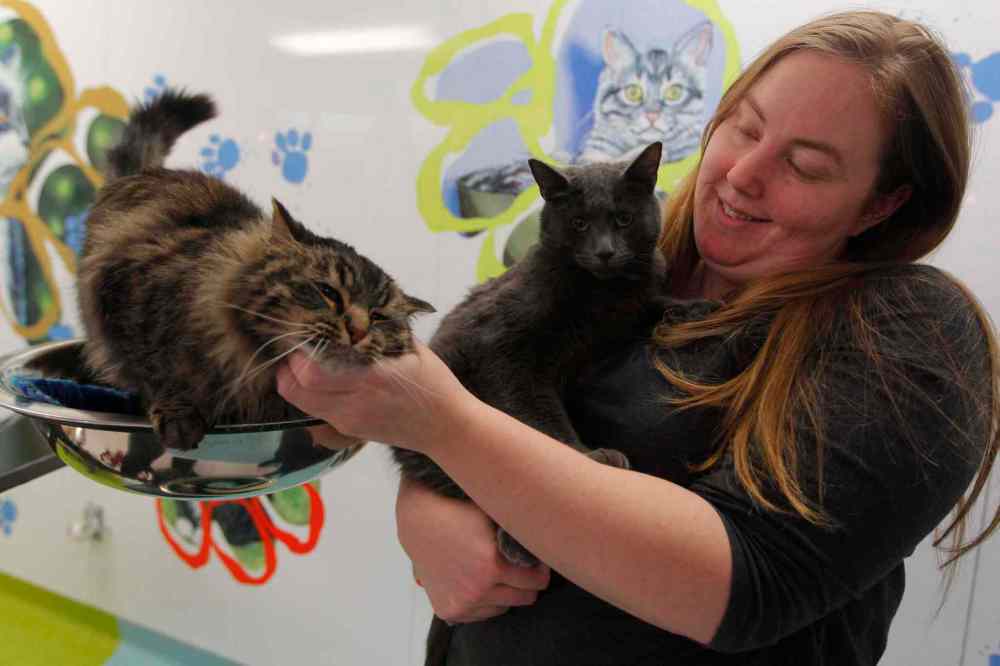
Winnipeg hopes to duplicate that success.
“We’re going to use 50 per cent of the licence money to create and expand spay-and-neuter programs in Winnipeg,” said Leland Gordon, chief operating officer of animal services in Winnipeg. “We need more accessible spaying and neutering because there’s nothing worse than euthanizing cats because there’s no room.”
As of 2013, Calgary had 45,421 licensed cats. Its rate of return of captured cats to owners was 47 per cent in 2012 and 49 per cent in 2013, a high figure made possible because the cats were licensed.
In Toronto, the experience with cat licensing has been less successful. Under a bylaw introduced in 1998, Toronto only has around 26,000 cats licensed, almost 20,000 fewer than in Calgary, even though Toronto’s human population is far larger than Calgary’s.
A Toronto animal services spokeswoman says its struggles stem from a lack of communication with cat owners.
Many cat owners think it’s a cash grab and don’t know part of the licence fees go toward helping shelters, she said. They say once cat owners are aware of that, compliance usually increases.
Some animal activists, such as Lynne Scott, the executive director of Craig Street Cats in Winnipeg, say cat licensing will increase the number of stray cats because some owners who are unable or unwilling to pay the licensing fee will give up their cats instead.
“The cost of administering the program is likely to be higher than the price charged for the licences,” said Scott. “It’s a poorly thought-out plan.”
She said Calgary was successful because that city planned ahead, something Winnipeg has neglected to do.

“One hundred per cent of the money brought in for licensing was targeted to a free spay-and-neuter clinic in Calgary,” she said. “They set up partnerships with the Meow Foundation so feral cats would be trapped and managed in feral colonies. They hired students to map areas that had lots of cats.”
Other shelters, however, are on board with licensing because they are receiving funds from the 50 per cent of the licence fees.
The Winnipeg Humane Society, D’Arcy’s A.R.C and The Winnipeg Pet Rescue Shelter – which make up Shelter and Rescue Alliance Manitoba (SARAM) — are all on board with the bylaw. “We’ve had mixed messages from the public but I think people will feel better knowing the funding is going to help shelters,” said Carla Martinelli-Irvine, SARAM chairwoman and director of the Winnipeg Pet Rescue Shelter.
stephen.burns@freepress.mb.ca
Do you intend to license your cats? Join the conversation in the comments below.
Feline-licensing facts
The facts about cat licensing, which the previous city council mandated by passing a bylaw in July 2013. The bylaw takes effect Jan. 1.
- All cats six months or older have to be licensed, including cats that stay indoors.
- The licence costs $15 annually if your cat is spayed or neutered, $50 if it isn’t.
- It’s a $250 fine if your cat is caught without a licence.
- The city provides a small tag to go on a break-away collar, which splits if it gets caught on something so the cat won’t choke.
- If the cat refuses the collar, owners can use a micro-chip and tattoo as a backup form of ID.
- People can report unlicensed cats to 311, 24 hours a day and can also take stray cats they find in Winnipeg to the Humane Society.
- For more information, visit the City of Winnipeg Animal Services at www.winnipeg.ca/cms/animal/
Related Articles
Winnipeggers license an estimated 10% of city's cats
Advertisement Advertise With Us
Advertisement Advertise With Us
History
Updated on Tuesday, December 9, 2014 7:00 AM CST: Replaces photo, adds question for discussion
Updated on Tuesday, December 9, 2014 9:41 AM CST: Corrects cost of licence for cat if it isn't spayed or neutered. corrects where stray cats can be taken, adds link