

City man has high hopes for school for drone pilots
Advertisement
Read this article for free:
or
Already have an account? Log in here »
To continue reading, please subscribe:
Digital Subscription
One year of digital access for only $1.44 a week*
- Enjoy unlimited reading on winnipegfreepress.com
- Read the E-Edition, our digital replica newspaper
- Access News Break, our award-winning app
- Play interactive puzzles
*Billed as $5.77 plus GST every four weeks. After 52 weeks, price increases to the regular rate of $19.95 plus GST every four weeks. Offer available to new and qualified returning subscribers only. Cancel any time.
To continue reading, please subscribe:
Add Free Press access to your Brandon Sun subscription for only an additional
$1 for the first 4 weeks*
- Enjoy unlimited reading on winnipegfreepress.com
- Read the E-Edition, our digital replica newspaper
- Access News Break, our award-winning app
- Play interactive puzzles
*Your next Brandon Sun subscription payment will increase by $1.00 and you will be charged $17.95 plus GST for four weeks. After four weeks, your payment will increase to $24.95 plus GST every four weeks.
Read unlimited articles for free today:
or
Already have an account? Log in here »
Hey there, time traveller!
This article was published 05/01/2015 (4174 days ago), so information in it may no longer be current.
A Winnipeg businessman said Transport Canada should require drone pilots be licensed, and he could be ready to teach them how to earn their papers this summer.
Dale George runs Buoyant Aircraft Systems International in Winnipeg. His company is working to develop a national flight school for unmanned aerial vehicle (UAV) pilots. He plans to pitch the project to Transport Canada’s UAV working group in April.
If all goes well, George said his company could be teaching pilots by August.
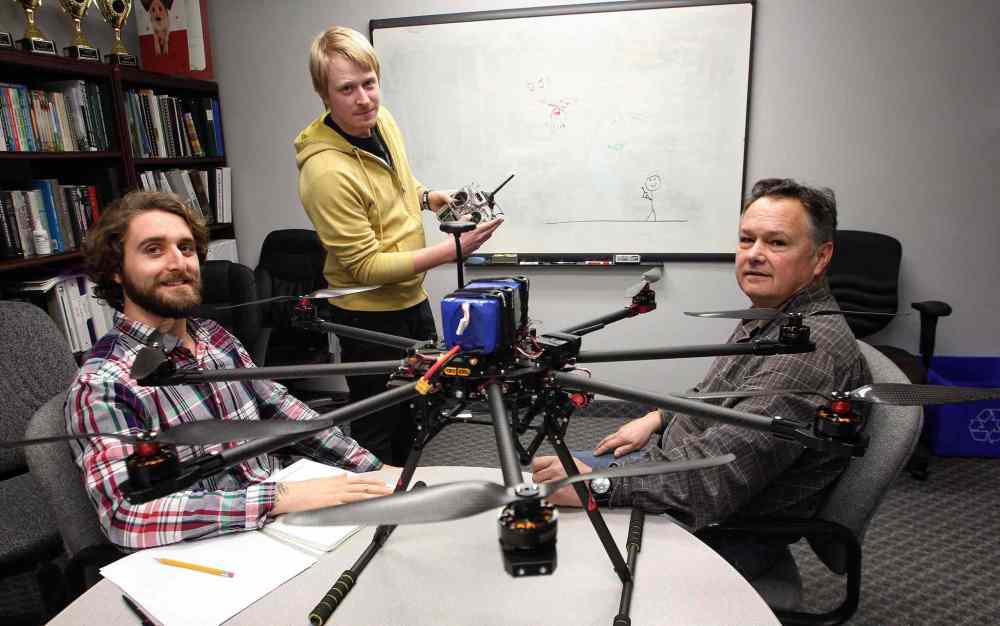
“The skies are not quite filled with them, but they are around, for sure. There’s some confusion around them, still,” George said. “I don’t want to say (they are) out of control, but it’s close.”
Transport Canada would need to approve the prospective flight school.
George said he hopes that will happen this summer.
Transport Canada wouldn’t comment on whether it’s considering licensing pilots. The working group “is studying a number of issues concerning UAV safety. It is expected to submit its recommendations to Transport Canada in the new year,” Transport Canada spokeswoman Andrea Moritz wrote in an email.
George said if his school doesn’t fly with the government, he might consider offering lessons to private fliers who want to brush up on their skills regardless of whether they need a licence.
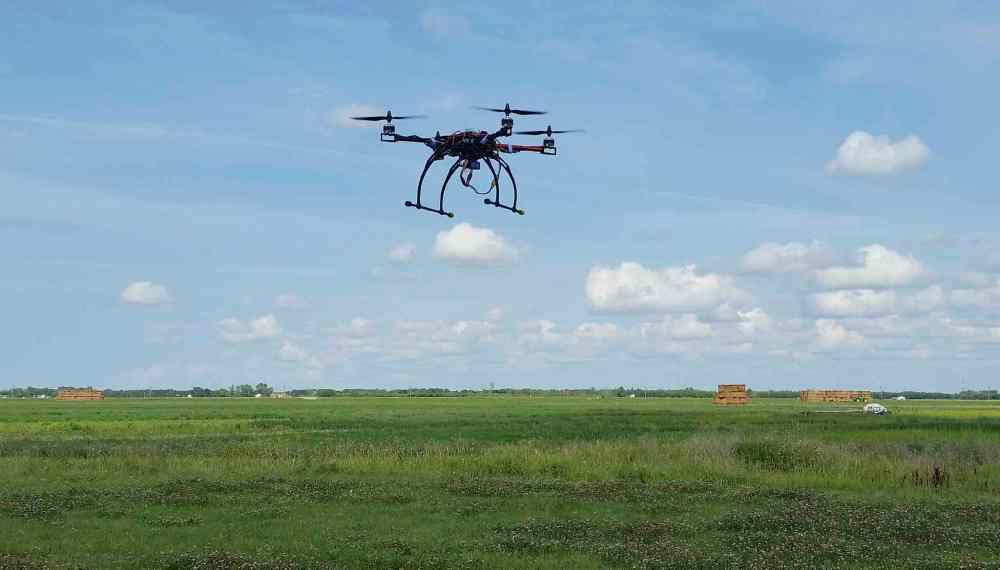
Drones are aircraft that can be piloted remotely. They can range in size and complexity from small model aircraft and helicopters flown from the ground via radio controllers up to large aircraft weighing hundreds of kilograms and guided by computer-programmed GPS co-ordinates.
Smaller ones were hot sellers during the holiday season.
‘I don’t want to say (they are) out of control, but it’s close’
— Dale George on the popularity of drones
Laurrie Gobeil, co-owner of Eliminator-RC, a hobby shop in Point Douglas, said small drones were practically flying off her shelves before Christmas.
“That’s definitely the up-and-coming thing as far as the hobby is concerned,” Gobeil said.
“It is catered to people with no experience, whereas with a lot of our other hobby appliances, there is some experience required,” she said.
People are not always using them responsibly.
Transport Canada daily aviation occurrence reports state there were 30 incidents involving UAVs in Canada, most of them close calls between UAVs and other aircraft.
In 2013, there were only two reported incidents, both involving UAVs that were being flown by police.
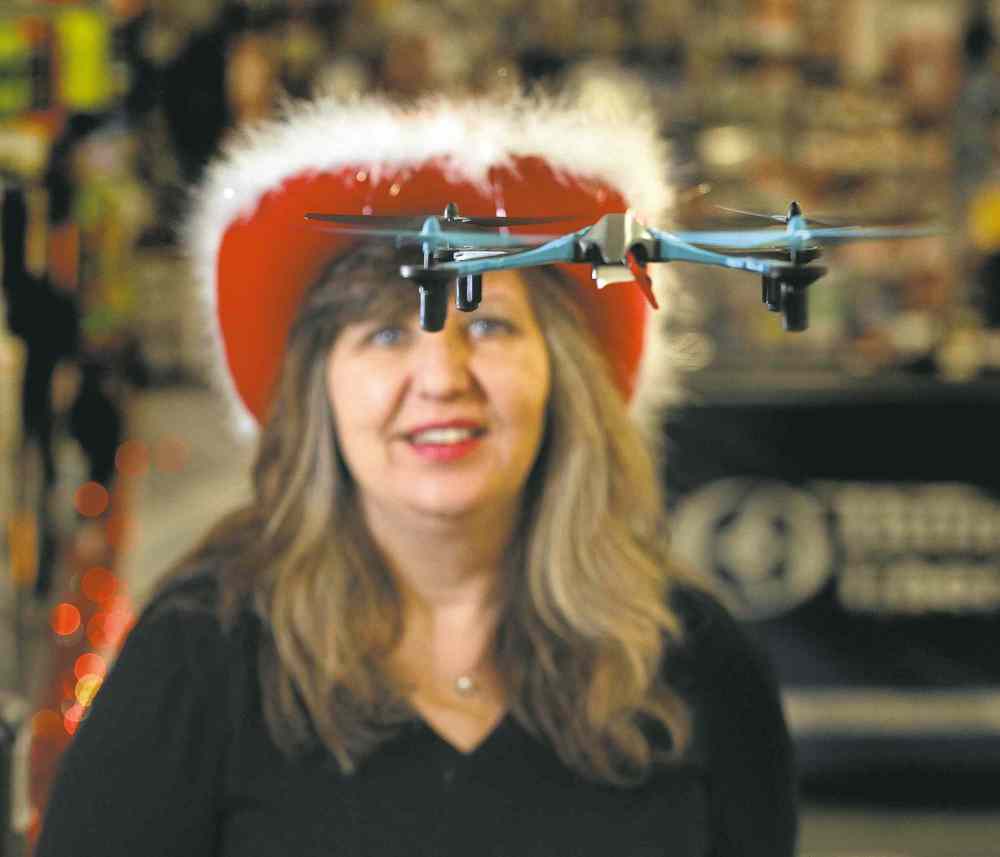
On Nov. 25, an Air Canada jet flying from Toronto to Phoenix reported missing a drone by only nine metres about 16 kilometres from the U.S. city.
In September, a pilot lost control of a commercially registered drone, which crashed into a car in Ottawa in the Algonquin College parking lot. Flying pieces damaged windows.
In July, a pilot had to increase altitude to avoid hitting a drone after taking off from the Vancouver International Airport, missing the drone by 30 metres.
Transport Canada introduced guidelines in November governing UAV flights. Currently, anyone operating a drone weighing less than two kilograms doesn’t need governmental permission to fly, but they must stay at least nine kilometres away from airports and aerodromes.
Drones are not allowed to fly higher than 90 metres, and the pilot must always maintain a direct line of sight to the craft.

If a pilot’s drone weighs more than 35 kilograms or if they are flying for commercial purposes, they must apply for a special flight-operations certificate, an onerous process that can take weeks to complete and may only cover individual flights.
Bryan Drobot is one of Orbo’s two employees who are developing the flight school.
He said all regulatory red tape could be cleared up if pilots had to undergo training and prove they’re responsible enough to fly.
“Realistically, safety is a huge issue. Someone who drives a forklift has to go for a course. If you drive a semi-truck you have to qualify (by taking) a course. With drones up to 25 kilograms, you could potentially harm or kill someone with that. You need to have the knowledge to use it safely,” Drobot said.
jesse.winter@freepress.mb.ca
History
Updated on Monday, January 5, 2015 7:09 AM CST: Replaces photos, changes headline