

Cardiac program criticized
Study highlights concerns about cancelled surgeries, wait lists
Advertisement
Read this article for free:
or
Already have an account? Log in here »
To continue reading, please subscribe:
Monthly Digital Subscription
$1 per week for 24 weeks*
- Enjoy unlimited reading on winnipegfreepress.com
- Read the E-Edition, our digital replica newspaper
- Access News Break, our award-winning app
- Play interactive puzzles
*Billed as $4.00 plus GST every four weeks. After 24 weeks, price increases to the regular rate of $19.95 plus GST every four weeks. Offer available to new and qualified returning subscribers only. Cancel any time.
Monthly Digital Subscription
$4.99/week*
- Enjoy unlimited reading on winnipegfreepress.com
- Read the E-Edition, our digital replica newspaper
- Access News Break, our award-winning app
- Play interactive puzzles
*Billed as $19.95 plus GST every four weeks. Cancel any time.
To continue reading, please subscribe:
Add Free Press access to your Brandon Sun subscription for only an additional
$1 for the first 4 weeks*
*Your next subscription payment will increase by $1.00 and you will be charged $16.99 plus GST for four weeks. After four weeks, your payment will increase to $23.99 plus GST every four weeks.
Read unlimited articles for free today:
or
Already have an account? Log in here »
Hey there, time traveller!
This article was published 13/01/2015 (4107 days ago), so information in it may no longer be current.
A review of Manitoba’s $100-million Cardiac Sciences Program raises concerns about the frequency of cancelled surgeries, long waiting lists for certain tests and a cumbersome management structure that blurs the lines of accountability.
The new study, conducted by the University of Ottawa Heart Institute, also said it would be premature for Manitoba to launch a heart-transplant program at St. Boniface Hospital, pointing to a shortage of locally donated organs among other factors.
The Winnipeg Regional Health Authority’s cardiac program serves 57,000 patients a year from across Manitoba, northwestern Ontario and Nunavut. It employs 500 clinical and other professionals, including 61 academic medical specialists.

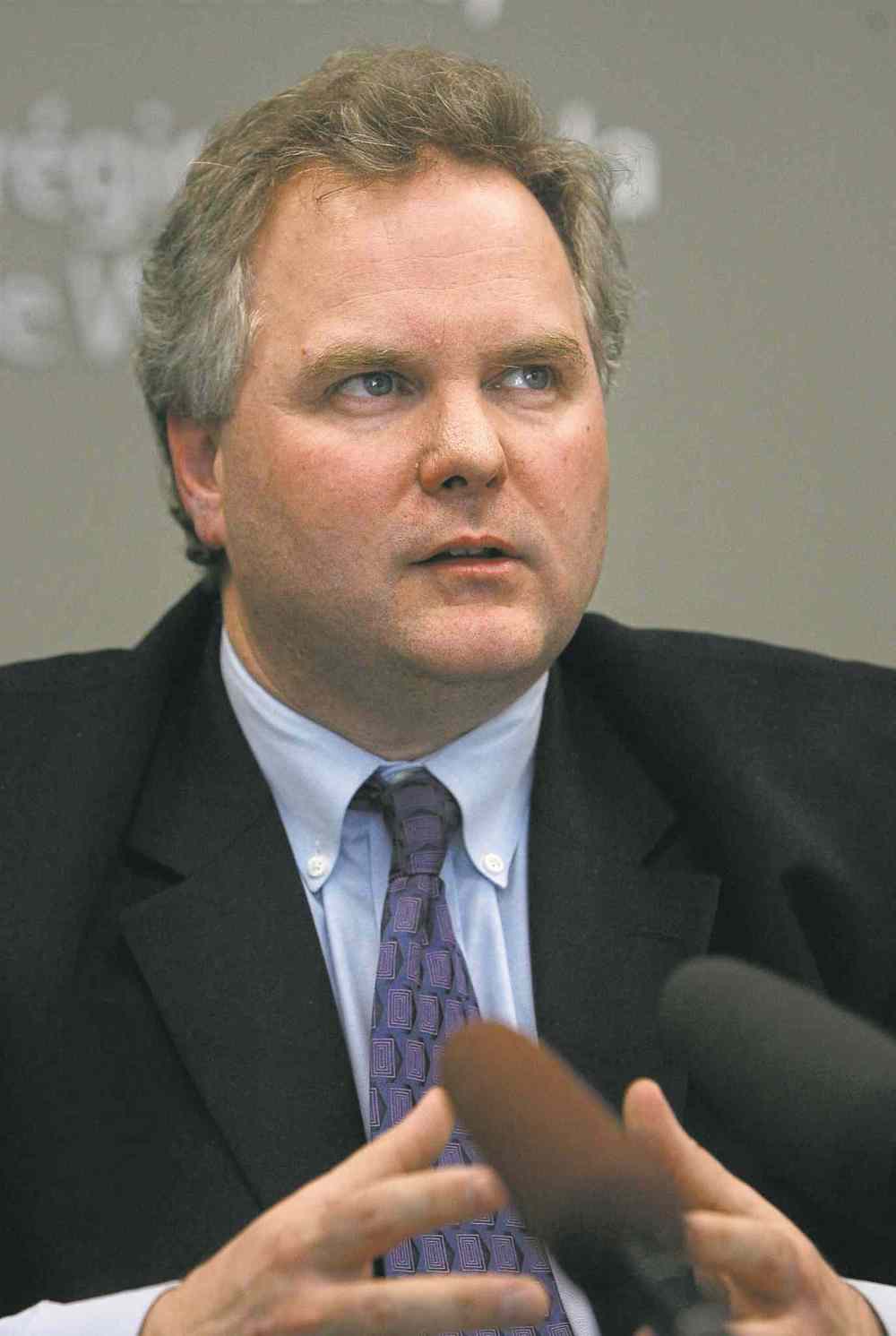
Dr. Brock Wright, the WRHA’s senior vice-president and chief medical officer, said Monday his organization asked the Ottawa institute for “a brutal, honest appraisal” of its cardiac program. And it seems that’s what it got.
In a 25-page report obtained by the Free Press, the consultant uses blunt language in pointing out program deficiencies — even as it praised its good surgical outcomes and “excellent” response to patient heart failure.
“The original series of objectives that resulted in the creation of the CSP (in 2004) has not been achieved,” the report said.
A complex governance structure has blurred lines of authority and accountability and is preventing professionals within the program from working as a team, it said.
More work needs to be done between the WRHA and the University of Manitoba’s faculty of medicine to integrate research and education into the program. If not, “cardiovascular sciences in Manitoba will remain a backwater in comparison with benchmark organizations to the detriment of the citizens of Manitoba.”
The University of Ottawa Heart Institute, considered the leader in Canada, reviewed “multiple layers of information” provided by the WRHA, St. Boniface Hospital and several other groups and conducted interviews with key program participants over three days in October. It also accepted written submissions on a confidential basis by health staff.
The study noted there were more than 120 cardiac surgical cancellations (or postponements, as the WRHA prefers to call them) in 2013. It said this raises questions about operating-room organization and capacity, including a shortage of intensive-care beds.
The report also said local cardiac surgeons don’t always follow up daily with patients, as recommended, and they “seemed at times quite disinterested in post-operative care.” It said the CSP needs to ensure each patient is seen by a staff surgeon at least once a day.
The report was especially critical of the huge wait list — 4,000 patients — for non-urgent echocardiograms (a test to diagnose or monitor heart disease), calling it “unacceptable.”
Wright said regional and CSP staff have held several meetings to discuss the report in recent days.
Plans are afoot to appoint a single cardiac leader to co-ordinate research and education with the three departments within the U of M faculty of medicine that deal with the program. The region is also looking at creating a leadership council that will streamline oversight over the program.
Wright said the WRHA will look at extending the hours for the provision of echocardiograms to ease the backlog, which is now thought to be closer to 3,000. It is also working to form a partnership with a training facility outside the province to provide more technologists, he said. The WRHA conducts between 19,000 and 20,000 echocardiograms annually, including those contracted out to the Maples Surgical Centre.

Wright said the WRHA is adding intensive-care beds to try to reduce the number of cardiac-surgery cancellations. He said there is “no easy fix” to the problem. The program tries to schedule as many surgeries as it can, but urgent cases often cause elective — or scheduled — cases to be postponed, he said.
Manitoba currently sends heart-transplant patients to Edmonton or Ottawa. A viable heart-transplant program needs at least one procedure per month to be sustainable, the report said. “It is our opinion that this will be a significant challenge for the (Winnipeg cardiac program), given the low (organ) donation rate and physician-manpower issues,” the report added.
Wright said there is no target date for initiating a heart-transplant program here, adding it would depend on donor and patient numbers.
“We remain prepared to do it when the conditions are appropriate,” he said Monday.
larry.kusch@freepress.mb.ca
History
Updated on Tuesday, January 13, 2015 6:20 AM CST: Replaces photo