

Pembina Valley park set to expand
Area home to rare plants, many raptors
Advertisement
Read this article for free:
or
Already have an account? Log in here »
To continue reading, please subscribe:

Digital Subscription
One year of digital access for only $205*
- Enjoy unlimited reading on winnipegfreepress.com
- Read the E-Edition, our digital replica newspaper
- Access News Break, our award-winning app
- Play interactive puzzles
*First annual payment billed as $205.00 + GST for one year. This annual subscription will automatically renew at $233.00 + GST every 52 weeks (10% off the regular annual price of $259.35). Offer available to new and qualified returning subscribers only. Cancel any time.
To continue reading, please subscribe:
Add Free Press access to your Brandon Sun subscription for only an additional
$1 for the first 4 weeks*
- Enjoy unlimited reading on winnipegfreepress.com
- Read the E-Edition, our digital replica newspaper
- Access News Break, our award-winning app
- Play interactive puzzles
*Your next Brandon Sun subscription payment will increase by $1.00 and you will be charged $17.95 plus GST for four weeks. After four weeks, your payment will increase to $24.95 plus GST every four weeks.
Read unlimited articles for free today:
or
Already have an account? Log in here »
Hey there, time traveller!
This article was published 17/01/2015 (4217 days ago), so information in it may no longer be current.
The Manitoba government plans to greatly expand a provincial park in the Pembina Valley along the U.S. border that is home to numerous raptors and rare plant species.
Conservation and Water Stewardship Minister Gord Mackintosh said due to recent land acquisitions the tiny Pembina Valley Provincial Park will grow more than five-fold to a planned 2,310 acres, or about a quarter of the size of Birds Hill Provincial Park.
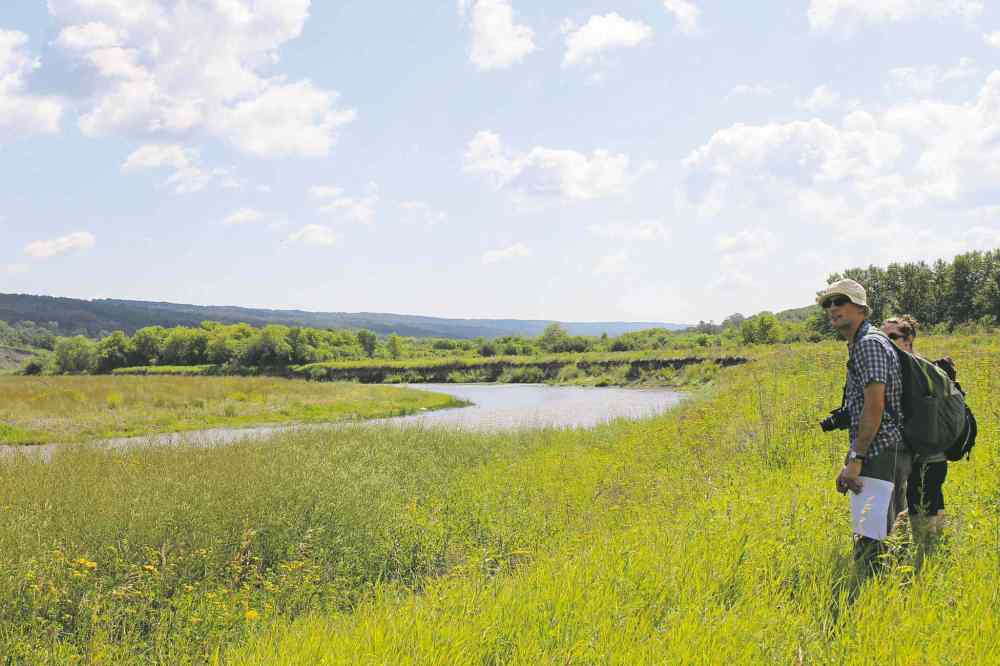
The picturesque area has some of the highest raptor counts in North America, including red-tailed hawks, Swanson’s hawks and golden eagles.
“In the spring there are hundreds of raptors that can be spotted on a daily basis,” Mackintosh said Friday.
He said the area also contains 16 rare plant species and 480 in total, plus 75 species of breeding birds.
The park opened in 2001 as 440 acres of natural area in south-central Manitoba, south of Morden, bordered by the Pembina Valley Wildlife Management Area. The expanded park will lay adjacent to the Tetrault Woods State Forest across the North Dakota border.
Public consultations on adding land purchased from private landowners and the conversion of two units of land in the wildlife-management area to the park will begin this spring. Permitted recreation uses will also be discussed.
Mackintosh said only about one per cent of Manitoba’s protected lands are situated south of the Trans-Canada Highway, making the proposed expansion even more important.
The park is characterized by the valley’s steep slopes, carved from the soft shale bedrock of a glacial spillway, and features ridges of oak and aspen. The Pembina River flows through the park.
It’s hoped new recreational activities will be developed in the park, including a longer hiking trail and the possibility of backcountry camping.
Mackintosh said the area is at risk of being developed. That’s why the government, with help from the Nature Conservancy of Canada, acquired land in the area. Total cost was $605,000, with the NCC contributing $195,000.
“It is one of the most beautiful places in this province and we have to keep it that way,” Mackintosh said.
Jeff Polakoff, the NCC’s regional vice-president, said the location is a staging area for raptors, particularly red-tailed hawks.
“It’s also a special area because of the number of ironwood trees,” he said, which are rare in Manitoba.

Some 320 acres of the new proposed park area is being purchased from the Olafson family.
Paul Olafson and his sister Oddney Sager said Friday they wanted to see the land protected.
“We didn’t want someone buying it and developing it into housing or cabins,” said Olafson. “We wanted it left the way it is now.”
larry.kusch@freepress.mb.ca