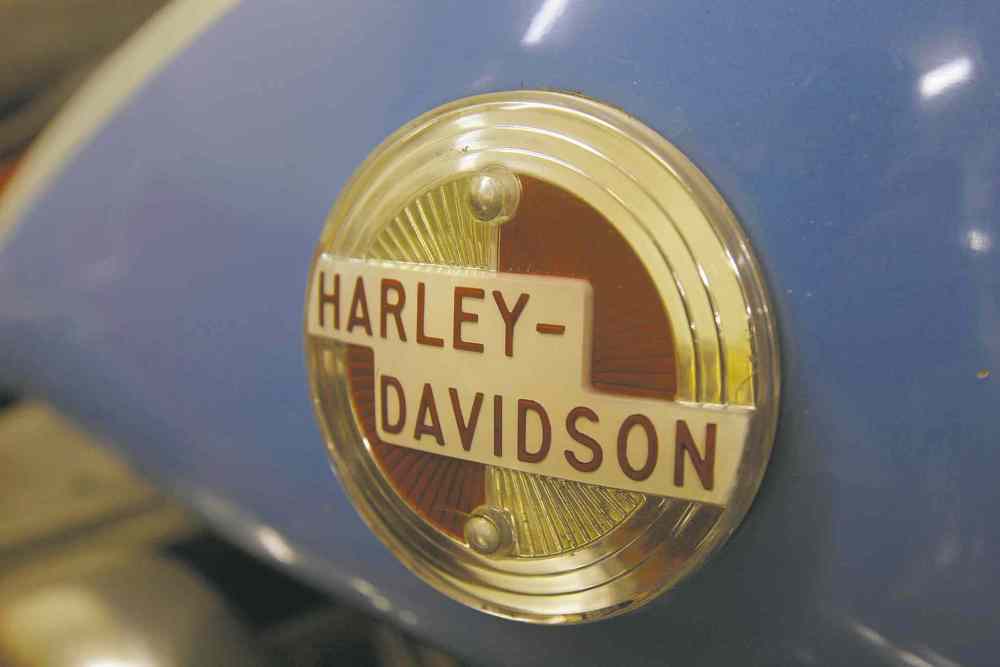
Going whole hog: Harley dealership owner has collection of 20 vintage bikes
Advertisement
Read this article for free:
or
Already have an account? Log in here »
To continue reading, please subscribe:
Digital Subscription
One year of digital access for only $1.44 a week*
- Enjoy unlimited reading on winnipegfreepress.com
- Read the E-Edition, our digital replica newspaper
- Access News Break, our award-winning app
- Play interactive puzzles
*Billed as $5.77 plus GST every four weeks. After 52 weeks, price increases to the regular rate of $19.95 plus GST every four weeks. Offer available to new and qualified returning subscribers only. Cancel any time.
To continue reading, please subscribe:
Add Free Press access to your Brandon Sun subscription for only an additional
$1 for the first 4 weeks*
- Enjoy unlimited reading on winnipegfreepress.com
- Read the E-Edition, our digital replica newspaper
- Access News Break, our award-winning app
- Play interactive puzzles
*Your next Brandon Sun subscription payment will increase by $1.00 and you will be charged $17.95 plus GST for four weeks. After four weeks, your payment will increase to $24.95 plus GST every four weeks.
Read unlimited articles for free today:
or
Already have an account? Log in here »
Hey there, time traveller!
This article was published 18/04/2015 (4057 days ago), so information in it may no longer be current.
MORDEN — Rudy Ens is glad he bought his vintage Harley-Davidson motorcycles before the Internet came along or he could never have afforded his amazing collection of bikes.
That may not make sense to many of us, because you can find anything you want on the Internet today.
Exactly, said Ens. It is easier to find vintage Harleys on the Internet, but so can everyone else. That leads to bidding, and that drives up prices. “If you find something on eBay, you bid against the whole world,” he said.
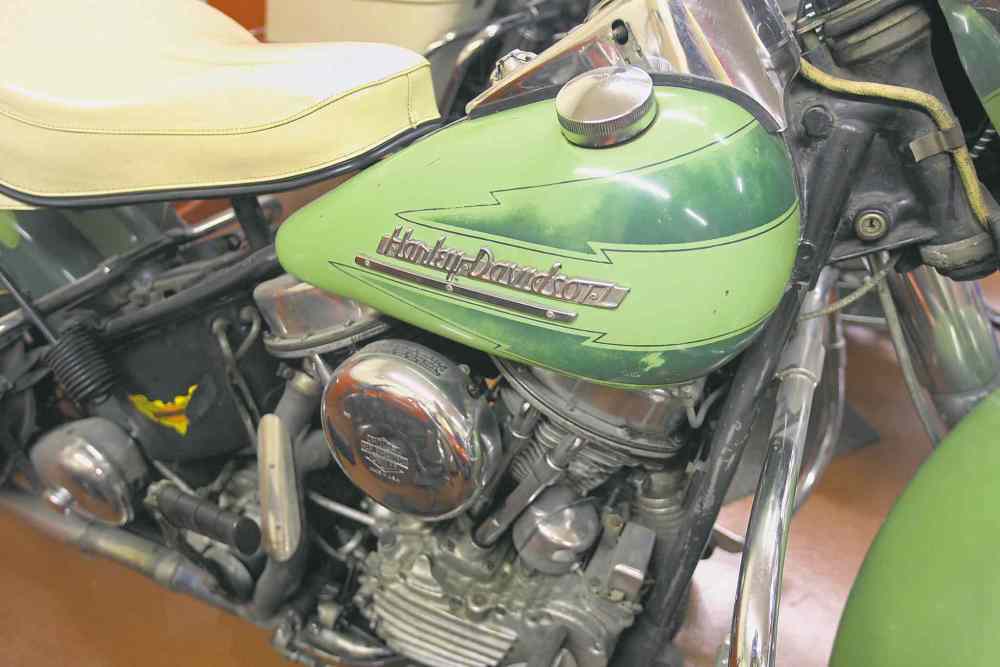
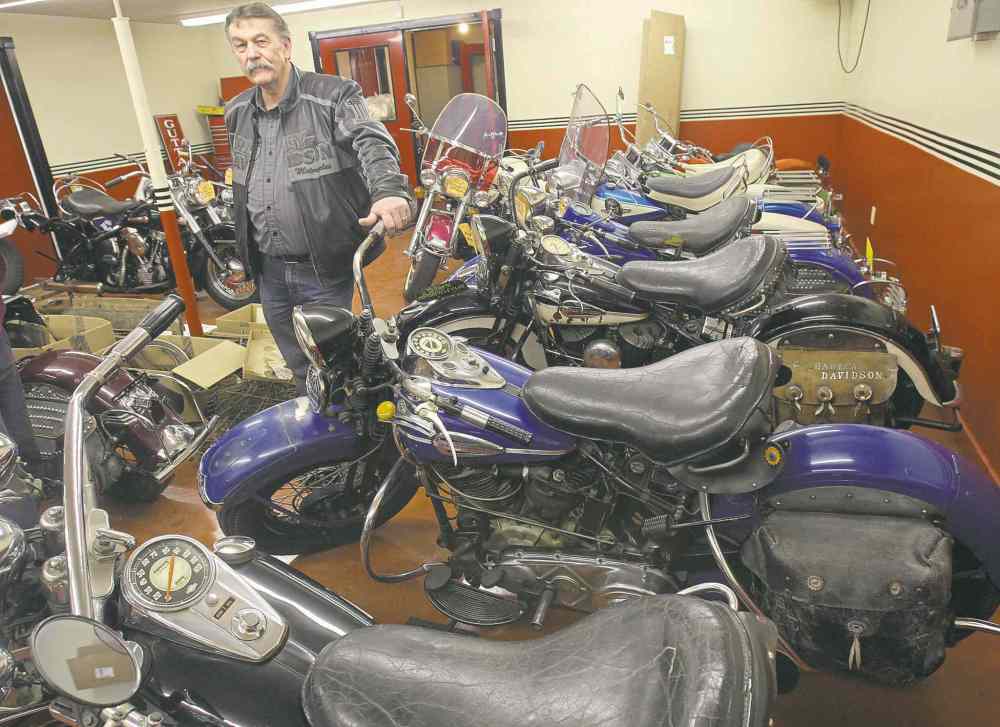
Ens has a collection of 20 vintage Harley-Davidsons, dating from 1937 to 1967. The collection includes Shovelheads, Flatheads, Knuckleheads, Panheads but no pinheads (there is no such engine). Nor does it include Blockheads, a Harley-Davidson engine that existed from 1984 to 2000 (too new to rate as vintage).
They sound like the names of grease monkeys in a slapstick comedy, but they are really slang terms for different era Harley engines, describing the physical shape of the rocker box. “Those names never came from Harley-Davidson. They’re all old-time biker nicknames, but they stuck,” Ens explained.
Ens owns Gaslight Harley-Davidson in Morden, one of only two Harley dealerships left in Manitoba. Harley-Davidson Winnipeg is the other. Ens has owned the motorcycle shop for 43 years and has been a Harley dealer for 38 years. He has 13 employees.
Ens keeps his vintage bikes in a backroom. The mingling aroma of oil, gasoline and leather is like a male perfume.
The Harleys in Ens’ collection are called “survivors” because they are in their original form, not restored. Ens was prescient in not following the trend to restore old motorcycles because now the originals are worth more.
“In the old days, guys would chrome them up and paint them,” and add reproduction parts, he said. “As time went on, guys realized they were buying fake motorcycles.”
He collected his vintage motorcycles the old-fashioned way: through magazine and newspaper ads, telephone calls, random tips and the like. He ran an ad in biker mag Hemmings Motor News, searching for an “unrestored” 1947 Knucklehead because he was born that year. He got a response from a guy in Texas. At the time, the Harley-Davidson Heritage Classic was in such demand in Texas there was a two-year waiting list. So Ens traded him a 1993 Heritage Classic from his dealership for the Knucklehead.
His collection includes a 1967 Electra Glide with the last kick-starter on a Harley bike. It has an electric starter, too, but Harley held onto the kick-starter for backup. “It was like wearing suspenders and a belt at the same time,” said Ens. It cost $2,800 brand new and still has just 7,800 miles (12,552 kilometres) on the odometer.
He has three Harleys from 1949. One he located in Davenport, Iowa, where it was allegedly owned from 1949-53 by an American soldier killed in the Korean War. The man’s family had the bike in storage in a barn for nearly half a century before selling. Ens concedes you never know the veracity of such stories, but the 1949 Panhead’s odometer shows just 11,900 miles (19,151 km).
Harley has always used genuine leather saddles and saddlebags. But while the motorcycle maker is known for its quality and authentic materials, some of that changed during wartime. “During the Second World War, certain things had to be saved for war production, like chrome, stainless steel and rubber,” Ens said.
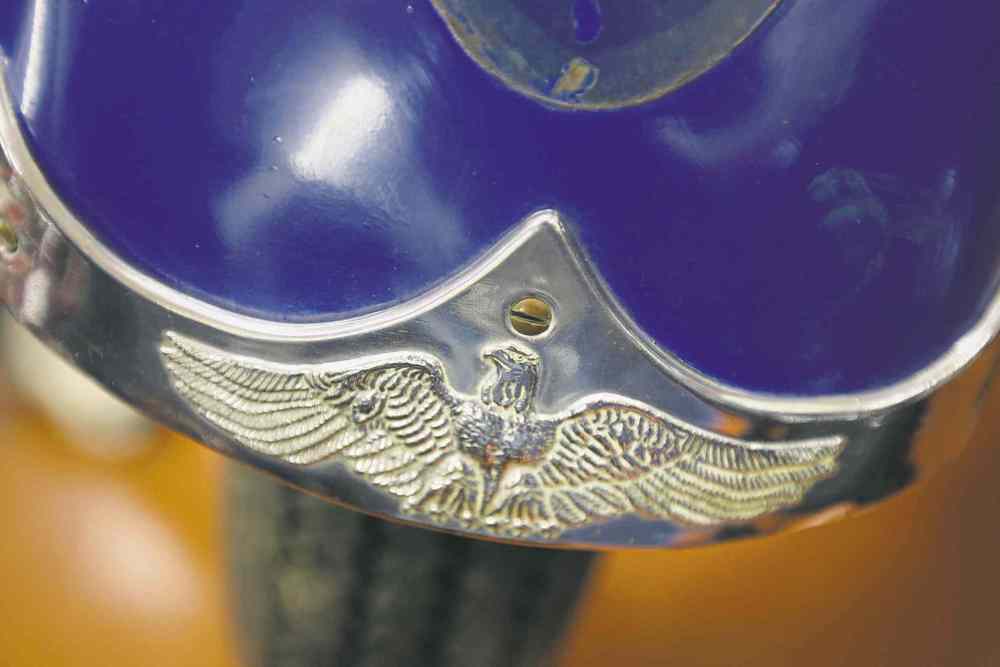

So its 1946 Civilian motorcycle was still built under wartime restraints. For example, the wheel rims are painted black instead of chrome plate, and the handle grips and kick-starter are covered in plastic, not rubber.
Ens found another bike, a 1959 Police Special, in the basement of an assisted-living apartment in Edmonton. It had been used by an RCMP officer in Moose Jaw. The bike was slated for auction in 1962. The officer bought it back for his personal use, then parked it in storage until 1987 when Ens bought it. It still has a working siren and pursuit lamp (flashing red light).
Ens is cautious about publicizing dollar values, but some of his machines could sell for up to $150,000 in an auction. More typical is a 1953 Panhead he says fetches $50,000 today. Another factor driving up prices is people are looking to invest their money where it can appreciate, with bank interest being so low.
His collection includes the 1937 U model, the first year the model came out, found in Casselton, N.D., and a 1949 sidecar model, one of only 58 made that year. One advantage for collectors is motorcycles tend to age better than cars because they aren’t run in winters when road salt damages the bodies, he said.
bill.redekop@freepress.mb.ca