

Foreign worker success story
Advertisement
Read this article for free:
or
Already have an account? Log in here »
To continue reading, please subscribe:
Monthly Digital Subscription
$1 per week for 24 weeks*
- Enjoy unlimited reading on winnipegfreepress.com
- Read the E-Edition, our digital replica newspaper
- Access News Break, our award-winning app
- Play interactive puzzles
*Billed as $4.00 plus GST every four weeks. After 24 weeks, price increases to the regular rate of $19.95 plus GST every four weeks. Offer available to new and qualified returning subscribers only. Cancel any time.
Monthly Digital Subscription
$4.99/week*
- Enjoy unlimited reading on winnipegfreepress.com
- Read the E-Edition, our digital replica newspaper
- Access News Break, our award-winning app
- Play interactive puzzles
*Billed as $19.95 plus GST every four weeks. Cancel any time.
To continue reading, please subscribe:
Add Free Press access to your Brandon Sun subscription for only an additional
$1 for the first 4 weeks*
*Your next subscription payment will increase by $1.00 and you will be charged $16.99 plus GST for four weeks. After four weeks, your payment will increase to $23.99 plus GST every four weeks.
Read unlimited articles for free today:
or
Already have an account? Log in here »
Hey there, time traveller!
This article was published 27/04/2015 (3996 days ago), so information in it may no longer be current.
The federal government might have had its heart in the right place. It clamped down on the temporary foreign worker program that was funnelling thousands more foreign employees into Canadian workplaces — tripling to more than 300,000 since 2002. But its desire to protect Canadian jobs for Canadians was led by some spectacular, isolated examples of employers abusing the program.
And that’s a shame because the new restrictions on how many, and how long, foreign recruits can work in Canada are posing real consequences for some industries in Manitoba, and the province’s vaunted immigrant program, which works at turning many of the workers into permanent residents quickly. In fact, since 2005, 8,482 such workers in different sectors have become permanent residents in Manitoba.
In 2014 alone, 4,254 workers were hired from other countries. Many work in corporate or academic positions for shorter terms. But thousands over the years have been hired for hard labour or lower-skill jobs that Canadians won’t take, in sectors that will be hardest hit by the new rules. Work permits are for one year now, not two, and by 2017, any workplace can have a maximum of 10 per cent of its workforce composed of foreign staff.
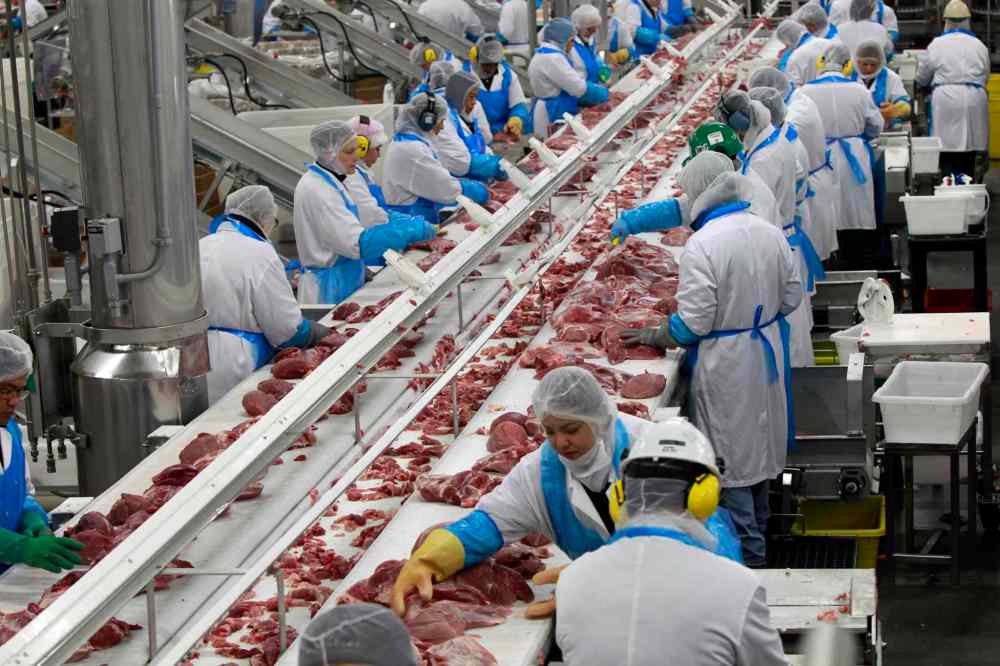
The foreign workers have helped build Manitoba’s pork industry. Packing plants in Brandon and Neepawa slaughter millions of pigs each year, with much of the meat exported. The pork industry has boosted the local and provincial economies and population.
Some 250 at Maple Leaf Foods’ Brandon operation of 1,900 employees, and about 30 per cent of Hylife’s 1,100 Neepawa employees, are working on foreign work permits. They, like hundreds before them, are moving to permanent residency through Manitoba’s provincial nominee program. Maple Leaf says about 75 per cent of its foreign workforce over the years has become permanent residents; Hylife says their figure is about 80 per cent.
But the meat processing industry has high turnover, between 15 and 30 per cent, and must constantly recruit workers. Further, the Brandon plant wants to expand, and hire another 350 employees. While that will require boosting the supply of pigs (and pig barns), an inability to hire enough people would also frustrate that goal.
Ottawa’s tougher rules put at risk well-run immigrant worker programs, and the economic benefits they bring. The isolated abuses used to justify the changes should, and could, be curbed by close inspection. But Manitoba has shown that can be done, alongside immigration worker recruitment.

Manitoba employers applying for federal TFW permits must also register provincially. That allows labour standards inspectors to inspect workplaces and address violations. Since 209, sixteen fines have been issued for violations.
Hylife says it is working on a plan to adjust from 30 per cent foreign workers, to 10 per cent — a real hurdle. Maple Leaf says Canada’s struggling economy has helped it hire more Canadians, but expects that will last only until the job market rises again.
Other provinces, notably Alberta, with extensive backlogs in provincial nominee programs are in worse shape than Manitoba. The fear, though, is that the one-year permits will make it tough to bring foreign workers’ English proficiency to an adequate level, to qualify for permanent residency.
The federal government is justified in putting pressure on businesses to recruit Canadians first. It has also championed Manitoba’s ability to track work conditions for foreign workers, and clipping abuses.
However, Manitoba’s approach has shown aggressive foreign recruitment and immigration can work. The Harper government should encourage other provinces to follow suit. And it should track the effect of the new TFW rules on productivity. It can then ease up on the sectors that play by rules, while boosting Canada’s economy.