

Old pumping station was once pretty on the inside
Architectural anomaly
Advertisement
Read this article for free:
or
Already have an account? Log in here »
To continue reading, please subscribe:
Monthly Digital Subscription
$1 per week for 24 weeks*
- Enjoy unlimited reading on winnipegfreepress.com
- Read the E-Edition, our digital replica newspaper
- Access News Break, our award-winning app
- Play interactive puzzles
*Billed as $4.00 plus GST every four weeks. After 24 weeks, price increases to the regular rate of $19.95 plus GST every four weeks. Offer available to new and qualified returning subscribers only. Cancel any time.
Monthly Digital Subscription
$4.99/week*
- Enjoy unlimited reading on winnipegfreepress.com
- Read the E-Edition, our digital replica newspaper
- Access News Break, our award-winning app
- Play interactive puzzles
*Billed as $19.95 plus GST every four weeks. Cancel any time.
To continue reading, please subscribe:
Add Free Press access to your Brandon Sun subscription for only an additional
$1 for the first 4 weeks*
*Your next subscription payment will increase by $1.00 and you will be charged $16.99 plus GST for four weeks. After four weeks, your payment will increase to $23.99 plus GST every four weeks.
Read unlimited articles for free today:
or
Already have an account? Log in here »
Hey there, time traveller!
This article was published 03/05/2015 (3989 days ago), so information in it may no longer be current.
McPhillips Street can be called many things, but beautiful is not one of them.
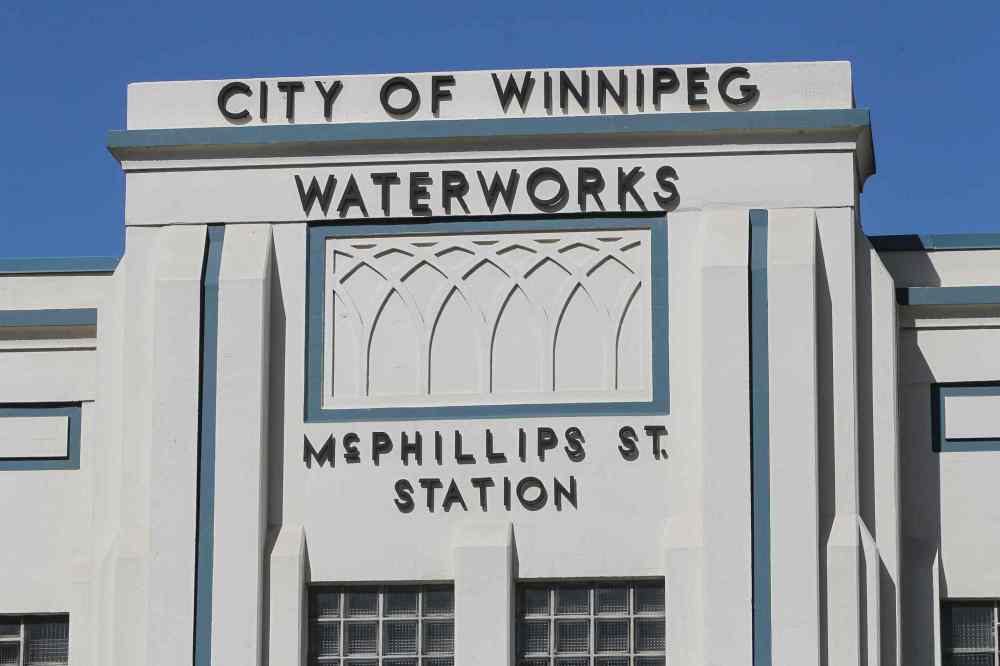
Yet, tucked away behind an expansive lawn just northwest of the intersection with Logan Avenue, is the old McPhillips Street Pumping Station, referred to in the 1930s by one newspaper editor as “one of Winnipeg’s most beautiful buildings,” with a facade and grounds more suited to an art gallery than a pumping station.
This building is the second of three pumping stations that have stood on this site. Their story tells the history of Winnipeg’s early waterworks system.
Despite incorporating in November 1873, the city did not get into the waterworks business until 1899. Prior to that, the provision of water to homes and businesses was contracted to a private firm called the Winnipeg Waterworks Company. The water, drawn from either the Red or Assiniboine rivers, was delivered by ox cart.
As the city’s population grew, the lack of a sufficient fresh water supply and/or sewage system created the perfect conditions for typhoid. By the late 1800s, the city faced hundreds of cases and dozens of deaths each year from the bacterial disease.
In 1899, the city introduced a sweeping public health bylaw that included the hiring of a public health officer and a crackdown on the number of outhouses and cesspools within city limits, and took control of the water distribution system. To ensure a safer supply, a couple of large artesian wells were dug on the western edge of the city near McPhillips Street.
This did not stop the spread of the disease. By 1904-05, the city was in the grips of a full-fledged typhoid epidemic. In 1905, the number of cases totalled more than 1,600, and typhoid killed 133 people.
Disease was just one factor in the need to improve the city’s central water supply.
In 1904, the Bulman Block fire on Bannatyne Avenue destroyed the original Ashdown Hardware building and the upper storeys of both the Duffin and Baker (Birt Saddlery) block and the Woodbine Hotel. The fire could have been much worse. The city’s water pressure was no match for such an inferno, unable to reach the upper floors of the buildings of the day, much less the new “skyscrapers” that were beginning to emerge on the city’s skyline.
In 1906, the city announced the construction of the first McPhillips Street Pumping Station, with an adjoining, open-air reservoir near the intersection of McPhillips and Logan. The station, which opened the following year, used coal-fired motors to operate a series of water pumps capable of distributing more than 105 million litres per day, at maximum load, to the entire city. It wasn’t until 1909 that the James Street Pumping Station opened and the two shared the load.
The engines of the McPhillips station generated enough power from its three units to also feed Winnipeg’s street-light system until City Hydro opened a substation on King Street in 1911.
By the mid-1920s, the aging McPhillips station and reservoir were considered too small to meet the future water needs of Winnipeg. For the city, the obvious location for the new infrastructure was next to the existing site, because they already owned two-thirds of the adjacent 15 acres of land and the site was already connected to the 1919 Shoal Lake aqueduct.
The choice was not without controversy. Residents from the Weston neighbourhood, at the time nicknamed “CPR Town,” appeared at a city council committee meeting to protest.
They claimed the new facility would keep their property values from rising. Some also pointed out it was a silly place for an open-air reservoir, just metres from the Canadian Pacific Railway’s Weston Shops and related industrial activity, including a coal-fired smelter. Thomas Hooper, the superintendent of the waterworks, assured council the residue from the soot and smoke would be “merely a trifle.”
‘Inside the building, everything is as spotless as the exterior might suggest. Brass rails are burnished and electric circuit breakers resplendent in coats of paint’ — Winnipeg Tribune city editor A.V. Thomas in 1933
Council sided with Hooper, and the tender for the new pumping station and 150-million litre reservoir was let in April 1929.
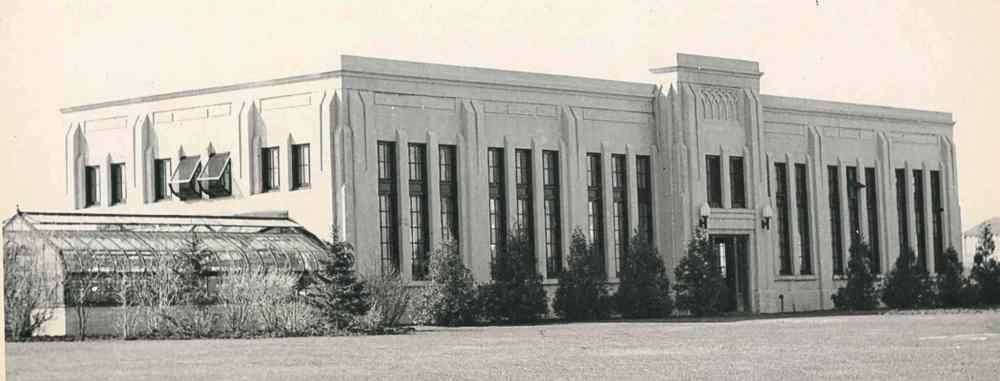
The building was designed by William Fingland. The Ontario-born architect is noted for dozens of smaller-scale buildings throughout Manitoba, mostly stores and bank branches. Two years earlier, he designed the Greater Winnipeg Water District Station on Plinguet Street in St. Boniface. The City of Winnipeg acted as the contractor, with city engineer W.P. Brereton overseeing construction using day labour.
The firm G.B. Wood Limited won the contract to excavate the 76,000 cubic metres of earth for the reservoir. Not long after work began, though, Wood pulled his equipment off the site. The city’s tender underestimated the depth he had to dig to find the proper type of clay on which the reinforced concrete lining would be laid. The two battled for weeks over who would cover the extra costs. They finally agreed to split the difference, though Wood contended he lost $6,000 on the contract.
The station itself cost around $40,000 to construct. In addition, there was a long list of specialized equipment that was tendered separately, everything from the massive pump engines and high-pressure pipes to an overhead crane and even a greenhouse. Add to that land purchases, the construction of the reservoir, fencing and the cost of demolishing the old station, and the total project cost was in the neighbourhood of $300,000.
The pumping station went into operation without fanfare in 1930. It wasn’t until April 1933 that city councillors had their first official look at the building. Along for the tour was A.V. Thomas, city editor of the Winnipeg Tribune. He described the interior this way:
“Inside the building, everything is as spotless as the exterior might suggest. Brass rails are burnished and electric circuit breakers resplendent in coats of paint. The motors, half a dozen of them, are neatly mounted and disposed in orderly fashion, a row of meters recording flow and pressure look wise in their clock-like cabinets. And off the tiled floor, you could eat the proverbial meal.”
Throughout the 1930s, the station pumped an average of between 52 million to 64 million litres of water per day, though at its peak could provide 170 million litres.
It served the municipalities surrounding the old city of Winnipeg that signed on to the Greater Winnipeg Water District, including St. James, Fort Garry, Assiniboia and the Kildonans (St. Boniface and St. Vital had their own water distribution systems.) The water pressure was kept at 70 PSI (pounds per square inch), which was 10 pounds more than the old station. In case of fire, the fire chief could order it increased to 80 PSI.
A notable feature of the old McPhillips Street Pumping Station was its landscaping. Soon after the building was completed, the city’s parks board was put in charge of beautifying the site. It installed the lawn, bushes and trees, as well as large garden plots. The flowers were grown in the on-site greenhouse.
One of the men responsible for the upkeep of the site was George Deans, a waterworks employee who lived in the adjacent Weston neighbourhood. Groundskeeper Deans was an avid gardener and a member of the Manitoba Horticultural Society, and ensured the lawns and gardens at the station were every bit as beautiful as those found in any city park.
When he retired from the city in 1950, the waterworks department hired him back on contract to tend the gardens at their various properties around the city.
In 1961, Metro Winnipeg issued a report on Winnipeg’s future water needs and recommended a larger and covered, 189-million litre reservoir be added to the McPhillips Street site. In December 1965, Metro approved the $6.5-million capital expenditure, and the new station and reservoir, which serves the city to this day, opened in 1968.

As for the old station, it is no longer connected to the city’s water supply. The engines, burnished brass rails and resplendent circuit breakers are long gone.
However, thanks to its solid construction and column-free interior, it was spared the wrecker’s ball and serves as a maintenance and storage garage for the city’s water and waste department.
Christian Cassidy writes about local
history on his blog, West End Dumplings.