

Soccer is about to grow into adulthood in Canada
Advertisement
Read this article for free:
or
Already have an account? Log in here »
To continue reading, please subscribe:

Digital Subscription
One year of digital access for only $205*
- Enjoy unlimited reading on winnipegfreepress.com
- Read the E-Edition, our digital replica newspaper
- Access News Break, our award-winning app
- Play interactive puzzles
*First annual payment billed as $205.00 + GST for one year. This annual subscription will automatically renew at $233.00 + GST every 52 weeks (10% off the regular annual price of $259.35). Offer available to new and qualified returning subscribers only. Cancel any time.
To continue reading, please subscribe:
Add Free Press access to your Brandon Sun subscription for only an additional
$1 for the first 4 weeks*
- Enjoy unlimited reading on winnipegfreepress.com
- Read the E-Edition, our digital replica newspaper
- Access News Break, our award-winning app
- Play interactive puzzles
*Your next Brandon Sun subscription payment will increase by $1.00 and you will be charged $17.95 plus GST for four weeks. After four weeks, your payment will increase to $24.95 plus GST every four weeks.
Read unlimited articles for free today:
or
Already have an account? Log in here »
Hey there, time traveller!
This article was published 05/06/2015 (4098 days ago), so information in it may no longer be current.
It takes an extraordinary event to change our ways. Something has to grab our attention and spur our imagination. Isolated incidents can alter an individual, but to get an entire generation to change direction, the impetus must be huge.
Welcome to the 2015 Women’s World Cup and the summer of soccer in Canada. In this country, we have Expo babies, children who literally got their start in life during the summer of 1967 as Canada hosted the world exposition in Montreal.
Soccer in Canada is about to conceive World Cup babies.
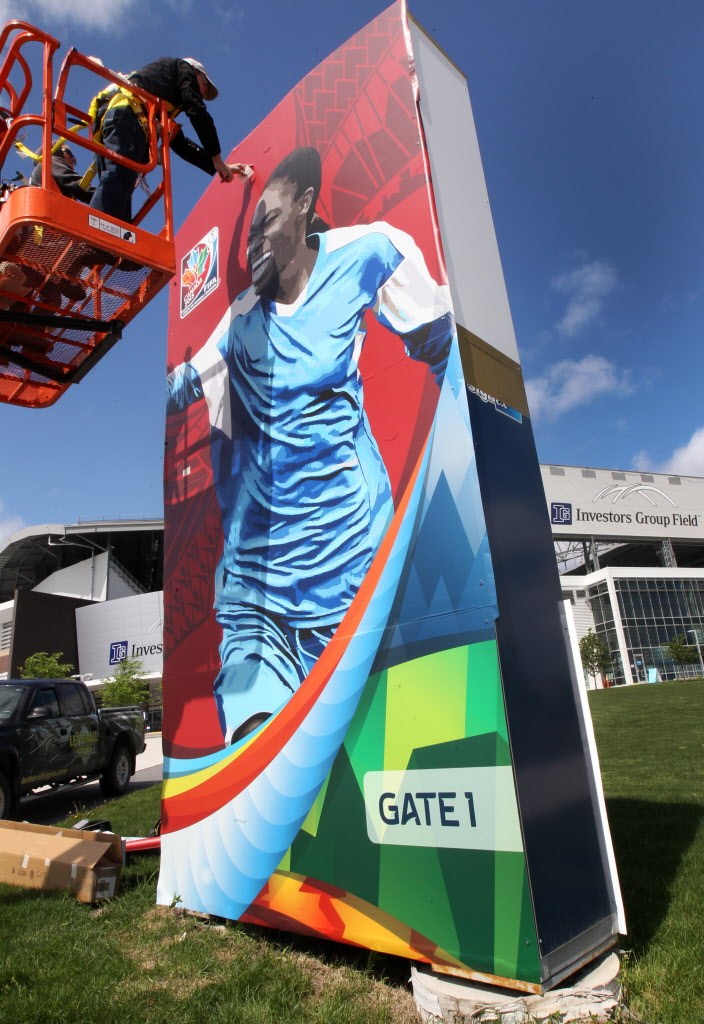
Soccer in Canada is about to experience its own boom, and hosting the World Cup in cities across our nation will produce lasting effects, from the grassroots level all the way to our national team programs.
Canadians will look back at the summer of 2015 as the time soccer came of age in this country.
Boys and girls will attend World Cup games in Winnipeg and across our country over the next month and leave wanting to be just like the players they’ve watched.
They won’t want to just play rec soccer. They’ll want to play rep soccer. They’ll want better coaches, facilities and administrators. They’ll want soccer to step up. To be like hockey.
“That’s the legacy the World Cup will leave,” said Manitoba Soccer Association executive director Héctor Vergara Friday. “This is the best soccer and it will show on the pitch. The games will leave people talking about soccer and wanting to get better at the game. To improve our associations and our players. To be better at the grassroots level and at the national team level.”
Soccer is global, but hockey is Canada’s game. The World Cup, however, could shift the focus of our children.
While our top athletes have always turned to hockey, this summer the very best in the world playing on our fields, living in our cities and drawing our admiration, will create a trend toward our best natural athletes giving soccer more than just a passing kick.
This summer will see our little boys and girls move in the same circles as global champions. Players with style and panache and skill and passion. Our kids are going to want to be just like them. It will push soccer a little forward in their minds and imaginations. For some, it will even surpass hockey.
Abby Wambach will sign an autograph or tousle a kid’s hair and create a convert. Dez Scott will tackle an opponent and have little boys imitating her in their neighbourhood parks.
“Soccer truly is the world’s game and it’s great to see so many of Manitoba’s cultural communities come together to cheer on their teams,” said Chad Falk, Winnipeg’s venue general manager.
“A great example: Winnipeg’s Chinese community has gathered almost 1,000 soccer fans to cheer on China when they play here June 15. This competition will leave a lasting legacy for sport and for women in Canada.”
There’s a phenomenon that sees our children emulate our sporting heroes. In Canada, our kids watch the NHL on TV every night of the winter and then go out and chase pucks of their own. Our best athletes, boys and girls, gravitate to hockey more than any other sport.
It’s why our national hockey teams are the best in the world. The pair of gold medals won by our men’s and women’s hockey teams in Sochi came as a result of many things, including elite coaching and minor programs. But at the very root of our hockey success is the desire of young people to put on skates and endure cold, sore feet to learn to play hockey.
Historically, the best male athletes in the U.S. play point guard in basketball, shortstop in baseball and quarterback in football. Those are the glory positions in the sports they watch on TV and at the stadiums and arenas in their towns.
Sometimes, however, a player or an event can cause a blip. Bobby Orr and his Stanley Cup-winning Boston Bruins as well as Team USA’s Miracle On Ice drew focus across the U.S., resulting in a surge in talent for USA Hockey.
The 1996 World Cup champion American squad was made up of players referred to in the U.S. as the country’s greatest generation of hockey players.

Orr and Jim Craig and Mike Eruzione got their attention and all of a sudden they wanted to play hockey. Not just for fun, but for scholarships and money and world titles.
These were seismic sporting events that, for a time, changed a country’s landscape. The World Cup will do the same for us.
Soccer is going to grow in Canada as a result of the World Cup. It just might grow up, too.
gary.lawless@freepress.mb.ca
Twitter: @garylawless
Related Articles
Christine Sinclair adds to scoring legacy







Advertisement Advertise With Us
Advertisement Advertise With Us
History
Updated on Friday, June 5, 2015 10:18 PM CDT: Updated story and headline.