

History of Winnipeg’s indigenous people ignored by FIFA
City's aboriginal history, peoples missing on information for media

Advertisement
Read this article for free:
or
Already have an account? Log in here »
To continue reading, please subscribe:
Monthly Digital Subscription
$0 for the first 4 weeks*
- Enjoy unlimited reading on winnipegfreepress.com
- Read the E-Edition, our digital replica newspaper
- Access News Break, our award-winning app
- Play interactive puzzles
*No charge for 4 weeks then price increases to the regular rate of $19.95 plus GST every four weeks. Offer available to new and qualified returning subscribers only. Cancel any time.
Monthly Digital Subscription
$4.99/week*
- Enjoy unlimited reading on winnipegfreepress.com
- Read the E-Edition, our digital replica newspaper
- Access News Break, our award-winning app
- Play interactive puzzles
*Billed as $19.95 plus GST every four weeks. Cancel any time.
To continue reading, please subscribe:
Add Free Press access to your Brandon Sun subscription for only an additional
$1 for the first 4 weeks*
*Your next subscription payment will increase by $1.00 and you will be charged $16.99 plus GST for four weeks. After four weeks, your payment will increase to $23.99 plus GST every four weeks.
Read unlimited articles for free today:
or
Already have an account? Log in here »
Hey there, time traveller!
This article was published 12/06/2015 (3861 days ago), so information in it may no longer be current.
Information about Winnipeg for media covering the 2015 FIFA Women’s World Cup includes much about the city’s history and culture but makes no mention of its indigenous people.
Described as a fur-trading post at the geographic centre of North America where “Scottish crofters” first settled in 1812, the FIFA online media channel for accredited journalists fails to say anything about Winnipeg’s aboriginal history or population.
Beneath a photo of The Forks where the Red and Assiniboine rivers meet, the 1,110-word profile refers to a “world-class skateboard park” but not the First Nations people who’ve gathered there for 6,000 years.
The communication and media relations co-ordinator for Tourism Winnipeg was puzzled by the FIFA profile.
“We’re not sure who’s provided this copy, especially the history section,” said Alan MacPherson at the city’s tourism information office.
“… I’m sure it’s difficult to sum up a city in a few hundred words,” he said in an email, “and this is what they came up with.”
The agency has no say in what FIFA decides to post on its website, he said. As of Thursday, FIFA hadn’t shared Tourism Winnipeg’s “things to do in Winnipeg during FIFA” post, or an updated “top 10 things to do” post, said MacPherson. Those posts highlight such things as the St. Boniface Museum, which shares Métis history, and the Winnipeg Art Gallery with its collection of aboriginal art, he said.
Next to the article about Winnipeg on FIFA’s online media channel is a 30-second Travel Manitoba video.
Its images include a woman playing a Japanese drum on a dragon boat, but the commercial doesn’t promote anything or anyone aboriginal.
Travel Manitoba says it had no say in what FIFA chose to show to the world media.
“We provided all four of our commercials to the Canadian Tourism Commission and FIFA Canada to use as they saw fit,” spokeswoman Linda Whitfield said in an email.
FIFA did not respond to a request for comment Thursday.
FIFA’s omission of the city’s indigenous history and culture is no surprise to the president of the Aboriginal Council of Winnipeg. Damon Johnston said a lack of resources and self-promotion are partly to blame.
“Has our leadership paid any attention to organizations like FIFA or encouraged them to do anything?” he asked. They haven’t because they’ve suffered “huge” budget cuts, Johnston said.
Federal cuts to the Assembly of Manitoba Chiefs saw its annual funding drop to $500,000 from $2.5 million, he said. The Aboriginal Council of Winnipeg’s funding has been halved, said Johnston.
“All the staff lost their capacity to do all this stuff.”
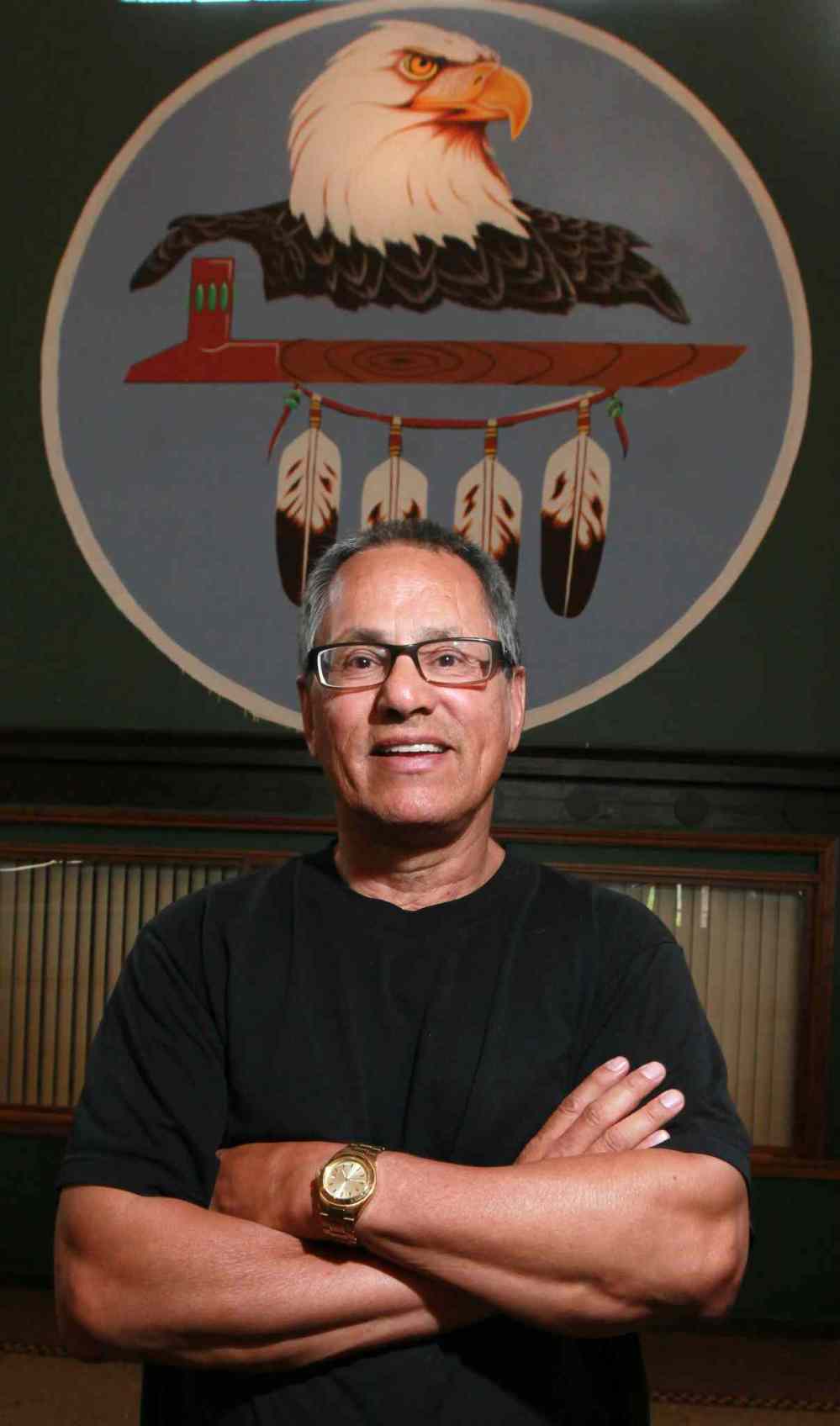
Visitors to Winnipeg from around the globe are interested in Canada’s indigenous people, said Johnston. On Wednesday, he was interviewed and photographed at the Aboriginal Centre by an Australian journalist here for the Women’s World Cup.
“He was quite blown away by this place,” Johnston said from his office in the former CP Rail station, “even though it’s not an aboriginal design.” He will point visitors to Thunderbird House across the street. “It’s a truly aboriginal place” with an aboriginal architect and round design. “It’s unique in that way.”

Traditionally, indigenous groups in Winnipeg haven’t been big self-promoters or joined forces to draw attention to themselves, said Johnston. But that’s changing.
Tourism Winnipeg reached out to the community recently, asking Johnston what more could be done to promote aboriginal tourism, he said.
The Aboriginal Council of Winnipeg has applied for funding to set up a new indigenous executive circle, with leaders of major organizations looking at development issues including tourism, said Johnston, who is on the board of Economic Development Winnipeg.
“It’s going to come for sure,” he said. “The first step is being done now with engagement from different leaders.”
carol.sanders@freepress.mb.ca
Carol Sanders
Legislature reporter
Carol Sanders is a reporter at the Free Press legislature bureau. The former general assignment reporter and copy editor joined the paper in 1997. Read more about Carol.
Every piece of reporting Carol produces is reviewed by an editing team before it is posted online or published in print — part of the Free Press‘s tradition, since 1872, of producing reliable independent journalism. Read more about Free Press’s history and mandate, and learn how our newsroom operates.
Our newsroom depends on a growing audience of readers to power our journalism. If you are not a paid reader, please consider becoming a subscriber.
Our newsroom depends on its audience of readers to power our journalism. Thank you for your support.
Here’s the information FIFA gave to media about Winnipeg:
History
Winnipeg is located at the junction of the Red and Assiniboine Rivers, almost at the geographic centre of North America. While there have been fur trading posts on the site since 1738, the first permanent settlement of the area took place in 1812 when a group of Scottish crofters arrived. Winnipeg was incorporated as a city in 1873 with a population of 1,869 people. The arrival of the Canadian Pacific Railway in 1885 stimulated a 30-year period of growth and prosperity unequalled in Canadian urban development.
A flood of immigrants, high wheat prices, plentiful capital and improved farming techniques contributed to making Winnipeg the wholesale, administrative, and financial centre of Western Canada. Following World War I, economic stagnation – due to low wheat prices and the Depression – lasted well into the 1940s.
Since 1945, Winnipeg has grown steadily based on its position as a major grain, financial, manufacturing, and transportation centre. It is the eighth largest city in Canada and dominates the Manitoba economy.
Portrait
Winnipeg is Manitoba’s vibrant capital city, located at the centre of Canada and North America. With a population of more than 778,000 culturally diverse people, the city has a cosmopolitan, international flair and a warm, welcoming spirit.
Described as the “cultural cradle of Canada,” Winnipeg offers a variety of arts, culture, sports, recreation and entertainment to satisfy every taste. It’s a creative, four-season city that celebrates its rich culture through many historic sites, exhibits, attractions and yearly festivals. There are opportunities year round to get swept up in the excitement at Winnipeg’s many festivals. Whether kicking back outdoors to live folk music at the Winnipeg Folk Festival or watching cutting-edge theatre at the Winnipeg Fringe Festival, there are plenty of ways to discover something new. Winnipeg’s dynamic festivals highlight live music, theatre, multicultural eats and more.
From the architecturally distinctive Exchange District to the joie de vivre of Winnipeg’s French Quarter, to the heart of our past at The Forks, Winnipeg is a striking blend of old and new, traditional and avant-garde – a cultural oasis without pretension. Take advantage of our great shopping, spectacular attractions, exciting casinos, vibrant nightlife, and serene parks and nature walks.
Winnipeg is home to a great array of universities, including the University of Winnipeg, the University of Manitoba, Red River College and Universite de Saint Boniface.
Winnipeg has a tremendous amount of recreation, sports and entertainment for a city of its size. Our city has 40 soccer (football) pitches, 26 golf courses, 24 curling rinks, 30 indoor hockey arenas, casinos, a race track, professional teams in hockey, football and baseball, and world-renowned performing arts.
Winnipeg has the only 24-hour airport in Western Canada, located just 15 minutes from downtown.
Must-visit sights
Winnipeg is a city with a story to tell at just about every street corner. Discover ancient Masonic mysteries with a Hermetic Code Tour at the Manitoba Legislative Building or get spooked on a bus tour of Winnipeg’s most haunted spots. One of the best ways to explore and discover the city is through the many historical guided walking tours, river boat excursions and interpretive tours.
Opportunities abound to experience the great outdoors and wonders of nature in Winnipeg throughout the year. The city has several breathtaking parks and urban forests, such as Assiniboine Park and Zoo, Kildonan Park and The Forks National Historic Site.
– The Forks is found at the junction of the Red and Assiniboine rivers, featuring a nine-acre park; a plaza with fountains, open performance spaces, patios; a world-class skateboard park, and an array of shops and dining.
– The world-class Canadian Museum for Human Rights (CMHR) will be more than just a building when it opens in 2014 at The Forks. This iconic facility is an “idea” museum dedicated to the past, present and future of human rights, as it explores its evolution in Canada and abroad through dialogue, technology and interactive experiences. A must-see for all, visitors will be captivated by the stories heard and encouraged to participate in discussion, offering an unforgettable and moving experience.
– Fort Gibraltar is a re-creation of a North West Company trading post from 1815 located in Winnipeg’s French Quarter. A blacksmith shop, trading post and costumed interpreters bring the Fort to life.
– Assiniboine Park is one of North America’s largest urban parks, serving as a lush and popular gathering space for more than 100 years. Today, the park is entering a new chapter of development – a $200 million investment into Assiniboine Park and the Assiniboine Park Zoo is underway. Within the park, hot new attractions include the Qualico Family Centre and the children’s Nature Playground. Inside the Assiniboine Park Zoo, construction continues on the new Journey to Churchill, set to become the world’s most comprehensive polar bear exhibit when it opens in 2014. Portions of the exhibit are open, including the International Polar Bear Conservation Centre—a transition centre for rescued polar bear cubs—along with Tundra Grill and Polar Playground.
– The Children’s Museum boasts a recent $10-million renovation with 12 exciting new galleries.
– The Winnipeg Art Gallery is Canada’s oldest civic art gallery and houses the world’s largest collection of contemporary Inuit art, some which is always on display
– The Exchange District is a National Historic Site home to gorgeous Chicago-style architecture, trendy boutiques and eateries, and art galleries.
– Nine permanent galleries can be found at The Manitoba Museum. Visitors can step aboard a full-size replica of the 17th century ship, ‘The Nonsuch’; travel back in time to Winnipeg during the roaring 1920s; watch a digitally animated, 450-milllion-year-old underwater world brought to life on three jumbo-sized screens and view treasures from around the world. Located in the museum’s lower level, the Planetarium invites families to gaze at the night sky or journey into space, while the Science Gallery has more than 100 educational hands-on exhibits that explore scientific principles.
Football
Winnipeg has hosted a number of international soccer competitions, including Men’s FIFA World Cup qualification matches, men and women’s National Team exhibition matches. Winnipeg was also host of the 1967 and 1999 Pan American Games, in which nations from the Americas participated in the male and female soccer competitions.
In 1986, Winnipeg hosted the first Canadian Women’s National Team camp, from which 16 players were selected for a series of international matches in USA. Four years later, Winnipeg hosted Canada’s first home Women’s International Friendly match.
Soccer is a huge part of the fabric of the community that includes many participants from around the world that enjoy playing and watching the beautiful game. We have over 250 club/association members that comprise of over 16,300 registered players.
Carol Sanders
Legislature reporter
Carol Sanders is a reporter at the Free Press legislature bureau. The former general assignment reporter and copy editor joined the paper in 1997. Read more about Carol.
Every piece of reporting Carol produces is reviewed by an editing team before it is posted online or published in print — part of the Free Press‘s tradition, since 1872, of producing reliable independent journalism. Read more about Free Press’s history and mandate, and learn how our newsroom operates.
Our newsroom depends on a growing audience of readers to power our journalism. If you are not a paid reader, please consider becoming a subscriber.
Our newsroom depends on its audience of readers to power our journalism. Thank you for your support.
Advertisement Advertise With Us
Advertisement Advertise With Us