

Manitoba first jurisdiction in North America to protect entire ecosystems
Advertisement
Read this article for free:
or
Already have an account? Log in here »
To continue reading, please subscribe:

Digital Subscription
One year of digital access for only $205*
- Enjoy unlimited reading on winnipegfreepress.com
- Read the E-Edition, our digital replica newspaper
- Access News Break, our award-winning app
- Play interactive puzzles
*First annual payment billed as $205.00 + GST for one year. This annual subscription will automatically renew at $233.00 + GST every 52 weeks (10% off the regular annual price of $259.35). Offer available to new and qualified returning subscribers only. Cancel any time.
To continue reading, please subscribe:
Add Free Press access to your Brandon Sun subscription for only an additional
$1 for the first 4 weeks*
- Enjoy unlimited reading on winnipegfreepress.com
- Read the E-Edition, our digital replica newspaper
- Access News Break, our award-winning app
- Play interactive puzzles
*Your next Brandon Sun subscription payment will increase by $1.00 and you will be charged $17.95 plus GST for four weeks. After four weeks, your payment will increase to $24.95 plus GST every four weeks.
Read unlimited articles for free today:
or
Already have an account? Log in here »
Hey there, time traveller!
This article was published 16/06/2015 (4101 days ago), so information in it may no longer be current.
Manitoba’s few remaining patches of tall-grass prairie and the rare limestone plains known alvars are now officially considered endangered.
In the first move of its kind for a political jurisdiction in this hemisphere, the province conferred endangered status on two entire ecosystems on Tuesday.
One is tall-grass prairie, which used to cover a broad swath of North America, from Manitoba down to Oklahoma. Less than half of one per cent of this ecosystem remains, mostly in small patches, thanks to the conversion of wild lands to agricultural and urban uses, as well as the encroachment of forest due to the disappearance of plains bison and the absence of wildfires.
Also deemed endangered is the more uncommon alvar ecosystem, found in Manitoba only in a few small patches in the Interlake. Relatively rare worldwide, alvars look like barren patches of exposed or lightly vegetated limestone, but are actually home to a rare combination of prairie plants, mosses, lichens, birds and insects, including some species that don’t compete very well in lusher ecosystems.
The province’s decision to declare entire ecosystems endangered sends a message about the importance of preserving interconnected webs of species, said Cary Hamel, conservation science manager for the Manitoba chapter of the Nature Conservancy of Canada, a non-profit organization that buys up, manages and preserves wild lands.
“This recognizes ecosystems have thousands of species within them,” said Hamel, a former provincial and federal biologist. “We can keep listing one species at a time in these ecosystems, or we can think bigger.”
In practical terms, endangered status means legally designated alvars and patches of tall-grass prairie in Manitoba are now subject to more stringent land-use and management rules, said James Duncan, director of the wildlife branch within Manitoba Conservation and Water Stewardship.
For example, mining isn’t in alvars, while herbicide applications aren’t allowed in the tall-grass prairie, Duncan said. Lower-impact activities such as grazing, hunting and trapping may continue.
Manitoba is the first political jurisdiction outside New Zealand and Australia to declare ecosystems endangered. The province has also just declared three new species endangered, including two out of three bats known to overwinter and hibernate in Manitoba.
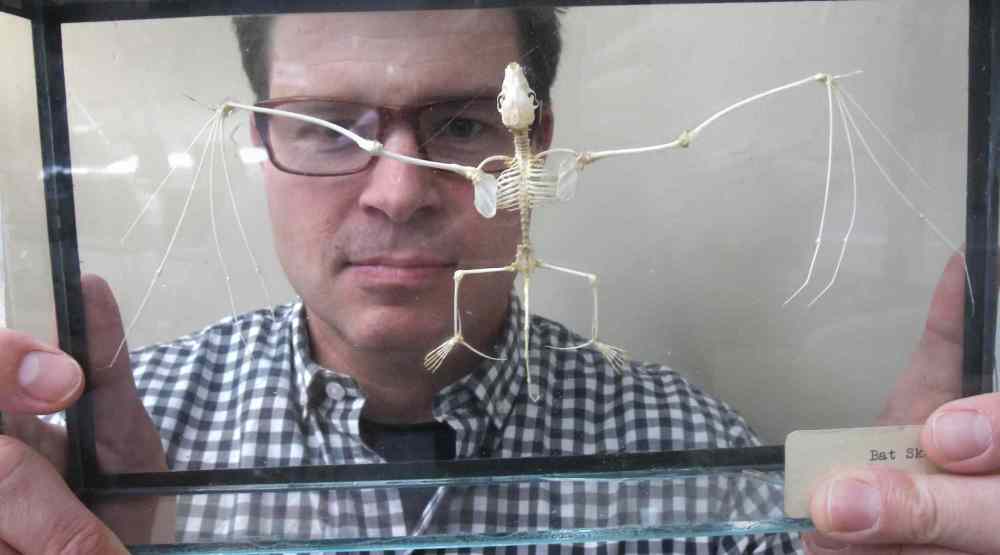
The little brown bat and northern long-eared bat remain plentiful in the province right now, but are in danger of steep decline due to the impending arrival of white-nose syndrome, a wasting disease that has decimated hibernating bat populations in eastern North America.
The syndrome is caused by an invasive Old World fungus known as Pseudogymnoascus destructans, which wakes up bats during their winter torpor and causes them to burn through their tiny fat supplies.
The fungus has been found in hibernacula, or bat caves, as far west as the Aitikokan, Ont. region, said University of Winnipeg biologist Craig Willis, a white-nose syndrome researcher and bat expert.
The endangered designation for the little brown and northern long-eared bats will translate into stiff fines for anyone who disturbs bat hibernacula on Crown land in Manitoba, said Duncan, the wildlife branch director.

“If they wake up once or twice during the winter, maybe they’re OK. But if they wake up six times, they’re dead,” he said.
A third bat species that hibernates in Manitoba, the big brown bat, is less threatened by white-nose syndrome because spends its winters in drier caves, where funguses are less likely to spread, Willis said. Big brown bats are also less common in Manitoba and are believed to congregate in smaller numbers.
Willis said three other bat species that migrate into Manitoba very summer face no threat from white-nose syndrome, yet are being decimated by wind turbines.
Also on Tuesday, Manitoba declared endangered Gastony’s cliffbrake, a fern found in alvars, while the olive-sided flycatcher – a bird – is now designated threatened. Another bird, the Canada warbler, has been downgraded from endangered to threatened.
History
Updated on Tuesday, June 16, 2015 3:15 PM CDT: Picture added.
Updated on Tuesday, June 16, 2015 5:02 PM CDT: posted write-thru