

Hard to keep labourers at Keeyask
Dam project has many aboriginal workers, but also high turnover
Advertisement
Read this article for free:
or
Already have an account? Log in here »
To continue reading, please subscribe:
Digital Subscription
One year of digital access for only $1.44 a week*
- Enjoy unlimited reading on winnipegfreepress.com
- Read the E-Edition, our digital replica newspaper
- Access News Break, our award-winning app
- Play interactive puzzles
*Billed as $5.77 plus GST every four weeks. After 52 weeks, price increases to the regular rate of $19.95 plus GST every four weeks. Offer available to new and qualified returning subscribers only. Cancel any time.
To continue reading, please subscribe:
Add Free Press access to your Brandon Sun subscription for only an additional
$1 for the first 4 weeks*
- Enjoy unlimited reading on winnipegfreepress.com
- Read the E-Edition, our digital replica newspaper
- Access News Break, our award-winning app
- Play interactive puzzles
*Your next Brandon Sun subscription payment will increase by $1.00 and you will be charged $17.95 plus GST for four weeks. After four weeks, your payment will increase to $24.95 plus GST every four weeks.
Read unlimited articles for free today:
or
Already have an account? Log in here »
Hey there, time traveller!
This article was published 23/07/2015 (4112 days ago), so information in it may no longer be current.
Even though the construction of Manitoba Hydro’s Keeyask mega-dam is generating more jobs for indigenous people than ever before, Hydro is also seeing a higher turnover rate for aboriginal workers.
Manitoba Hydro spokesman Scott Powell said the most recent numbers show the turnover rate for aboriginal staff is 14 per cent one year into construction of Manitoba’s newest generation station. Powell said the turnover rate for non-aboriginal staff is nine per cent.
To compare, the construction of Hydro’s last dam project, the $1.4-billion Wuskwatim generating station west of Thompson, had a turnover rate as high as 41 per cent for aboriginal workers. In the early stages of Wuskwatim’s construction in 2009, aboriginal people made up 29 per cent of the total workforce of 284 employees.
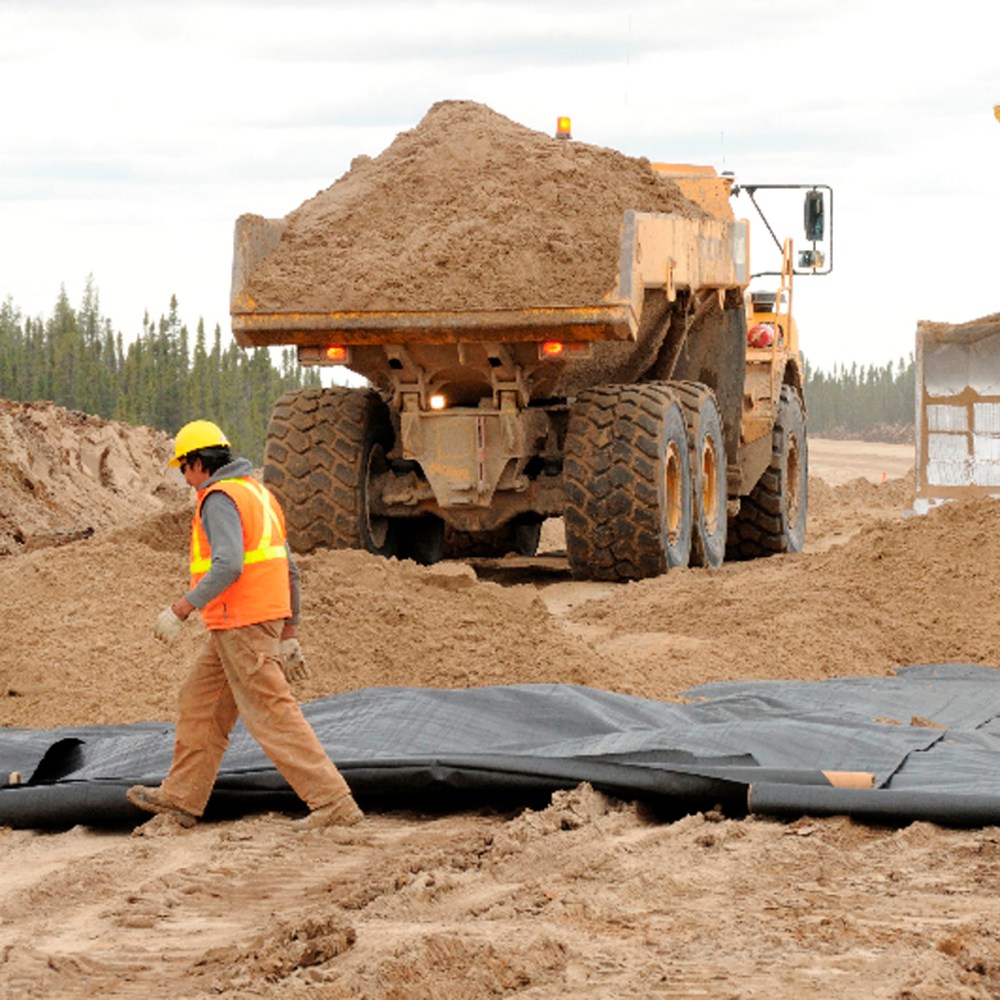
To be fair, Keeyask’s aboriginal turnover numbers are based on a much higher aboriginal workforce — 45 per cent of 1,220 employees.
Hydro says no specific reasons have been identified. Former and current workers say the reasons for the higher turnover at Keeyask for aboriginal workers vary, but the most common is being away from family for extended periods.
That’s even more pronounced during the summer months, when work on the dam site is more accelerated. Generally, workers and management work nine hours a day, six days a week, Monday through Saturday. Workers usually spend 21 days at the isolated site 725 kilometres northeast of Winnipeg on the Nelson River, then get one week off.
Winnipeg resident Mike Hawkins, who is currently on leave, said another reason is some aboriginal employees believe they’ve been taken advantage of. He said he was first hired in November 2014 to clean heavy equipment using a pressure washer.
“When I got up there, there was no pressure-washer station built, so they put me on as labourer,” Hawkins said. “I also helped some of the OEs (operating engineers) clean their machines and checking for oil levels. Most of the time, I helped doing fuelling.”
Hawkins, who is aboriginal, said he eventually quizzed management about why his job kept switching.
“The management didn’t like that, and they basically told me to keep my mouth shut,” he said.
He also said there is a feeling among some aboriginal people BBE Hydro Constructors LP, the company building the seven-unit, 695-megawatt Keeyask powerhouse and its 23 kilometres of earth dike structures, could be more accommodating toward indigenous people, such as helping them get the proper training and certification they need to operate equipment or perform more specialized jobs such as drilling.
“Everybody has to have equal opportunity up there,” Hawkins said.
Under the Burntwood/Nelson Agreement, a collective bargaining accord that applies to major northern Manitoba Hydro projects, special measures are to be implemented during construction to employ, train and retain First Nations workers on the Keeyask project.
BBE held an employment information session in Thompson on Tuesday to recruit more aboriginal and northern workers. A company spokesman was unavailable for comment.
Thompson resident Keith Fortin, an aboriginal heavy-equipment operator on family leave to go back to Keeyask on Sept. 1, said too many people are being hired to work at Keeyask from outside the province.
“The whole idea was to stimulate the economy in northern Manitoba,” he said. “We’re also trying to bring a lot of the money being spent on Keeyask back to home, but it’s harder when we’re handing out contracts to companies outside Manitoba.”
‘The whole idea was to stimulate the economy in northern Manitoba. We’re also trying to bring a lot of the money being spent on Keeyask back to home, but it’s harder when we’re handing out contracts to companies outside Manitoba’ — Thompson resident Keith Fortin, an aboriginal heavy-equipment operator
The same criticism was made during the construction of the Limestone dam in 1986, when as many as 60 per cent of the workers on the site were not northerners, with others coming from Saskatchewan, Alberta, British Columbia and Quebec.
Montreal resident Martin Hamel, who only lasted only three weeks in January as a procurement officer for BBE, also said more could be done to make the Keeyask work site more inclusive.
“It has nothing to do with the remoteness,” he said. “The moment you experience the camp, you know right away if you’re good for it or not. When you’re there, you might be there for the money, but money doesn’t drive a good project — it’s the team. If you can bring all people together with a common goal, it doesn’t matter if it’s cold or if it’s hot, it’s really the culture.”
Hamel, who is not aboriginal, said he quit after he got his first paycheque.
“We were working 70 hours a week, but they were only paying 40,” Hamel said. “It was unacceptable for me. I’m not ashamed that I quit right on the spot. I’m prouder than that.”
“A lot of people left,” he added. “I know they have a lot of difficulty hiring. I know because I see all the jobs posted on the job market.”
Hamel and others say BBE has recently hired a number of workers from the United States to fill the gap left by a shortage of Canadians, including aboriginal people.
Hamel complained to Manitoba Hydro about his treatment and said officials with the public utility told him they looked into his complaint about non-unionized administrative employees not being paid overtime.
“I’d never been in a project like this,” he said. “It was purely improvised. Sometimes when I was there, I felt they had no control of the project. It was the worst of the worst.”
Hamel and others had no criticism of the camp, its accommodations and the quality of the food served.
“It was awesome,” he said.
The camp includes a full movie theatre, games room and exercise room. Workers get individual rooms with their own shower, toilet and Wi-Fi. There are approximately 2,500 rooms.
Keeyask is expected to be producing electricity as early as 2019 and in full operation a year later. Under Hydro’s and the provincial government’s plan, the estimated $6.5-billion Keeyask project is being built before the Manitoba market requires its electricity, to take advantage of a window to sell power to Minnesota and Wisconsin.
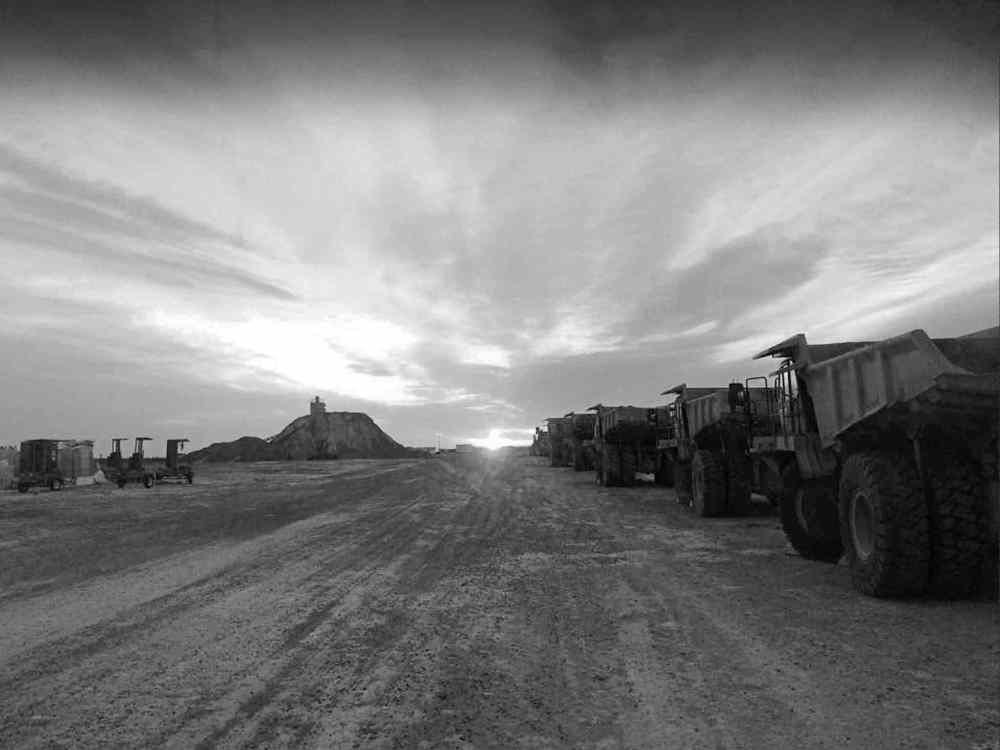
That window is open for the next 15 years as U.S. utilities close older coal plants to meet new federal emission standards and to follow state-mandated plans to use more renewable energy.
bruce.owen@freepress.mb.ca
A closer look at the Keeyask workforce
Total number of aboriginal people hired as of May 1:
| Category | Currently employed | % of total currently employed |
| Total aboriginal employees | 552 | 45% |
| Total non-aboriginal employees | 668 | 55% |
| Total out-of-province workers | 273 | 22% |
| TOTAL EMPLOYEES | 1,220 | 100% |

Total number of members hired as of May 1 from the four bands that make up, along with Manitoba Hydro, the Keeyask Hydropower Limited Partnership:
| Band | Currently employed | % of total currently employed |
| Fox Lake Cree Nation | 39 | 7% |
| Tataskweyak Cree Nation | 135 | 24% |
| War Lake First Nation | 21 | 4% |
| York Factory First Nation | 47 | 9% |
— source: keeyask.com
Related Articles
Making it work for aboriginal employees
Advertisement Advertise With Us
Advertisement Advertise With Us
History
Updated on Thursday, July 23, 2015 7:22 AM CDT: Replaces photo
Updated on Thursday, July 23, 2015 9:50 AM CDT: Adds table