

Winnipeg human rights lawyer questions Harper’s proposed travel ban
Advertisement
Read this article for free:
or
Already have an account? Log in here »
To continue reading, please subscribe:

Digital Subscription
One year of digital access for only $205*
- Enjoy unlimited reading on winnipegfreepress.com
- Read the E-Edition, our digital replica newspaper
- Access News Break, our award-winning app
- Play interactive puzzles
*First annual payment billed as $205.00 + GST for one year. This annual subscription will automatically renew at $233.00 + GST every 52 weeks (10% off the regular annual price of $259.35). Offer available to new and qualified returning subscribers only. Cancel any time.
To continue reading, please subscribe:
Add Free Press access to your Brandon Sun subscription for only an additional
$1 for the first 4 weeks*
- Enjoy unlimited reading on winnipegfreepress.com
- Read the E-Edition, our digital replica newspaper
- Access News Break, our award-winning app
- Play interactive puzzles
*Your next Brandon Sun subscription payment will increase by $1.00 and you will be charged $17.95 plus GST for four weeks. After four weeks, your payment will increase to $24.95 plus GST every four weeks.
Read unlimited articles for free today:
or
Already have an account? Log in here »
Hey there, time traveller!
This article was published 09/08/2015 (4073 days ago), so information in it may no longer be current.
A Winnipeg human rights lawyer is concerned by Prime Minister Stephen Harper’s latest anti-terrorism pledge, made while on the campaign trail in Ottawa Sunday.
David Matas said Harper’s proposed crackdown on travel to regions of the world known to be controlled by terrorists is overbearing.
Harper’s policy promise would expand federal laws that make it a crime for Canadians to head overseas to fight alongside groups officially identified by the federal government as a terrorist organization.
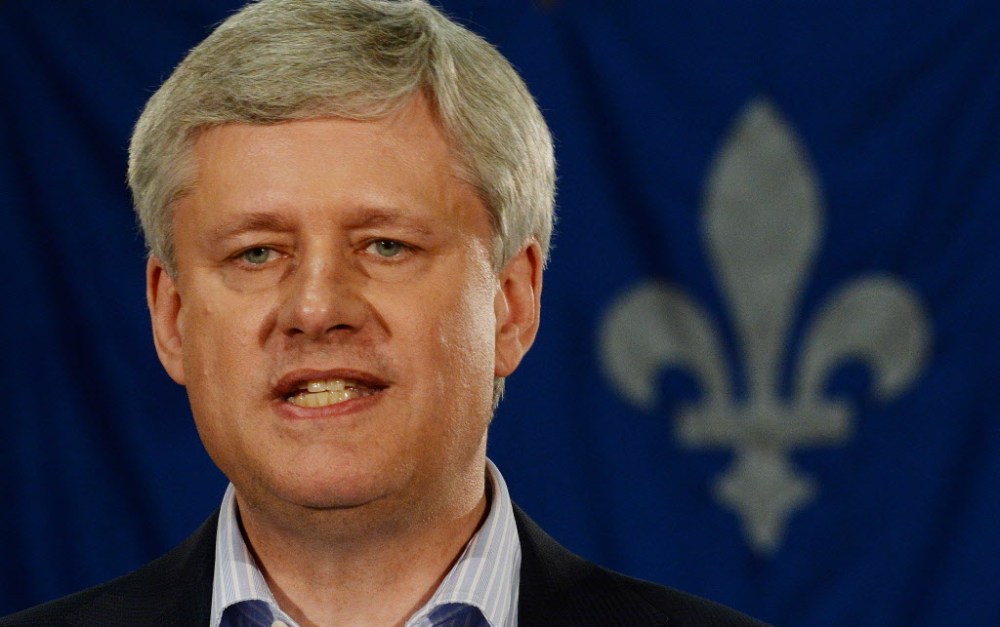
“There is absolutely no right in this country to travel to an area under the governance of terrorists. That is not a human right,” Harper said.
“We’re not under any illusion here what just about everybody going to an area like that is doing. That’s the reason to pursue this particular policy that’s been used in other countries.”
Matas believes the Tories are trying to show voters they are stronger on terrorism than the opposition parties.
“The proposal has at least one legitimate aim — preventing Canadians from going abroad to join terrorist organizations. However, it is overbroad and likely to be ineffective,” Matas said in an emailed statement to the Free Press.
“The criminal law operates only after the fact. Someone who goes to a designated area and then returns would become subject to prosecution. This type of law does not prevent travel. It just punishes travel after the fact.”
Harper said “theoretically” there could be legitimate reasons for Canadians to travel to these areas, including a diplomat under “certain, rare circumstances.”
“There will be exceptions in the law for those legitimate reasons,” Harper said. “I don’t think people that have legitimate reasons will have difficulty showing those, but we know what other people are doing there and this is something we’ve got to nip in the bud before terrorists, trained terrorists, return to this country.”
Matas brought up visiting family, or attending weddings or funerals as reasons Canadians might want to travel to known terrorist areas, but they could be blocked by bureaucratic obstacles.
“By the time you get the permission you need, the reason why you want to go may have passed. It’s problematic,” he said. “It’s an unnecessary restriction on freedom.”
Harper unveiled the promise in a speech to supporters in Ottawa, referencing the attacks last year in Saint-Jean-sur-Richelieu and in Ottawa where ISIS-inspired Canadians murdered two members of the military.
Michael Zehaf Bibeau stormed Parliament Hill on Oct. 22 with a loaded rifle seconds after shooting Cpl. Nathan Cirillo three times in the back at the National War Memorial.
Two days prior to that attack, Warrant Officer Patrice Vincent was killed after being struck in a hit-and-run attack southeast of Montreal.
The Tories have tried to frame part of their election campaign as a question about which of the three major federal party leaders is best adept at keeping Canadians safe, with Harper taking jabs on Sunday at NDP Leader Tom Mulcair and Liberal Leader Justin Trudeau as being softies.
The two, however, have taken aim at Harper over civil liberty questions arising from the Conservatives’ controversial anti-terrorism law, Bill C-51, which has also been a focus of debate among Canadians on social media in the early days of the campaign.
The latest proposal is likely to stoke more debate and questions.

The proposal is based on a law already in place in Australia, which raised concerns from critics in that country that it would upend the idea that people are innocent until proven guilty.
Australia has designated parts of Iraq and Syria as no-travel zones and sets a jail term of 10 years for anyone caught violating the law that was enacted last year.
Similar to Australia, the Conservatives are promising to enact a law that would establish “declared areas” — regions of the world where terrorist groups like the Islamic State of Iraq and the Levant hold control and use their base to recruit and train followers. The proposal didn’t identify any countries in particular outside of Iraq, but Harper said it would target “the most dangerous places on Earth where governance is non-existent and violence is widespread and brutal.”
The proposed law would see national security agencies tracking Canadians who travel to those areas, and force those returning to Canada, or to a country with which Canada has an extradition treaty, to prove they were in the region for humanitarian reasons, or as a journalist covering the conflict.
Harper repeated and defended the pledge at a rally of Conservative faithful near the Quebec City airport later Sunday afternoon.
wfpvideo:4410420687001:wfpvideoRelated Articles
Liberals win 4th mandate as NDP vote collapses and Singh announces he will resign




Advertisement Advertise With Us
Advertisement Advertise With Us
History
Updated on Sunday, August 9, 2015 6:46 PM CDT: Adds video.