

The woman behind the haunting image from Vietnam in 70’s, speaks out on Syrian refugee image
She was a symbol of the horror of war; a testament to the power of a single image
Advertisement
Read this article for free:
or
Already have an account? Log in here »
To continue reading, please subscribe:
Monthly Digital Subscription
$1 per week for 24 weeks*
- Enjoy unlimited reading on winnipegfreepress.com
- Read the E-Edition, our digital replica newspaper
- Access News Break, our award-winning app
- Play interactive puzzles
*Billed as $4.00 plus GST every four weeks. After 24 weeks, price increases to the regular rate of $19.95 plus GST every four weeks. Offer available to new and qualified returning subscribers only. Cancel any time.
Monthly Digital Subscription
$4.99/week*
- Enjoy unlimited reading on winnipegfreepress.com
- Read the E-Edition, our digital replica newspaper
- Access News Break, our award-winning app
- Play interactive puzzles
*Billed as $19.95 plus GST every four weeks. Cancel any time.
To continue reading, please subscribe:
Add Free Press access to your Brandon Sun subscription for only an additional
$1 for the first 4 weeks*
*Your next subscription payment will increase by $1.00 and you will be charged $16.99 plus GST for four weeks. After four weeks, your payment will increase to $23.99 plus GST every four weeks.
Read unlimited articles for free today:
or
Already have an account? Log in here »
Hey there, time traveller!
This article was published 04/09/2015 (3875 days ago), so information in it may no longer be current.
Kim Phuc was photographed at a horrific moment of her life.
In 1972, when she was nine, an Associated Press photographer captured the haunting image of children in south Vietnam, who were fleeing after a napalm bomb had been dropped on their village by South Vietnamese forces.
The Pulitzer Price-winning photograph, taken by Nick Ut, weighed on the conscience of the world.
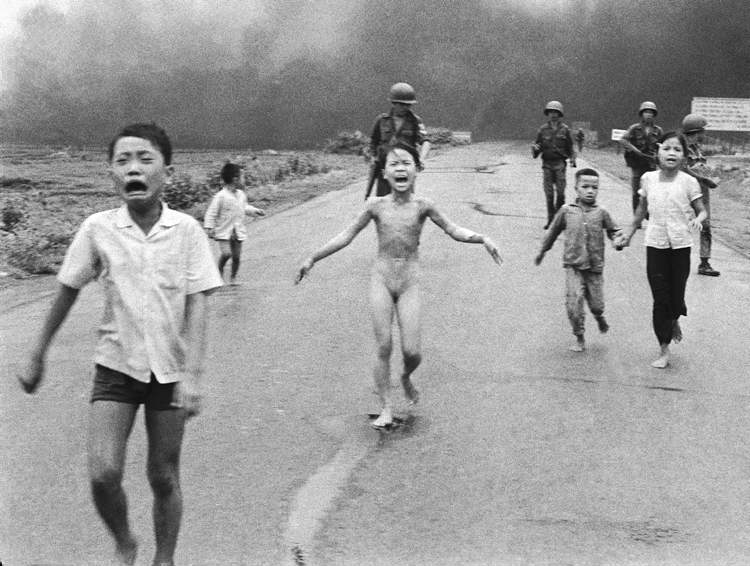
The naked and terrified girl was running beside her two brothers and two cousins.
“I saw the airplane come so fast, and I saw four bombs landing down and I heard the noise like ‘boom, boom, boom boom.’ There was fire everywhere around me and honestly, the fire did burn off my clothes and I saw the fire on my left arm,” Phuc said.
She had been screaming, “Too hot! Too hot!” when the photo by Ut was taken. Phuc remembers the scene vividly up until the point where soldiers poured water on her and she passed out from the pain.
Phuc now lives in Ajax, Ont., with her husband and two adult sons.
On Friday, she discussed for the first time another such iconic photo: one that has seared the Syrian war and refugee crisis into the hearts and minds of many.
The photo, taken by Nilufer Demir for DHA on Wednesday, shows the body of a three-year-old Syrian refugee, Alan Kurdi, washed up on the shore of Turkey’s Aegean Sea.
“Why do more innocent children have to die? I hope that powerful picture will wake up the world,” Phuc said. “I feel so deeply saddened about the migration crisis and the plight of all people forced to flee their homes, their country and in hope of finding peace and freedom and a better life.”
Upon seeing the photograph, Phuc, 52, said she cried. “I wish our government would act swiftly and generously to open their borders, their homes and their hearts to our fellow human beings who are suffering and so desperate,” she said.
Alan’s family had been fleeing Syria. His father, mother and five-year-old brother, Galib, were on an overloaded boat to the Greek island of Kos.
The boat capsized and father Abdullah Kurdi was the only one who survived.
‘Why do more innocent children have to die? I hope that powerful picture will wake up the world. I feel so deeply saddened about the migration crisis
and the plight of all people forced to flee their homes, their country and in hope of finding peace and freedom and a better life’
— Kim Phuc, of the photo of young Syrian refugee Alan Kurdi that has touched the world
The image of Alan’s body being carried from the Turkish beach has heightened awareness about the plight of nearly 11 million displaced Syrians desperately seeking safety in foreign countries.
The photograph reminds her of the tragedy she endured. “I am so grateful that not only (Ut took my) picture, but he rushed me to the nearest hospital. He is my hero.”
She lost two baby cousins, and her aunt was badly burned during the attack.
She underwent 17 surgeries. Phuc has scars all over her back, arms and legs.
Phuc said the photo haunted her for years until she realized she could harness its depravity — and her unintended fame — to elicit change.
In 1997, she started the KIM Foundation International, a non-profit that provides medical assistance for child victims of war, and was named a UNESCO goodwill ambassador for peace.
“In the beginning, I didn’t like that picture much because I’m a girl and the first time I saw that, I (was) just shocked,” she said. “I felt embarrassed because I’m a girl and I looked around and my brothers and my cousins, they have clothes on… right away, I wished that photo hadn’t been taken.”
Phuc said she learned to respect the photo because of its compelling truth.
“I realized that because that picture is so powerful that it can help people stop the war,” she said.
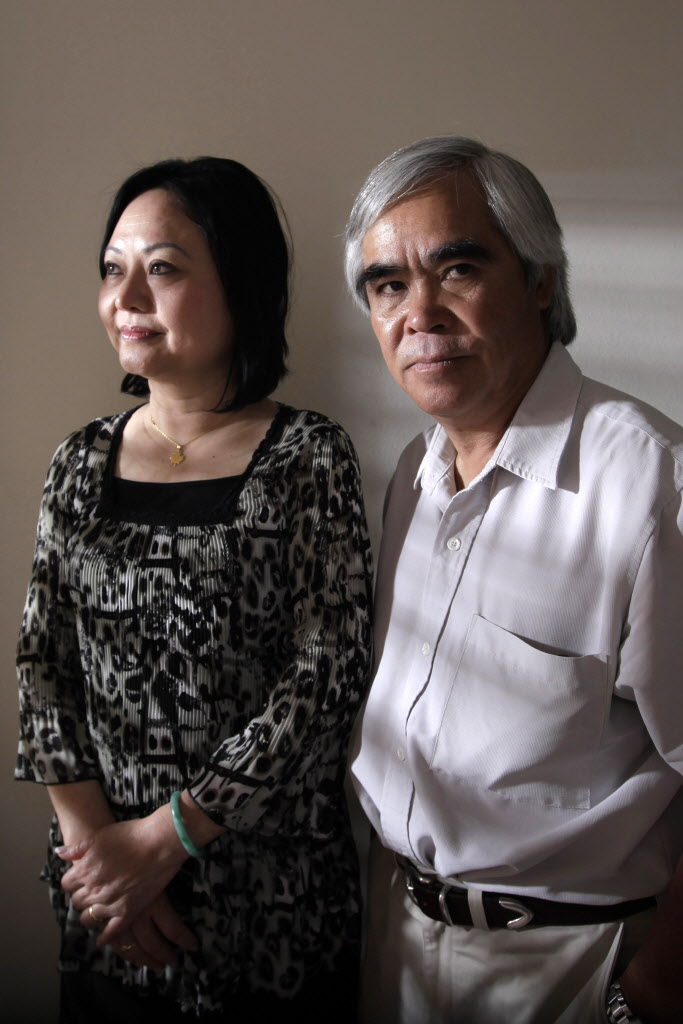
The Vietnam War ended three years later and it’s widely believed the photo of Phuc — printed on the front pages of newspapers around the world — was a tipping point.

Phuc said she believes the photo of Alan has the same potential.
Her voice breaks as she tries to talk about the boy who died and his grief-stricken father, whom she hopes to connect with one day.
Phuc will speak at the Grant Memorial Church Sunday at 10:15 a.m.
jessica.botelho-urbanski@freepress.mb.ca
Twitter: @_jessbu
History
Updated on Saturday, September 5, 2015 7:00 AM CDT: Corrects that it was South Vietnamese forces who dropped Napalm.