

Winnipeg Transit’s woes attributed to recently purchased New Flyer buses
Advertisement
Read this article for free:
or
Already have an account? Log in here »
To continue reading, please subscribe:

Digital Subscription
One year of digital access for only $205*
- Enjoy unlimited reading on winnipegfreepress.com
- Read the E-Edition, our digital replica newspaper
- Access News Break, our award-winning app
- Play interactive puzzles
*First annual payment billed as $205.00 + GST for one year. This annual subscription will automatically renew at $233.00 + GST every 52 weeks (10% off the regular annual price of $259.35). Offer available to new and qualified returning subscribers only. Cancel any time.
To continue reading, please subscribe:
Add Free Press access to your Brandon Sun subscription for only an additional
$1 for the first 4 weeks*
- Enjoy unlimited reading on winnipegfreepress.com
- Read the E-Edition, our digital replica newspaper
- Access News Break, our award-winning app
- Play interactive puzzles
*Your next Brandon Sun subscription payment will increase by $1.00 and you will be charged $17.95 plus GST for four weeks. After four weeks, your payment will increase to $24.95 plus GST every four weeks.
Read unlimited articles for free today:
or
Already have an account? Log in here »
Hey there, time traveller!
This article was published 17/09/2015 (4009 days ago), so information in it may no longer be current.
Winnipeg Transit’s inability to properly maintain its fall route schedule is largely the fault of a large number of recently-purchased New Flyer buses with persistent engine and emission control problems.
Transit director Dave Wardrop said the New Flyer buses were bought less than five years ago but the problems are so severe and persistent that the vehicle engines are being repeatedly rebuilt.
“If we hadn’t been encountering the emission control problems to the extent we have, we would have been able to meet the original fall schedule,” Wardrop said.
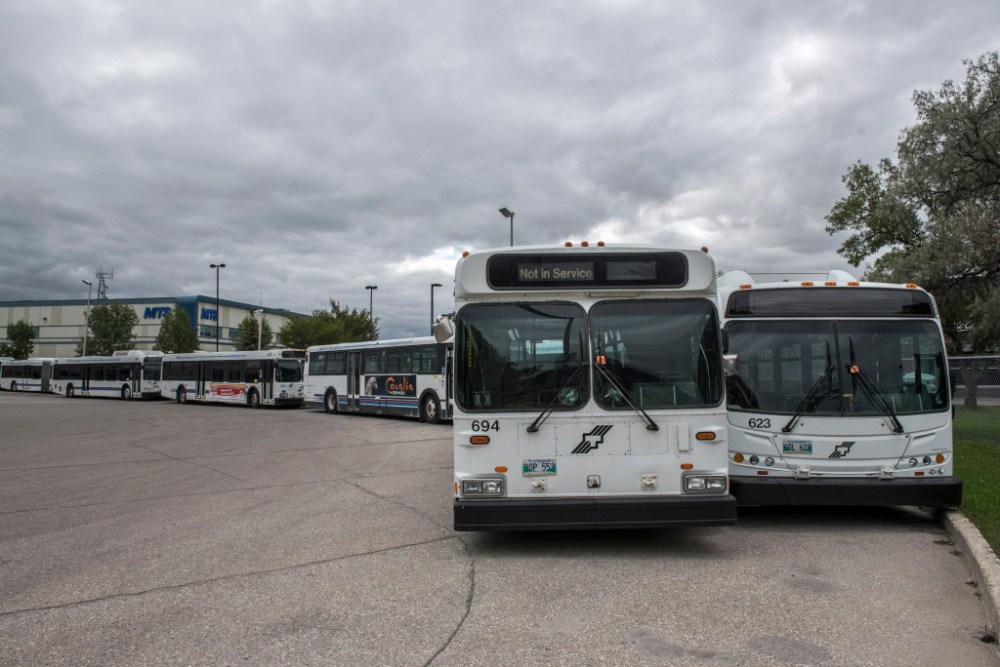
Wardrop said there were 98 buses out of service Thursday morning and 57 of those were the newer, problematic New Flyer vehicles with the engine and emission problems.
Winnipeg Transit bought 101 New Flyer buses between 2011 and 2013 but now 57 to 60 of them are out of service on a daily basis, for up to a week at a time, because of the recurring engine and emission control problems.
The problems on the New Flyer buses began shortly after they were purchased, Wardrop said, and became acute about 18 months ago.
The warranty on the buses has expired, Wardrop said, adding Transit has been unable to seek any recourse from New Flyer or the manufacturer of the engines except to consult with them on the nature of the repairs.
The Free Press has asked New Flyer for comment and we’re waiting their response.
Transit abruptly juggled its routes last week, after several dozen buses were unexpectedly taken out of service Sept. 8 because of engine and emission control problems.
Transit altered its morning and afternoon rush-hour schedules for the following day, affecting 18 routes.
To mitigate the impact, Transit spread the pain around and revised the schedule again for Sept. 11 – taking fewer buses off many more routes, a total of 37 morning and rush-hour – which will remain in effect until at least December.
Other transit authorities have experienced similar problems with the New Flyer buses but Wardrop said the situation was made worse for Winnipeg Transit this year because of a shortage of mechanics and a shortage of a number of spare buses – most transit authorities have 20 per cent of their fleet as spares, which can be put on the road when buses are taken off for service but Winnipeg’s spare total is 11 per cent of its fleet.
“Because we don’t have that capacity in our system, this problem has arisen and has hit us particularly hard,” he said.

Wardrop said he’s not aware of any plans by New Flyer to issue a recall and repair or replace the faulty engines.
“At this point, we’re working with their engineers and their technical people to come up with a resolution the best they can.”
Wardrop said transit has the option of sending the faulty engines back to the manufacturer for repair but that takes two to three weeks, where transit’s own mechanics can rebuild an engine within a week.
aldo.santin@freepress.mb.ca