

Human impact on wolf habitats leading to coyote-wolf interbreeding
Advertisement
Read this article for free:
or
Already have an account? Log in here »
To continue reading, please subscribe:

Digital Subscription
One year of digital access for only $205*
- Enjoy unlimited reading on winnipegfreepress.com
- Read the E-Edition, our digital replica newspaper
- Access News Break, our award-winning app
- Play interactive puzzles
*First annual payment billed as $205.00 + GST for one year. This annual subscription will automatically renew at $233.00 + GST every 52 weeks (10% off the regular annual price of $259.35). Offer available to new and qualified returning subscribers only. Cancel any time.
To continue reading, please subscribe:
Add Free Press access to your Brandon Sun subscription for only an additional
$1 for the first 4 weeks*
- Enjoy unlimited reading on winnipegfreepress.com
- Read the E-Edition, our digital replica newspaper
- Access News Break, our award-winning app
- Play interactive puzzles
*Your next Brandon Sun subscription payment will increase by $1.00 and you will be charged $17.95 plus GST for four weeks. After four weeks, your payment will increase to $24.95 plus GST every four weeks.
Read unlimited articles for free today:
or
Already have an account? Log in here »
Hey there, time traveller!
This article was published 24/09/2015 (3984 days ago), so information in it may no longer be current.
Almost 10 per cent of wolves tested in Manitoba had genetic profiles suggesting wolf-coyote hybridization, according to a 2012 study.
The study, which looked the genetic profiles of captured wolves from Manitoba to Quebec, opens the possibility that a wolf intrusion at Hillside Beach and Victoria Beach could be due in part to hybrid wolves – so-called coywolves. The animals have attacked four pet dogs in the past month, killing three.
Study co-author Paul Paquet of the University of Victoria said the main reason wolves and coyotes can interbreed is the impact of humans on wolf habitat, and what he called “the long-term persecution of wolves,” such as extensive hunting and trapping to eradicate the predator.
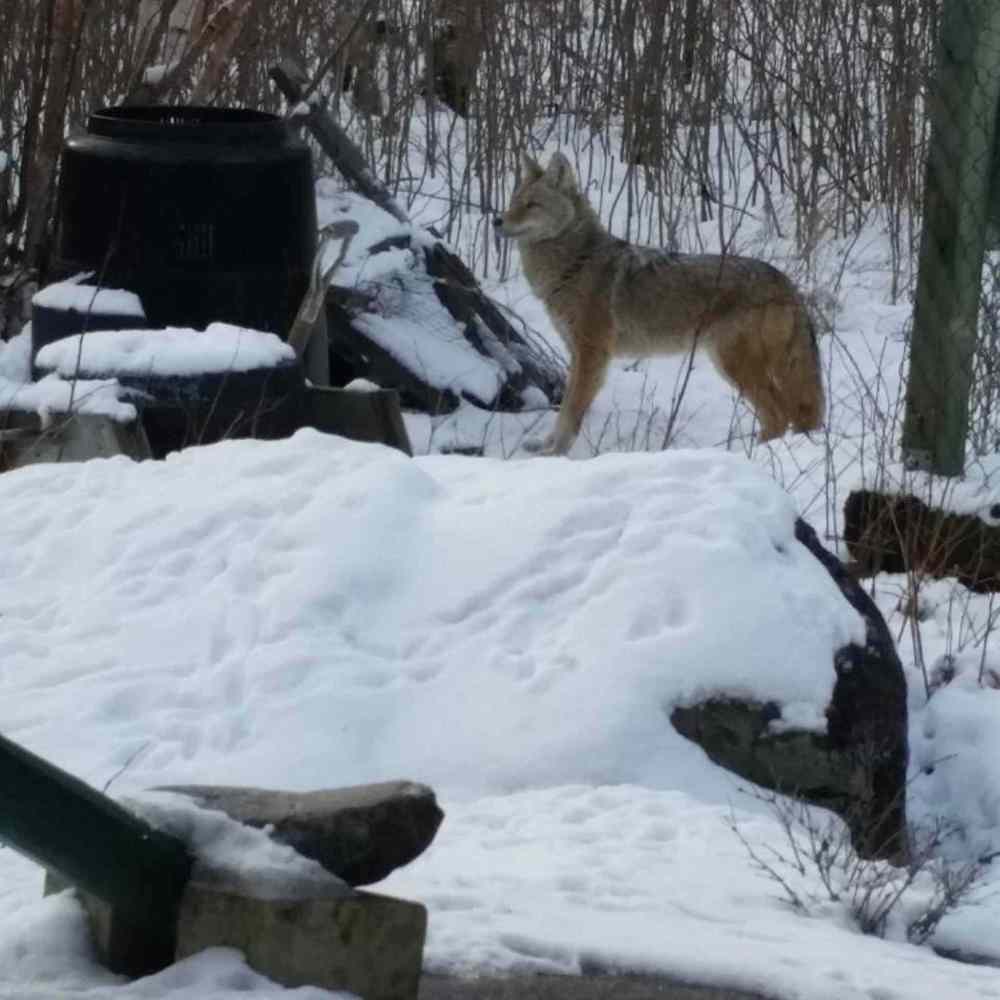
Coyotes, meanwhile, have for the most part thrived and have made their territories in urban settings, such as Charleswood and south Winnipeg.
Paquet said low wolf numbers and a healthy coyote population creates an opportunity for breeding between the species.
The hybridization can be traced back to the mid-20th century, and perhaps even further to colonization, he said Thursday. Paquet is also the senior scientist with the Rainforest Conservation Foundation.
The study, called Canid Hybridization: Contemporary Evolution on Human-Modified Landscapes, also found that 6.3 per cent of coyotes tested had genetic profiles suggesting wolf-coyote hybridization. Researchers collected tissue, blood and hair samples of wolves and coyotes obtained during 1990-2010.
Most prairie samples were collected in the Riding Mountain National Park region.
The numbers are higher in Quebec. The study found, 12.6 per cent of coyotes and 37.4 per cent of wolves had profiles indicating hybrid origin. There is no clear explanation why contemporary wolf hybridization appears more common in Quebec than on the Prairies.
The numbers are similar in most of the Great Lakes area and the northern United States, Paquet said.
Wolf/coyote hybridization has not been found west of Manitoba.
“We’re not sure why that is,” Paquet said.
Lori Schmidt, the wolf curator at the International Wolf Center’s interpretive center in Ely, Minn., said coywolves are more commonly found in the eastern United States.
Schmidt said the presence of hybrid wolves is more a sign of adaptation than anything else. That includes the decline of moose, elk and caribou — replaced by white-tail deer — and climate change.
“Here we are at the end of September and we haven’t even had a frost yet,” she said. “The ecological system is going to adapt to whatever niche it needs.”
He also said it’s rare for wolves to attack dogs, although in the most recent case the dogs might have been attacked because the wolves saw them as competitors, not food.
He also warned against making generalizations about the animal’s behavior as it can vary depending on the environment and situation, and the impact of humans on them.
He cautioned residents and cottagers in the area do have to be mindful that wolves have moved in, but generally do not have to significantly alter their activities.
“It’s a matter of being cautious,” he said.
Provincial and local officials have warned pet owners to keep their pets indoors, and not let them roam at large.
A professional trapper has been brought in by the province to capture the most problem wolves.

“The likelihood is that the wolves will remain there,” Paquet said, adding the predators would find it difficult to move into another pack’s territory.
“The wolf population trails the prey population about one year,” he said.
Similar instances of wolves attacking dogs have been experienced in northern Minnesota this year.
Wisconsin has seen about half-a-dozen dogs killed by wolves this year.
bruce.owen@freepress.mb.ca
Are they around?
Lori Schmidt, the wolf curator at the International Wolf Center’s interpretive center in Ely, MN, offers these tips to gauge the presences of wolves, besides actual sightings:
Wolf scat: If it’s dark, it means the wolf has recently eaten. If it’s full of hair or white, it means the wolf has not eaten in a while, and will be hunting.
Watch the behaviour of deer: If they appear nervous, it means they sense they are being hunted.
Look for tracks: Tracks can tell you if there is more than one animal, and the age of the animals like pups.
Howling: There are three howls a wolf and wolf pack make. The deep, sustained howls are to rally the pack to go on the hunt; bark-howling means a wolf pack is defending its territory from other wolves; high-pitched yipping or yelping howls are made by pups.
Pups: Wolves are a social animal driven by the survival of the young, and they will always be hunting, which is why it’s vital cottagers and year-round residents keep their pets under control. “They cannot sustain themselves on mice,” Schmidt said.
Related Articles
Dog attacked by wolf in Albert Beach
Advertisement Advertise With Us
Advertisement Advertise With Us
History
Updated on Thursday, September 24, 2015 5:55 PM CDT: ADded comment from Lori Schmidt, adds sidebar