

City should reconsider public subsidies for MTS Centre
Advertisement
Read this article for free:
or
Already have an account? Log in here »
To continue reading, please subscribe:

Digital Subscription
One year of digital access for only $205*
- Enjoy unlimited reading on winnipegfreepress.com
- Read the E-Edition, our digital replica newspaper
- Access News Break, our award-winning app
- Play interactive puzzles
*First annual payment billed as $205.00 + GST for one year. This annual subscription will automatically renew at $233.00 + GST every 52 weeks (10% off the regular annual price of $259.35). Offer available to new and qualified returning subscribers only. Cancel any time.
To continue reading, please subscribe:
Add Free Press access to your Brandon Sun subscription for only an additional
$1 for the first 4 weeks*
- Enjoy unlimited reading on winnipegfreepress.com
- Read the E-Edition, our digital replica newspaper
- Access News Break, our award-winning app
- Play interactive puzzles
*Your next Brandon Sun subscription payment will increase by $1.00 and you will be charged $17.95 plus GST for four weeks. After four weeks, your payment will increase to $24.95 plus GST every four weeks.
Read unlimited articles for free today:
or
Already have an account? Log in here »
Hey there, time traveller!
This article was published 05/10/2015 (4008 days ago), so information in it may no longer be current.
Some city councillors are wondering aloud if the city is getting a raw deal from True North Sports & Entertainment, owners of the Winnipeg Jets, Manitoba Moose and the MTS Centre.
The quick answer is probably, although it would be misleading and unfair to start dumping all over True North.
The city returns $6.6 million in entertainment and business taxes to True North every year, as well as nearly $1 million in property taxes that would normally be collected if it were assessed as a commercial venture, rather than recreational land.
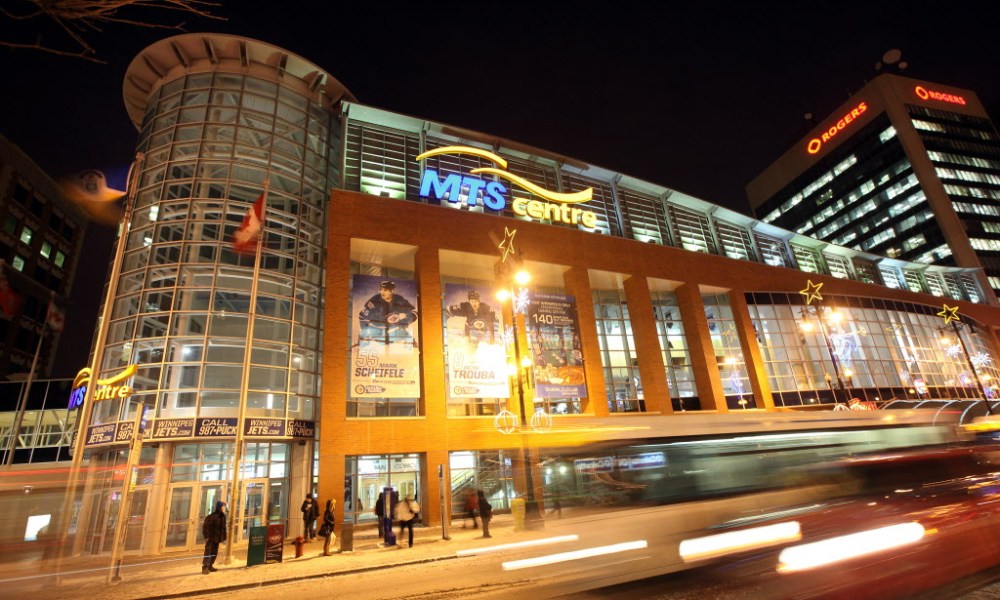
That’s a lot of moolah for a city that can’t fix its streets or plow public sidewalks in a timely manner. The province has also favoured the downtown arena with financial gifts, including $40 million in capital to build the structure and an estimated $5.5 million in lottery cash annually under a special revenue-sharing agreement.
Coun. Russ Wyatt says “things have changed” since the original financial arrangements that helped build the $133-million arena, which opened 11 years ago.
Mr. Wyatt said he thinks it’s time for a new deal, while Coun. Marty Morantz, the city’s finance chairman, said he would instruct legal officials to review the agreements with True North.
The original agreement was for 25 years, so it’s unlikely True North will open negotiations any time soon.
At the same time, Coun. Wyatt has a point when he says “things have changed.”
When True North founder Mark Chipman first raised the idea of building an arena on the site of the old Eaton’s building, it was a pretty thin business deal.
The only major tenant was the Manitoba Moose of the old International Hockey League, which was not exactly rolling in dough. Mr. Chipman believed the new arena would attract more entertainment acts than the old Winnipeg Arena, but when the potential revenues and costs were added up, the bottom line didn’t look very attractive.
The city’s generous business community jumped in to help with personal investments in the project, but none of them expected to make a killing.
At that time, the MTS Centre was viewed as a downtown-revitalization project, although even that was in doubt in the early days.
Today, however, the arena has two major tenants: the Winnipeg Jets and the Manitoba Moose. In terms of entertainment events, such as concerts, it is one of the busiest venues in Canada and rated as one of the most successful in the world.
The Jets might be a budget team by NHL standards, but the arena is not.
It’s important to separate the Jets from the arena in analyzing the fairness of the financial support True North is receiving from the province and city.
Premier Greg Selinger, for example, has made it clear the province’s support (and the city’s, too) is not about supporting an NHL team, which is entirely True North’s problem.

The public sector is merely supporting the arena itself, which was frequently described as an infrastructure project when politicians were selling the original deal.
And from all appearances, the arena is going gangbusters, with more than 80 hockey games a year at home between the two teams, plus more than 100 other major events. More than 10 million paying patrons have walked through its doors since it opened.
Coun. Wyatt, then, is correct in wanting to renegotiate the deal.
True North, of course, has raised property values downtown and created new businesses, which have led to new taxes for the province and city.
But it will eventually have to make the case for continuing public subsidies. If it can’t do that, then taxes should rise and the gifts should stop.