

Marion Street interchange project ‘likely dead’: public works committee chairwoman
Advertisement
Read this article for free:
or
Already have an account? Log in here »
To continue reading, please subscribe:
Digital Subscription
One year of digital access for only $75*
- Enjoy unlimited reading on winnipegfreepress.com
- Read the E-Edition, our digital replica newspaper
- Access News Break, our award-winning app
- Play interactive puzzles
*Billed as $5.77 plus GST every four weeks. After 52 weeks, price increases to the regular rate of $19.95 plus GST every four weeks. Offer available to new and qualified returning subscribers only. Cancel any time.
Monthly Digital Subscription
$4.99/week*
- Enjoy unlimited reading on winnipegfreepress.com
- Read the E-Edition, our digital replica newspaper
- Access News Break, our award-winning app
- Play interactive puzzles
*Billed as $19.95 plus GST every four weeks. Cancel any time.
To continue reading, please subscribe:
Add Free Press access to your Brandon Sun subscription for only an additional
$1 for the first 4 weeks*
- Enjoy unlimited reading on winnipegfreepress.com
- Read the E-Edition, our digital replica newspaper
- Access News Break, our award-winning app
- Play interactive puzzles
*Your next Brandon Sun subscription payment will increase by $1.00 and you will be charged $17.95 plus GST for four weeks. After four weeks, your payment will increase to $24.95 plus GST every four weeks.
Read unlimited articles for free today:
or
Already have an account? Log in here »
Hey there, time traveller!
This article was published 08/10/2015 (3878 days ago), so information in it may no longer be current.
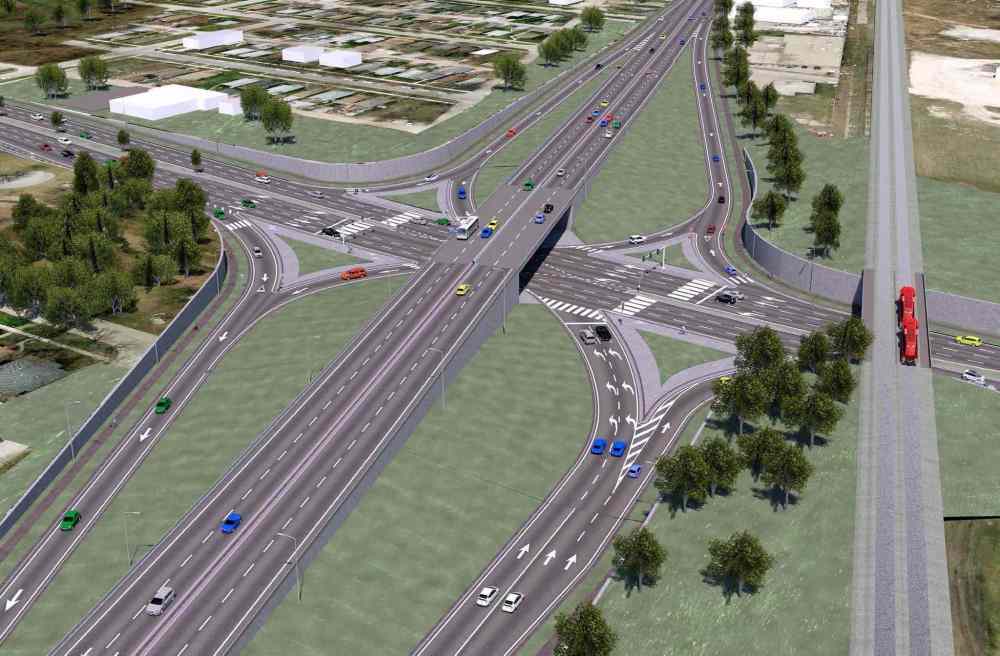
A group of St. Boniface residents says it believes its opposition to the $250-million Marion Street interchange project was ignored because city officials have linked the plan to a proposed bus rapid-transit corridor through the area.
Meanwhile, the chairwoman of the public works committee, Coun. Janice Lukes (South Winnipeg-St. Norbert), said the Marion project is likely dead now that the ward councillor, Matt Allard, has come out against it, too.
Lukes said the public works department will bring the project to the committee for consideration, but she doesn’t believe there is support any longer for it on council.
“I never supported it from Day 1 and it doesn’t look like” there is support for it any longer, Lukes said.
Sandra Dupuis, founder and treasurer of the Seine River Bonivital Residents Association, said a senior transit official confirmed to the group the Marion widening would spur a residential development on the former Canada Packers site, a 178-acre vacant parcel on the north side of Marion, which is key to the proposed southeast BRT corridor.
“We found out they made this so big to accommodate BRT, and that was never, ever brought to our attention at any of the public consultations,” Dupuis said.
Dupuis said the residents association has uncovered evidence there is a plan to construct 600 single-family and multi-family residential units on the former Canada Packers site.
“We have lots to report that hasn’t been put on the table yet,” Dupuis said. “We’ve got all the evidence, all the proof, all the research.”

Dupuis said the residents association, which formed in April in response to the project, does not believe there is any validity to the city’s reasons for justifying the scope of the project, and they’ll soon be releasing their own alternative designs for improvements to Marion.
“We’ve done all the research and we have a design that doesn’t cost anywhere near this,” Dupuis said. “We have three plans to put on the table that are nowhere near this amount of money, nowhere near this destruction.”
Improving the Marion and Archibald streets intersection had been a recommendation of the city’s transportation master plan, which initially proposed a scaled-down, $70-million project. The work morphed in cost and scope despite community consultations that opposed the chosen design, but city council endorsed it as the city’s No. 2 priority for road infrastructure while little attention, beyond the immediate neighbourhood, was paid to the actual design.
That changed this week when Allard, who initially promoted the project during a budget debate, said he was withdrawing his support because of community opposition and his own conclusions the proposal was too expensive, the expropriations and property demolitions would cause too much damage to residential neighbourhoods, and the overall design is not appropriate for the area.