

Exhibit highlights Albania’s role in rescuing Jews during Holocaust

Advertisement
Read this article for free:
or
Already have an account? Log in here »
To continue reading, please subscribe:

Digital Subscription
One year of digital access for only $205*
- Enjoy unlimited reading on winnipegfreepress.com
- Read the E-Edition, our digital replica newspaper
- Access News Break, our award-winning app
- Play interactive puzzles
*First annual payment billed as $205.00 + GST for one year. This annual subscription will automatically renew at $233.00 + GST every 52 weeks (10% off the regular annual price of $259.35). Offer available to new and qualified returning subscribers only. Cancel any time.
To continue reading, please subscribe:
Add Free Press access to your Brandon Sun subscription for only an additional
$1 for the first 4 weeks*
- Enjoy unlimited reading on winnipegfreepress.com
- Read the E-Edition, our digital replica newspaper
- Access News Break, our award-winning app
- Play interactive puzzles
*Your next Brandon Sun subscription payment will increase by $1.00 and you will be charged $17.95 plus GST for four weeks. After four weeks, your payment will increase to $24.95 plus GST every four weeks.
Read unlimited articles for free today:
or
Already have an account? Log in here »
Hey there, time traveller!
This article was published 01/11/2015 (3957 days ago), so information in it may no longer be current.
An exhibit featuring the one European nation that was able to save Jews during the Holocaust — Albania, with its Muslim majority — opens this week in Winnipeg. BESA: A Code of Honour, tells the story of Muslim Albanians who rescued Jews during the Holocaust.
“It’s a positive story when it comes to Muslim-Jewish relations,” said Ray Dirks, curator of the Mennonite Heritage Centre Gallery that’s hosting the exhibit presented by the Freeman Family Foundation Holocaust Education Centre.
During the Nazi occupation in Albania, almost all of the Jews living within its borders, those of Albanian origin and the many Jewish refugees who poured into the country, were saved.

The exhibit from Yad Vashem in Jerusalem that starts Monday in Winnipeg looks at the German occupation in 1943 when the Albanian population refused to comply with the occupier’s orders to turn over lists of Jews residing within the country’s borders. Governmental agencies provided many Jewish families with fake documentation that allowed them to live among the rest of the population. The Albanians protected their Jewish citizens and provided sanctuary to Jewish refugees in Albania.
“Anything that says people of different faiths and cultures can get along and help each other, that involves peace, compassion and hope — we want to be part of that and promote it,” said Dirks.
Helping the Jews was grounded in Besa, a code of honour that exists today in Albania and means “to keep the promise.” It is also considered a matter of national honour. During the Holocaust, Albanian Muslims competed with one another for the privilege of saving Jews. These acts originated from compassion, loving-kindness and a desire to help those in need, even though the recipients were of another faith.
As a result, there were more Jews in Albania at the end of the war than there were at the beginning.
With all the conflict in the Middle East, the Besa exhibit “is a wonderful example from long ago. It’s evidence of Muslims helping Jews,” said Dirks.

The exhibit opens Monday at the Mennonite Heritage Centre Gallery. On Tuesday, the one-hour documentary Besa: The Promise, will be screened at 7 p.m. at the gallery at 500 Shaftesbury Blvd.
“Here you have a Jewish group come to a Christian organization to do something that is about Jews and Muslims,” said Dirks. “It’s a good thing to have three communities working together.
“Even if you’re a person of no faith, all faiths are in Winnipeg and we need to know each other and accept each other and to set aside stereotypes and ignorance and find ways to get along.”
carol.sanders@freepress.mb.ca
Carol Sanders
Legislature reporter
Carol Sanders is a reporter at the Free Press legislature bureau. The former general assignment reporter and copy editor joined the paper in 1997. Read more about Carol.
Every piece of reporting Carol produces is reviewed by an editing team before it is posted online or published in print — part of the Free Press‘s tradition, since 1872, of producing reliable independent journalism. Read more about Free Press’s history and mandate, and learn how our newsroom operates.
Our newsroom depends on a growing audience of readers to power our journalism. If you are not a paid reader, please consider becoming a subscriber.
Our newsroom depends on its audience of readers to power our journalism. Thank you for your support.
Carol Sanders
Legislature reporter
Carol Sanders is a reporter at the Free Press legislature bureau. The former general assignment reporter and copy editor joined the paper in 1997. Read more about Carol.
Every piece of reporting Carol produces is reviewed by an editing team before it is posted online or published in print — part of the Free Press‘s tradition, since 1872, of producing reliable independent journalism. Read more about Free Press’s history and mandate, and learn how our newsroom operates.
Our newsroom depends on a growing audience of readers to power our journalism. If you are not a paid reader, please consider becoming a subscriber.
Our newsroom depends on its audience of readers to power our journalism. Thank you for your support.
Related Articles
Photo exhibit shines light on Muslims saving Jews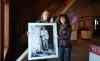
Advertisement Advertise With Us
Advertisement Advertise With Us