Girl rockers were groundbreaking
Young women braved male-dominated early rock scene
Advertisement
Read this article for free:
or
Already have an account? Log in here »
To continue reading, please subscribe:

Digital Subscription
One year of digital access for only $205*
- Enjoy unlimited reading on winnipegfreepress.com
- Read the E-Edition, our digital replica newspaper
- Access News Break, our award-winning app
- Play interactive puzzles
*First annual payment billed as $205.00 + GST for one year. This annual subscription will automatically renew at $233.00 + GST every 52 weeks (10% off the regular annual price of $259.35). Offer available to new and qualified returning subscribers only. Cancel any time.
To continue reading, please subscribe:
Add Free Press access to your Brandon Sun subscription for only an additional
$1 for the first 4 weeks*
- Enjoy unlimited reading on winnipegfreepress.com
- Read the E-Edition, our digital replica newspaper
- Access News Break, our award-winning app
- Play interactive puzzles
*Your next Brandon Sun subscription payment will increase by $1.00 and you will be charged $17.95 plus GST for four weeks. After four weeks, your payment will increase to $24.95 plus GST every four weeks.
Read unlimited articles for free today:
or
Already have an account? Log in here »
Hey there, time traveller!
This article was published 21/11/2015 (3942 days ago), so information in it may no longer be current.
It’s often been said that back in the 1960s, boys joined rock ’n’ roll bands to meet girls.
From my own experience, I discovered rather quickly girls were more interested in me if I held a guitar than if I caught a football or hit a home run. The thriving local music scene was predominantly male. Nowadays, mixed-gender bands are much more commonplace. Back then, however, there were very few female rock ’n’ rollers playing with the guys.
“It was like girls playing hockey,” notes Revellie Nixon, drummer for mid-’70s all-female band Honey. “You just didn’t see it. Girls had to work harder to earn respect from the guys because, like hockey, being in a band was such a guy thing. We had to overcome the stereotype that a girl couldn’t rock. I constantly had to prove myself.”
Patti Ireland, who drummed for the Human Kynd and the Soul Brothers in the ’60s, said she wanted to be in a band after seeing the Beatles perform on The Ed Sullivan Show.
“It looked like so much fun. It wasn’t even a drum thing, although I liked Ringo’s drumming,” she said. “It was a music thing. It was never about meeting boys.”
As a young teen, Ireland attended a dance at Transcona Collegiate where local band the Shondels played.
“I just loved Kenny Hordichuk’s drumming. He was a real showman, doing all these fancy things, twirling his sticks. Afterward, he autographed his sticks for me. We’ve been friends ever since.”
Her parents bought her a set of drums soon after, and she was on her way.
“There were no female drummers around to serve as role models for me. I took lessons from Al Johnson.”
Johnson, a veteran drummer, played with the Quid and later Chopping Block, the Fifth and Next, and was widely respected for his technique.
“He took me everywhere they played so I could watch and learn from him,” Ireland says.
She was soon approached by a group of male students at her school to form the Human Kynd.
One of the earliest girls to play with the boys was Peggy Shane, who fronted the Bel-Aires and later the VIPs. Shane (Peggy Shinkarik) was the sister of local singer Brian Shane, who had been a member of the Swing Tones. She had often joined him at singing gigs. Around 1962, she assembled the otherwise all-male Bel-Aires, who became a popular fixture on the community club circuit.
“She could do rock numbers as well as pop songs,” says husband and band member Wayne Arnold, “everything from Land of 1000 Dances to Hava Nagila. Back then, you had to be versatile.”

Shane died last year.
Also singing with bands then were Carol West, who appeared often with Chad Allan & the Reflections (later the Guess Who) and Micki Allen with the Vi-Counts. Both went on to sing on several CBC TV shows.
Miss Tee*Kays jeans, Lucille Emond Merritt, appeared with several local bands in the mid-’60s, promoting Monarch Wear’s teen clothing line.
“I was one of a handful of girl singers at that time,” Merritt says, “and playing with so many different bands was unusual. I performed with the Pink Plumm, the Cordells, Friday the 13th. They just shuffled me from band to band each week. Sometimes good, sometimes not so good.
“The funniest thing, though, was that most guy bands preferred to play without a girl singer if possible, but managers and booking agents like Frank Wiener and Fred Glazerman would tell them, ‘Get a girl singer in the band, and I will get you gigs.’ Bob Bradburn at CKRC wanted Neil Young to have me in the Squires, but that just didn’t work out because they didn’t want a girl in their band. It was awful, but I did do a couple of community-club gigs with them.”
Merritt also sang on CBC shows and later fronted Fellowship.
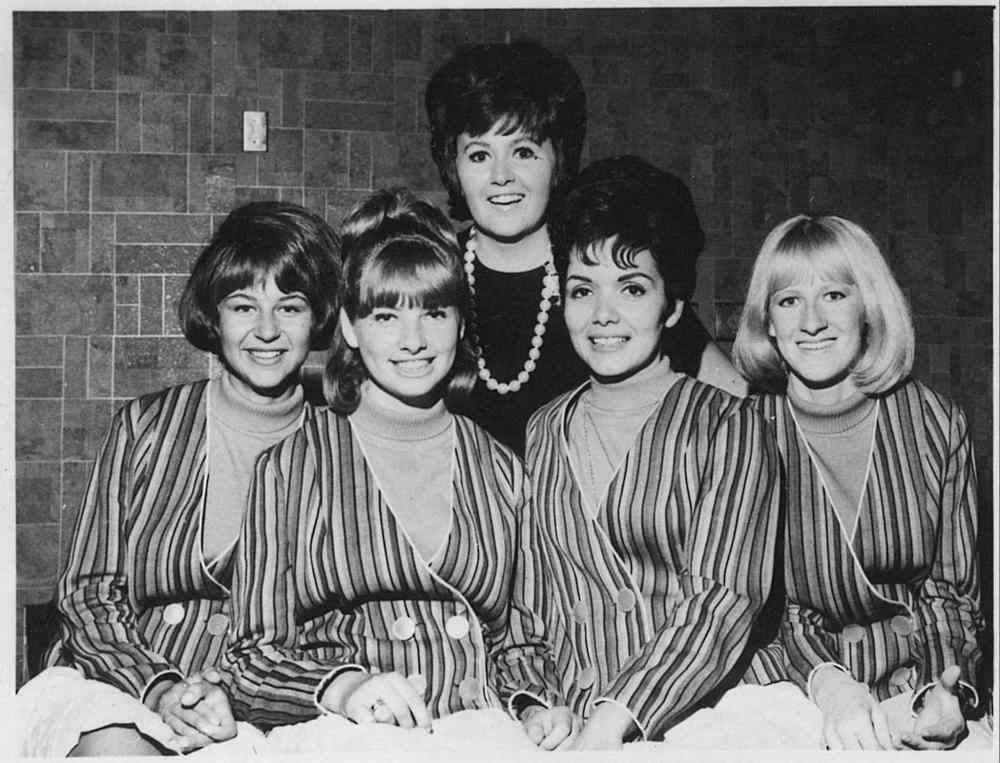
Winnipeg’s first all-female rock band, the Feminine Touch — Sharon Hellum (née Temple) on bass, guitarist Sharon McMullin, Penny Stark on drums and Gail Bowen on organ — formed in late 1965, when 17-year-old Hellum answered an ad in the paper for female musicians to form an all-girl band. The quartet rehearsed for six months before making their debut.
“I had led a sheltered life until I joined the band,” says Hellum. “I had never travelled out of the city. I had to grow up fast.”
Besides playing the Hungry I club on Portage Avenue and various community clubs, the band was on the road a lot. For young women, that could sometimes be scary.
“We had to be on our guard all the time,” recalls Hellum. “We did get harassed a few times. That’s why we always stuck together. In hindsight, (booking agent) Frank Weiner should have sent a bodyguard along with us. We had a guy who came to see us every night in Hull, Que., and followed us to the next gigs for two weeks. That was unsettling.”
Young women playing in rock bands had another concern to deal with.
“There was a perception that because we played in a band, we were loose women,” she adds. “That was certainly not the case for us.”
Nonetheless, Hellum cherishes her memories of her rock-band experience.
“It was one of the best times in my life. I don’t think any of us grew up dreaming of being in a band, so when the opportunity came up, I just jumped at it. An all-girl band? Who would have thought of that back then?
“It was a novelty for sure, but most male musicians were really supportive and respected us because we were good players,” she said.
Bowen later joined mixed-gender group Expedition to Earth.
The Feminine Touch played a very memorable gig on April 1, 1967, when they were an opening act for teen sensation the Monkees. By then, Stark had quit, so Ireland was quickly drafted to fulfil a week’s bookings, including the Monkees show.
“I played on a higher drum riser,” Ireland recalls of the sold-out Winnipeg Arena concert, “and I couldn’t hear a thing. There was so much screaming and no monitors. I was so nervous I dropped a stick during a song and had to lean over and grab it fast before it fell off the riser. Afterwards I got to meet two of the Monkees. Back at school the next week, I was a celebrity.”
Jackie Richards Doll was a St. James-raised, classically trained piano player who switched to rock ’n’ roll in her later teens.
“I bought the electric organ from the Feminine Touch after they broke up,” she says.
In 1967, Doll was approached by drummer Bonnie Peters, guitarist Marion Pawlowski and bass player Sandy Walker to form all-girl group the Suffragettes. The group played the community-club circuit as well as a fashion show at the Bay’s Paddlewheel restaurant.
A year later, Pawlowski and Walker left to attend university, and the band folded after filling commitments with two guys, Gerry Gacek and Wesley Doll, in the band.
“There were a lot of disappointed guys who came to see us,” Doll laughs.
She then joined the Love Circle along with Wesley, her husband-to-be. The band was the brainchild of Sugar & Spice manager Michael Gillespie. Doll played keyboards and sang on the band’s lone 1969 single on Franklin Records, Never Leave Me Never, produced by Bob Burns.
For Doll, being the only girl in an all-male band had its own expectations.
“It was tougher for a girl musician than a girl singer,” she says. “Guys would have a girl singer but not girl players. You had to work hard to earn respect.”
Nonetheless, there were advantages, too.
“The guys were always extremely protective of me. I never had any hassles, although one girl wanted to beat me up in a washroom because her boyfriend was looking at me,” she says. “And the guys would carry all the big equipment like my organ and Leslie speaker cabinet, while I carried the mike stands. On the road I had my own room, while all the guys were piled into another room down the hall.”
Like other female musicians, Doll would often be approached after shows by young girls asking what it was like to play in a band.
“I would always tell them, ‘You can do it, too.’ I would be very encouraging,” she said. “Most girls had trouble seeing themselves playing in bands. So I think I was a role model.”
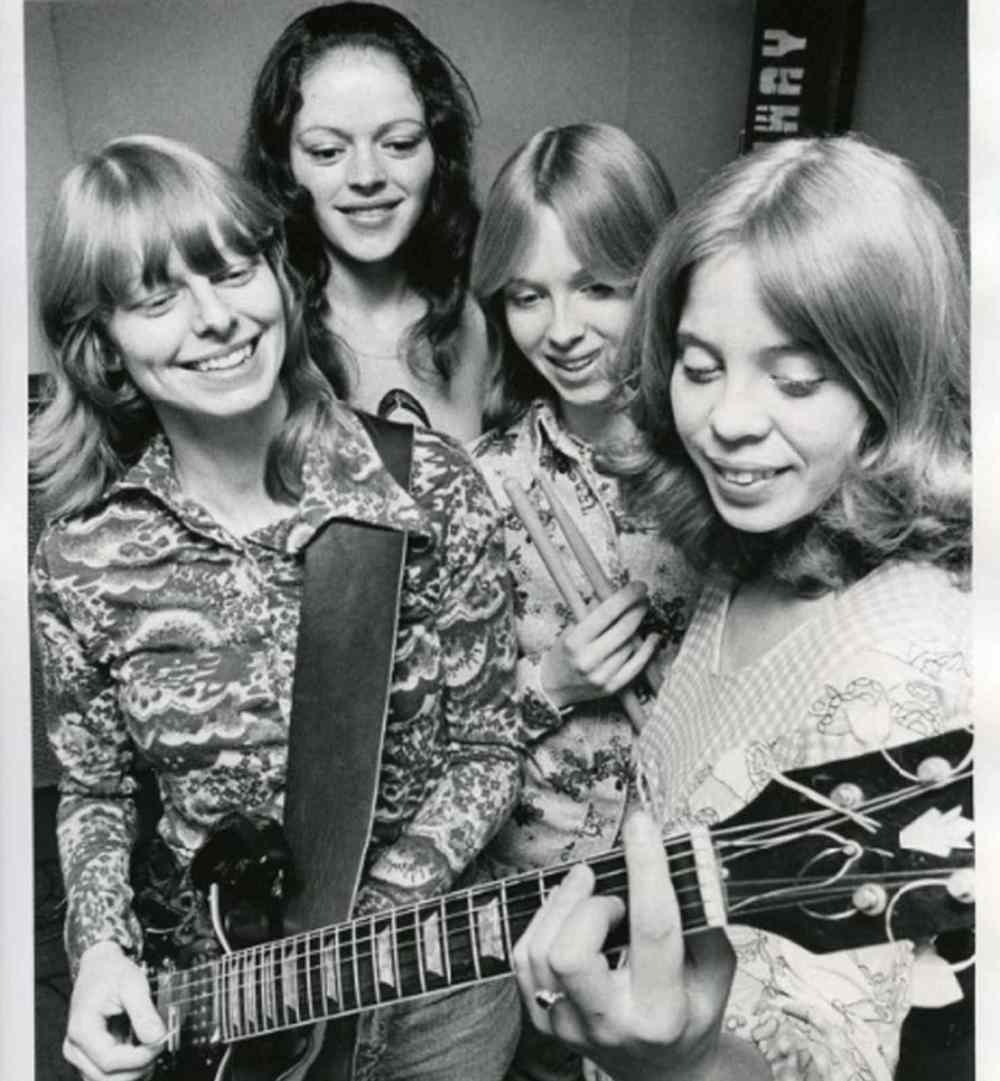
While Doll’s parents were supportive of her playing with the boys, Mrs. Murphy wasn’t so sure when she witnessed five long-haired teenage boys lugging their amplifiers down her basement stairs in late 1967. Her darling, Catholic school-raised daughters — Kathleen, Maureen and Aileen — had joined up with Fort Rouge rock band the Griffins to become Winnipeg’s best-known mixed-gender band, Sugar & Spice.
“Mum was absolutely freaked out about the three of us joining a rock ’n’ roll band,” recalls Maureen. “This was the reason that she decided to accompany us to Edmonton and Calgary when we opened for the Who. She wouldn’t even let us stay in the same hotel as the guys.”
Aileen recalls the members of the Who trying to pick up the three teenage sisters.
“They invited us to a party, but we soon realized we were the party and didn’t go.”
Sugar & Spice would enjoy huge success with the hit record Cruel War in 1969.
Singer Judie St. Germain, the youngest sister of local music star Ray St. Germain, enjoyed a stint as vocalist for hard-rock band the Condemned in 1966 under the name Judy Dawn.
“I didn’t want to be seen as trying to ride on my brother’s coattails,” she says.
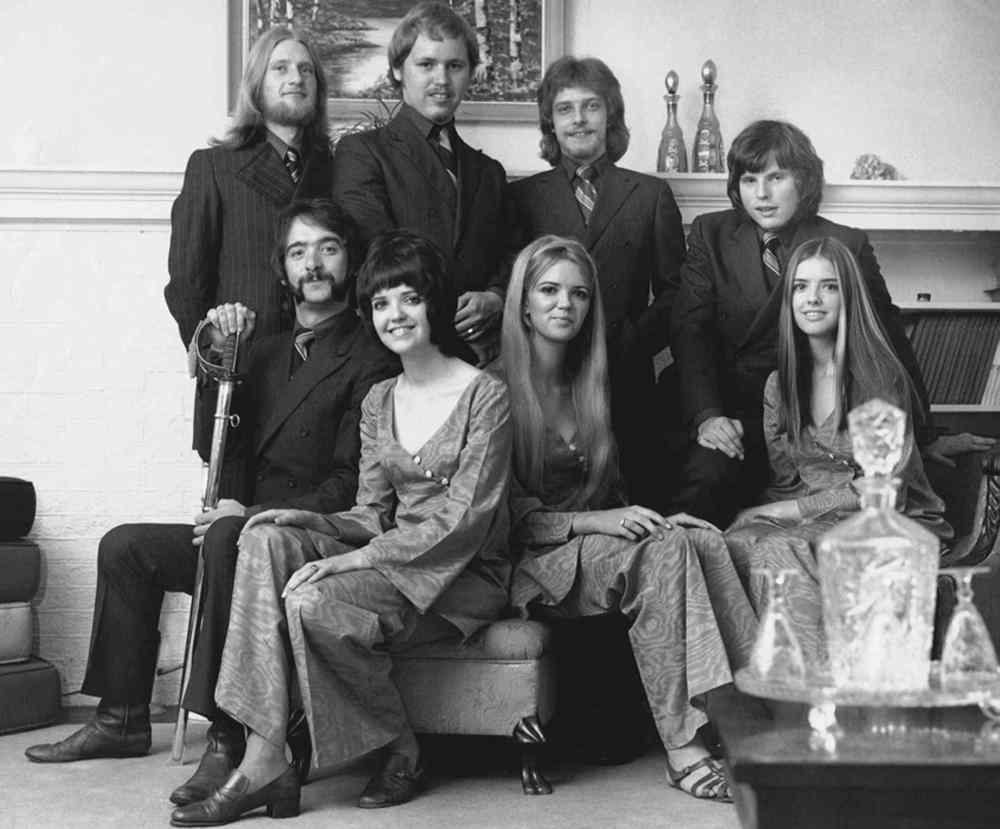
She had already performed on CBC-TV’s Music Hop and on radio with her brother as part of the Hal Lone Pine and Betty Cody band, featuring Lenny Breau on guitar.
“I grew up having music all around me,” she says.
Guitarist Ralph Gammelseter invited St. Germain to audition for his band.
“We thought it might be a good hook to have a girl up front,” Gammelseter says. “She was quite pretty and had a decent voice.”
Still, some family members expressed trepidation.
“My mom didn’t want me in a band,” says St. Germain. “She worried about what might happen. But the guys were good to me. Ray was concerned because he knew that girls were paid less than guys in the entertainment world. My boyfriend didn’t want me in a band with a bunch of guys, either.”
St. Germain sang with the Condemned for about a year.
“My fondest memory was when we were doing Be My Baby, and when I sang the line ‘For every kiss you give me, I’ll give you three,’ the guys in the band would pretend to faint onstage.”
Parachute Club singer/percussionist Julie Masi (née Opocensky) began her music career in the latter ’60s drumming for a mostly male rock band in Dominion City.
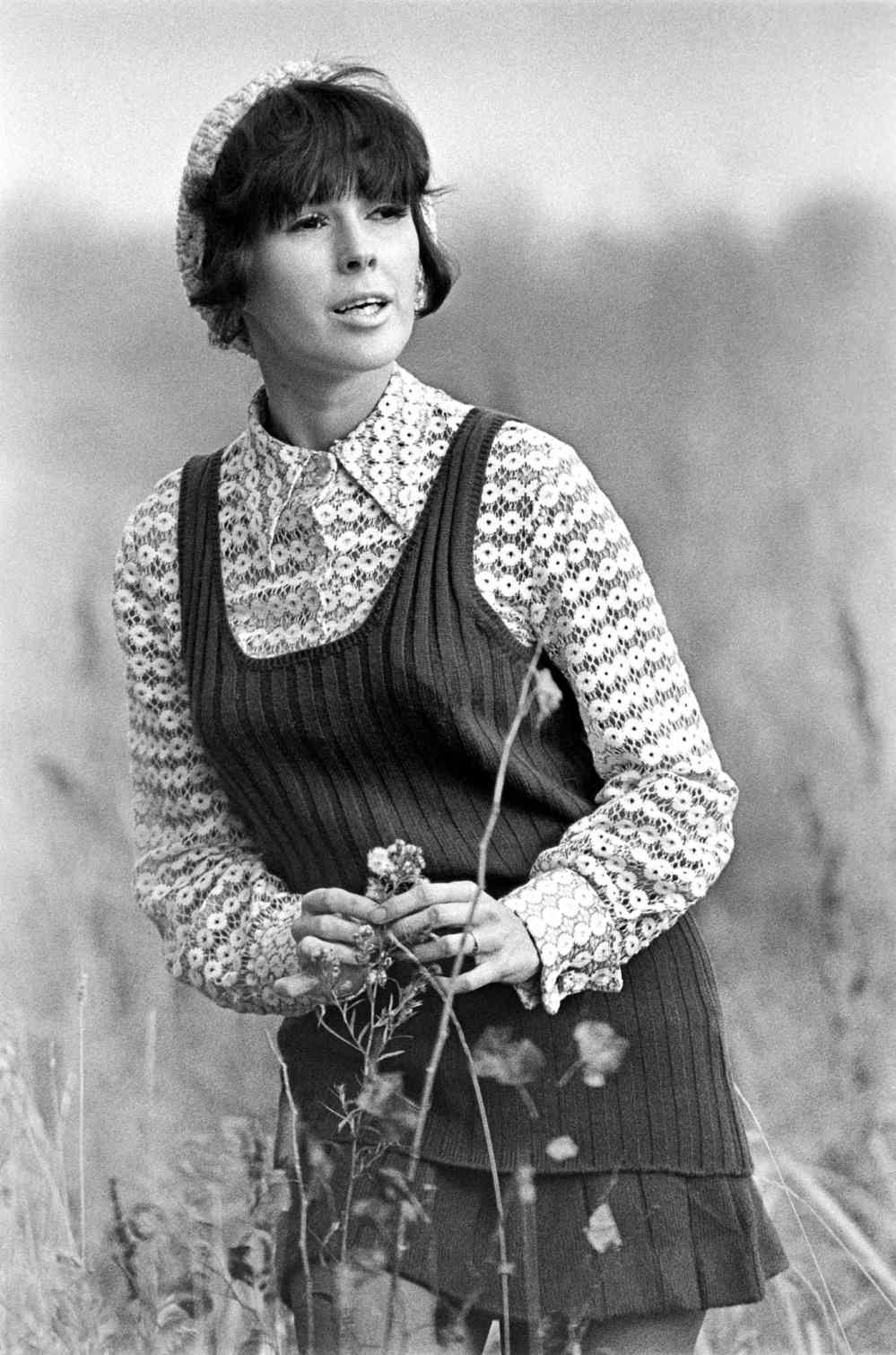
“Drums were just something I wanted to do,” she says. “I got my first set of drums at age 11, but before that, I used to sit downstairs and drum along with a couple of sticks to records.”
At age 15, Julie and her sister Janet, who played organ, joined ManMaid. “Being from a rural area, we didn’t have a lot of choices for drummers,” says bass player Rick Gallant. “But Julie was as good as any drummer that we had ever seen or heard, and she and Janet sang so well. It gave us a whole new dimension.”
Adds Masi, “The only other band I had seen at the time with girls was Sugar & Spice, so we were kind of unique. I think people looked at me and thought, ‘Wow, she can really play.’ ”
While their parents encouraged their musical ambitions, “They were a little uneasy with their girls travelling around the countryside with a bunch of hormonally charged teenage boys,” says Gallant.
A few others dared to include female band members. The Exiled featured organ player Bonnie Wallace (née Hemming) in their otherwise male lineup, as did the Mantae with Leslie Moore and Alana Hammond. Once the drinking age was lowered to 18 in the fall of 1970, more females joined rock bands. Vocalist extraordinaire Dianne Heatherington fronted popular Winnipeg pub band the Merry-Go-Round and went on to host her own CBC television show and record an album in Toronto. Singer Sharilyn Nathanson replaced Heatherington in the Electric Banana and later fronted Canyon. Cathy Clark brought her powerful vocal ability to early ’70s pub band Homecooking. Suzanne Morier sang with Live Lobster, Spice and Cottonmouth.
All-female band Honey came together in 1974 when a few friends who were hanging around Orfans guitarist Danny Holmes’ McCalman Avenue home decided to form a band. Guitarist Sandra (Smokey) Holm (née Ellefson), bass player Hugette (Yogie) Trudel and keyboard player Irene (Beeni) Lesiuk recruited drummer Revellie Nixon after placing an ad in the newspaper. Holms was the most experienced, having played in all-girl American band the Ladybirds, who appeared at the Town & Country supper club in the late ’60s.
“I wasn’t looking to be in a band,” notes Lesiuk, “but I just went along with it for fun.”
For Nixon, however, playing drums was her life calling.
“I was 16 when I joined the band,” she says. “The other girls were older. But from the time I started playing drums at age 9, I loved it. I just knew I was different than other girls because I just wanted to play in a band. I used to stand outside the St. Vital Hotel because I was too young and listen to Marc LaFrance (Musical Odyssey, Crowcuss) playing and singing. I wanted to be like him.”
Honey played the bar scene for a few years, with Nixon using a fake ID as she was underage.
“I had a lot of guy friends who were musicians,” states Lesiuk, “and they were cool with the idea of an all-girl band. But some girls weren’t so cool about it. I remember playing the Kenricia Hotel in Kenora and a group of girls in the audience walking by the front of the stage and flicking their cigarette butts at us because they thought we were going to steal their boyfriends.”
While Masi and Nixon made music their careers and continue to perform today (Heatherington performed until her death in 1998 from cancer), most female musicians and singers from that period left the business to marry, have kids or return to school.
Nonetheless, they were groundbreakers for female rockers today.
“It was all just a whirlwind for me,” says Ireland, “but I got married and started having kids, so I left it all behind. But I recently bought a set of drums again and have been playing with some old bandmates just for fun. I missed it.”
Sign up for John Einarson’s Songs of Protest class (Dec. 2) at mcnallyrobinson.com.