

Wildlife Society urges help for Manitoba’s moose
Calls for comprehensive management, recovery strategy
Advertisement
Read this article for free:
or
Already have an account? Log in here »
To continue reading, please subscribe:
Monthly Digital Subscription
$1 per week for 24 weeks*
- Enjoy unlimited reading on winnipegfreepress.com
- Read the E-Edition, our digital replica newspaper
- Access News Break, our award-winning app
- Play interactive puzzles
*Billed as $4.00 plus GST every four weeks. After 24 weeks, price increases to the regular rate of $19.95 plus GST every four weeks. Offer available to new and qualified returning subscribers only. Cancel any time.
Monthly Digital Subscription
$4.99/week*
- Enjoy unlimited reading on winnipegfreepress.com
- Read the E-Edition, our digital replica newspaper
- Access News Break, our award-winning app
- Play interactive puzzles
*Billed as $19.95 plus GST every four weeks. Cancel any time.
To continue reading, please subscribe:
Add Free Press access to your Brandon Sun subscription for only an additional
$1 for the first 4 weeks*
*Your next subscription payment will increase by $1.00 and you will be charged $16.99 plus GST for four weeks. After four weeks, your payment will increase to $23.99 plus GST every four weeks.
Read unlimited articles for free today:
or
Already have an account? Log in here »
Hey there, time traveller!
This article was published 05/12/2015 (3762 days ago), so information in it may no longer be current.
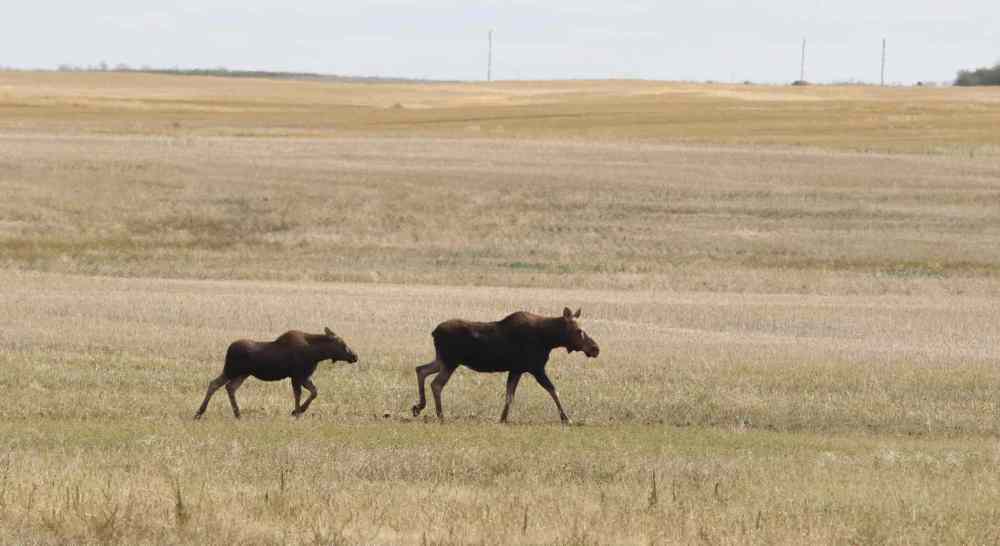
Manitoba’s oldest wildlife-management organization says the province isn’t doing enough to reverse the decline of the moose population, which it pegs at well below official estimates.
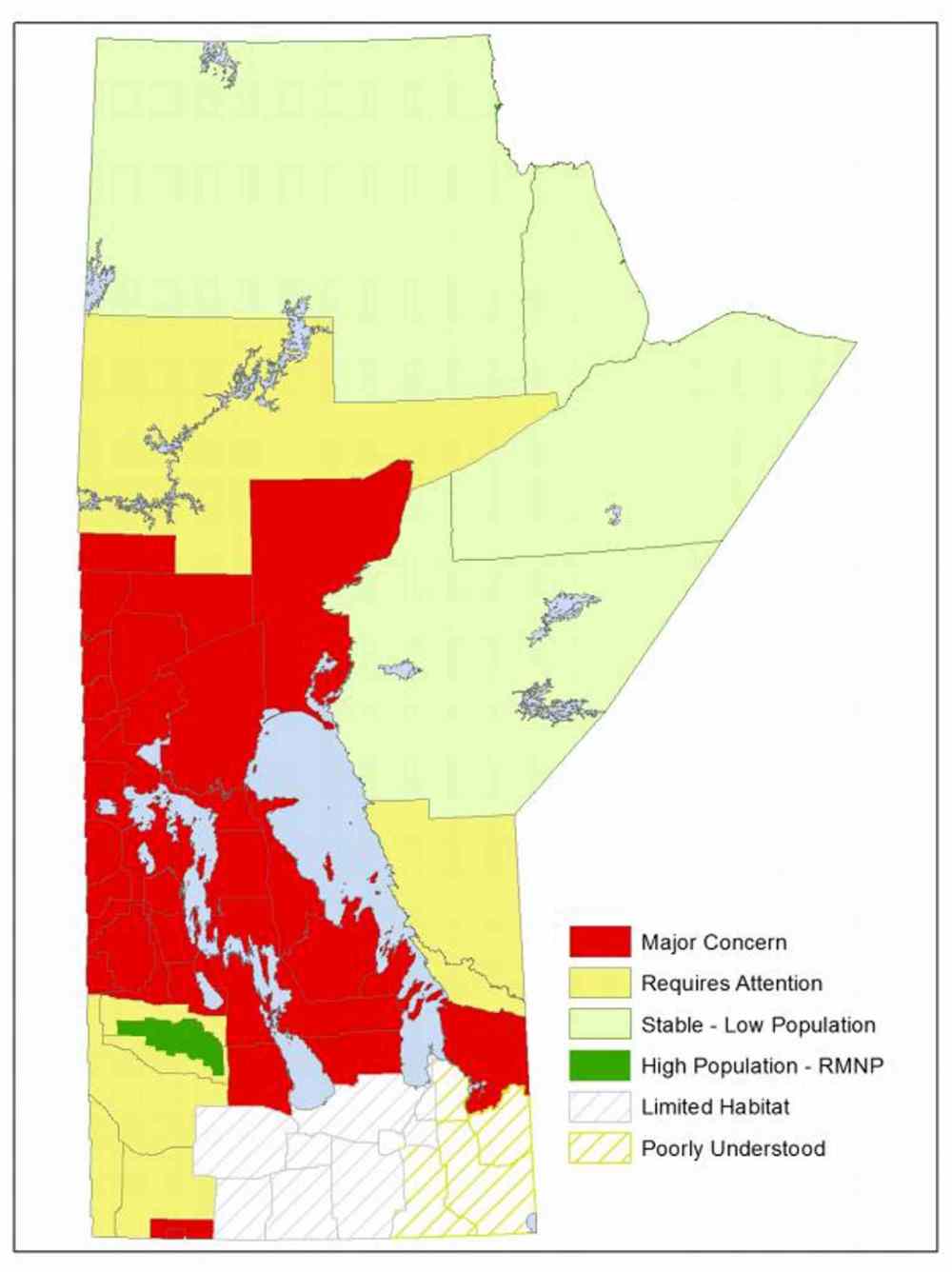
The Wildlife Society’s Manitoba chapter is calling on the province to develop a comprehensive moose-management and recovery strategy, estimating the population of the iconic ungulate has dropped from a historic high of 45,000 animals to roughly 20,000.
The province pegs the moose population at 27,000 animals.
“Any road-accessible area is pretty much out of moose. They’ve been hunted to a level where the population isn’t viable anymore,” said Jack Dubois, a society member and former director of Manitoba Conservation and Water Stewardship’s wildlife branch.
“They’re also becoming more scarce further north. While the province is taking this seriously in a few areas, it doesn’t seem to be moving fast enough to take a broader approach.”
The Wildlife Society, which represents about 150 biologists, planners and other wildlife professionals, cites factors such as over-hunting, disease, parasites, predation by wolves and increased human access into once-remote areas as factors in the decline of moose.
In November, the group sent a letter to Conservation and Water Stewardship Minister Tom Nevakshonoff, urging him to create a moose-management and recovery plan.
“We recognize that the Province of Manitoba, in co-operation with aboriginal communities, has taken unprecedented steps in enacting moose-hunting conservation closures and implementing other conservation measures,” the society wrote.
“While we applaud these regional initiatives, the Manitoba chapter contends that there is an urgent need to develop a comprehensive provincewide moose-management plan followed by regional action plans in order to achieve lasting moose-population recovery.”
This would involve more game-hunting area closures, a provincewide moose-population survey, more scientific research into moose diseases and parasites, more anti-poaching initiatives and more stringent management of development in areas where moose remain present.
The society also wants to see the province allow more forest fires, which makes room for vegetation that serves as moose forage during the regeneration process.
No one at Manitoba Conservation and Water Stewardship was made available for an interview. In a statement, regional program manager Brian Joynt said the province is in discussions about moose-population recovery and noted moose are in trouble elsewhere in North America.
In response to population declines, provincial wildlife officials have put a stop to moose hunting around Turtle Mountain, Duck Mountain, Pelican Lake, Red Deer Lake, Swan Lake, the Porcupine Hills and Nopiming Provincial Park.
The province also formed moose-management committees that include representatives from indigenous communities, where residents retain the right to hunt moose for food and subsistence.
Joynt also said the province has increased aerial surveys, has started to manage wolf populations and is managing deer in areas where diseases and parasites can move from one ungulate species to another.
The Wildlife Society’s letter follows an October alarm sounded by the Manitoba Wildlife Federation, which said moose numbers are declining due to excessive hunting and called for an end to unregulated harvesting.
bartley.kives@freepress.mb.ca
History
Updated on Saturday, December 5, 2015 9:28 AM CST: Adds pic.