

Province wants feds to protect Hudson Bay beluga whales
Advertisement
Read this article for free:
or
Already have an account? Log in here »
To continue reading, please subscribe:

Digital Subscription
One year of digital access for only $205*
- Enjoy unlimited reading on winnipegfreepress.com
- Read the E-Edition, our digital replica newspaper
- Access News Break, our award-winning app
- Play interactive puzzles
*First annual payment billed as $205.00 + GST for one year. This annual subscription will automatically renew at $233.00 + GST every 52 weeks (10% off the regular annual price of $259.35). Offer available to new and qualified returning subscribers only. Cancel any time.
To continue reading, please subscribe:
Add Free Press access to your Brandon Sun subscription for only an additional
$1 for the first 4 weeks*
- Enjoy unlimited reading on winnipegfreepress.com
- Read the E-Edition, our digital replica newspaper
- Access News Break, our award-winning app
- Play interactive puzzles
*Your next Brandon Sun subscription payment will increase by $1.00 and you will be charged $17.95 plus GST for four weeks. After four weeks, your payment will increase to $24.95 plus GST every four weeks.
Read unlimited articles for free today:
or
Already have an account? Log in here »
Hey there, time traveller!
This article was published 07/01/2016 (3866 days ago), so information in it may no longer be current.
Manitoba wants federal protection for three northern river estuaries as part of an effort to preserve habitat along Hudson Bay for the world’s largest population of beluga whales.
The province’s new Beluga Habitat Sustainability Plan, slated to be published today, calls on Ottawa to place the mouths of the Churchill, Nelson and Seal Rivers within a new national marine-conservation area along Hudson Bay.
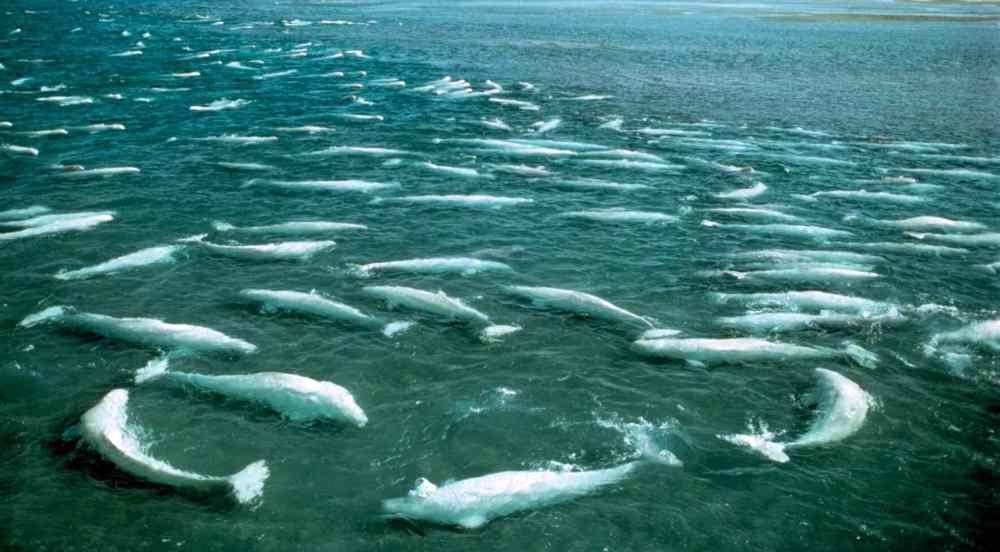
This move would protect feeding, moulting and calving areas for the estimated 57,000 beluga whales that summer in the shallow waters along Manitoba’s Hudson Bay coast. What’s formally known as the Western Hudson Bay population represents more than quarter of the global beluga whale population, estimated at 200,000.
“This is the largest population we have in the world, and it’s very healthy. Half of the others are under some kind of stress,” said Kristin Westdal, a marine biologist with The Pew Charitable Trusts’ Oceans North Canada, a non-profit organization that worked with Manitoba to develop a beluga-habitat plan.
National marine-conservation areas, which are akin to underwater parks, are protected from activities such as ocean dumping, undersea mining and oil and gas exploration.
During the 2015 federal election campaign, the Liberal party pledged to protect five per cent of Canada’s 202,000-kilometre coastline within these areas by 2017 and then extend protection to 10 per cent of the coastline by 2020. Right now, Canada protects 1.3 per cent of its coastline, or 2,600 kilometres.
Manitoba Conservation and Water Stewardship Minister Tom Nevakshonoff said Ottawa is aware of the forthcoming request. The province also wants Ottawa to amend federal legislation governing the pollution of Arctic waters for areas south of the 60th parallel so it covers the Manitoban river estuaries frequented by belugas.
“We want to preserve this iconic species. Populations are healthy, and we want to keep them that way,” Nevakshonoff said.
The call for federal protection is one facet of a Manitoba beluga-habitat plan that also calls for pollution management at the Port of Churchill, ship-traffic planning in and around the port, better monitoring of the Western Hudson Bay beluga population and protection of the rivers that flow through Manitoba into Hudson Bay.
Development along those rivers is cited in the strategy as a potential threat to Manitoba’s belugas, which so far have been spared from the environmental pollution that has led to cancers among the St. Lawrence River population, now listed as threatened.
Shipping and noise pollution are also listed as threats, along with climate change, which has the potential to reduce sea ice at the Hudson Bay belugas’ winter feeding grounds northeast of the bay, in Hudson Strait, the Labrador Sea and Davis Strait.
Sea ice in these bodies of water provides habitat for the algae that feed the fish that in turn are preyed upon by belugas. Belugas also use ice as cover to evade killer whales, which are becoming a more common presence in northern waters, including Hudson Bay.
Westdal said it’s unclear what the belugas will do if ice cover recedes. “They might just move to other areas, further north,” she said.
“That’s why we want to protect their summer habitat.
“They spend a lot of time in Manitoba coastal waters.”
Pierre Richard, a retired federal biologist who is one of the world’s foremost beluga experts, said it’s important to have a plan in place before development proceeds at Churchill and elsewhere along Hudson Bay.
“Any kind of development that affects their habitat should be measured against the impacts that might have on the population,” he said.
“The idea behind the plan was to think ahead.”

57,000 Beluga WhalesSomewhere in Hudson Straight, 57,000 beluga whales are cheering. Manitoba takes a big step towards creating a National Marine Conservation Area today.
Posted by Build Films on Friday, January 8, 2016
History
Updated on Friday, January 8, 2016 1:51 PM CST: Adds build Films video