

12 women recognized as suffrage anniversary celebrations wrap up
Advertisement
Read this article for free:
or
Already have an account? Log in here »
To continue reading, please subscribe:

Digital Subscription
One year of digital access for only $205*
- Enjoy unlimited reading on winnipegfreepress.com
- Read the E-Edition, our digital replica newspaper
- Access News Break, our award-winning app
- Play interactive puzzles
*First annual payment billed as $205.00 + GST for one year. This annual subscription will automatically renew at $233.00 + GST every 52 weeks (10% off the regular annual price of $259.35). Offer available to new and qualified returning subscribers only. Cancel any time.
To continue reading, please subscribe:
Add Free Press access to your Brandon Sun subscription for only an additional
$1 for the first 4 weeks*
- Enjoy unlimited reading on winnipegfreepress.com
- Read the E-Edition, our digital replica newspaper
- Access News Break, our award-winning app
- Play interactive puzzles
*Your next Brandon Sun subscription payment will increase by $1.00 and you will be charged $17.95 plus GST for four weeks. After four weeks, your payment will increase to $24.95 plus GST every four weeks.
Read unlimited articles for free today:
or
Already have an account? Log in here »
Hey there, time traveller!
This article was published 28/01/2016 (3861 days ago), so information in it may no longer be current.
Inspirational words spoken a century ago went home Thursday with the winners of the 2016 Nellie Awards.
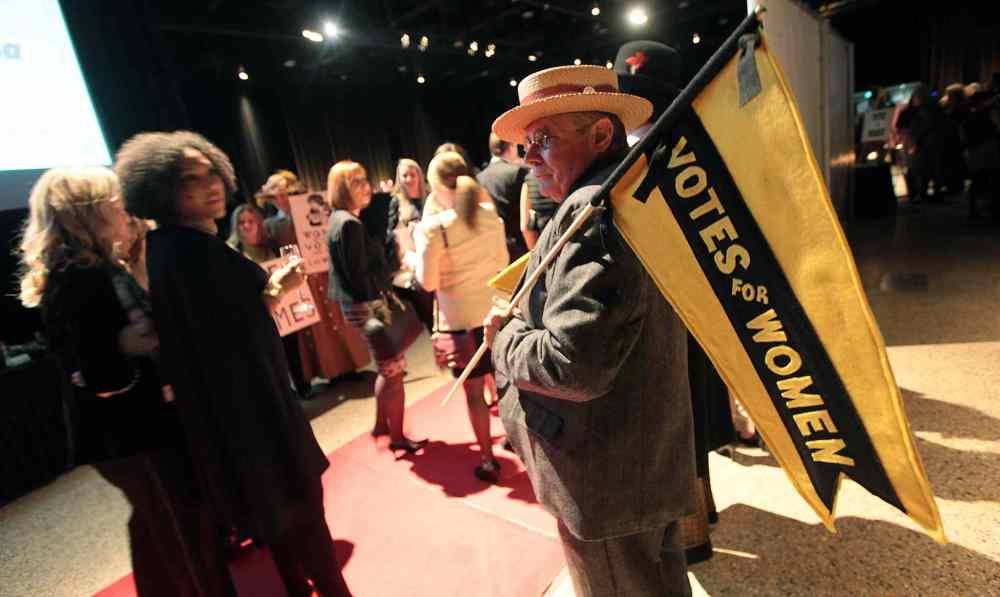
Honouring the spirit of Nellie McClung’s life’s work by recognizing 12 women who have contributed to social justice, the arts and promoted democracy, the awards were presented at the glitzy Centennial Gala, celebrating 100 years of Manitoba women’s right to vote, at the RBC Convention Centre.
Recipients received awards featuring the inscription of a McClung quote. “I want to leave something behind when I go; some small legacy of truth, some word that will shine in a dark place.”
Women in Manitoba were the first to win the right to vote 100 years ago on Jan. 28, 1916, thanks to Manitoba suffragettes like McClung, E. Cora Hind, Francis Beynon and her sister Lillian Beynon Thomas and others. Other provinces followed but it wasn’t until 1960, when voting rights were extended to First Nations people, that voting was universal in Canada.
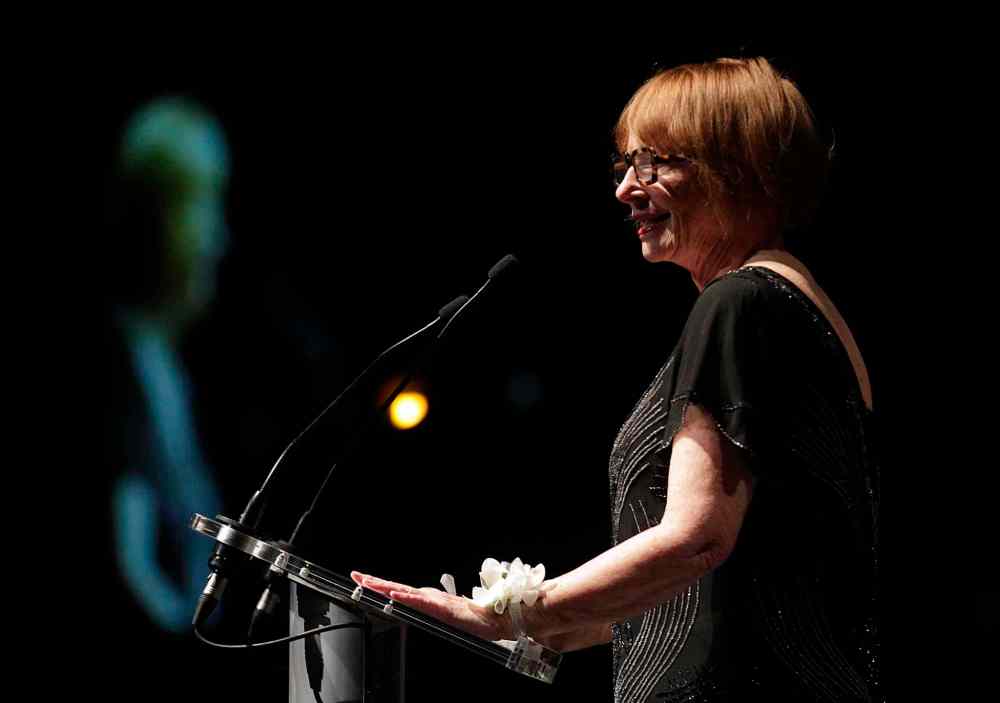
Lt.-Gov. Janice Filmon and Gail Asper were the recipients of the Nellie Legacy Award while Filmon, founding chairwoman of the Nellie McClung Foundation and the second woman to be appointed to the ceremonial post of Lieutenant Governor, served as the keynote speaker for the Centennial Gala.
“It’s been a very meaningful and inspiring day and this evening is really capping it off,” Filmon said in an interview prior to the gala. “I hope that the women and men at the gala are leaving inspired knowing that there is a place for them, for those that feel they can mentor, and that the words that are spoken find a place in somebody’s heart. It’s never one big thing. It’s a series of choices, a series of small decisions that lead to the big one. Maybe that’s a thousand hearts that were changed at one point, I don’t know, but I do know that we must celebrate these kinds of milestones.”
Filmon reflected on what it must have been like 100 years ago when the current legislative building did not stand where it is today and when the provincial government was housed in a building on the corner of Broadway Avenue and Kennedy Street.
“Those women, at the time, they knew they were working on something important . I don’t know that they could have known the important part it plays from a historical point of view because it really opened up, once that went through, that women could vote, be in elected office, own property.”
Earlier in the day, Filmon and former prime minister Kim Campbell participated in a special day of programming with students at the Canadian Museum for Human Rights and the Manitoba Museum.
Filmon spoke about the responsibilities of voting to the students in her keynote address at lunch.
“Voting rights are protection against injustice and incompetence,” Filmon said Thursday. But, she added, they only work if you use them.
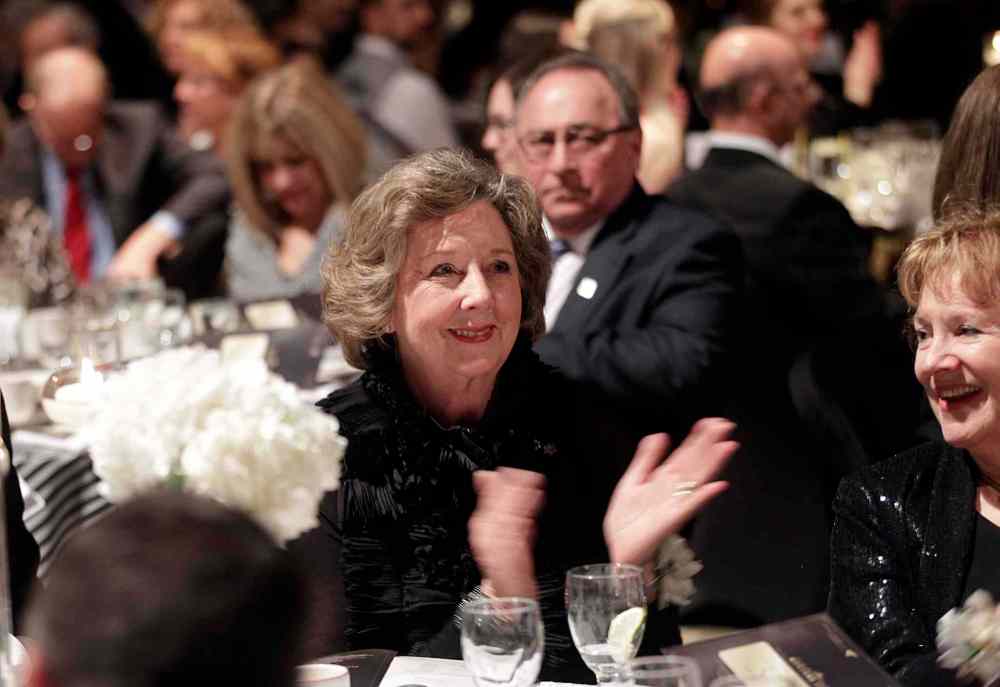
“A single piece of legislation did not bring social equality, or economic equality or political equality for women, but if you look around the world you can see the effect of Nellie McClung and her allies.”
She reviewed the suffrage battle a century ago, noting women were ridiculed for seeking the same voting rights as men who owned property until McClung’s knack for humour turned the tables and made the premier of the day, Rodmond Roblin, eat his words.
“Man’s place is on the farm,” said Filmon, paraphrasing McClung’s remarks at a mock legislature, a piece of political theatre that suffragettes used a century ago. “Who knows what they would do if they got the vote? It’s hard enough now to keep them at home.”
McClung’s famous remarks mocked the premier who’d dismissed women voting rights, insisting they belonged at home, quietly supporting their men. The mock parliament helped turned the tide for advocates of women’s suffrage, gaining them valuable political allies and public support.
Students in attendance indicated they understood the importance of the milestone.
“In 50 years I will look back at this and say, ‘I was there to mark the 100 years since women won the right to vote,’ ” said Quynhanh Nguyen, 11, in Grade 6 at Winnipeg’s Oakenwald Elementary School.
Women’s rights are a basic mark of respect people owe each other, added classmate Dorsa Nourmohammadi, who wore a hijab.
“It means respect for everyone — no one should bug each other because of their religions or stereotypes,” she said.
alexandra.paul@freepress.mb.ca
2016 Nellie Award recipients
Dr. Jessie Lang
Beatrice Watson
Wilma Derksen
Connie Magnusson Schimnowski
Susan Hart-Kulbaba
Dr. Alexandria Wilson
Shirley Kalyniuk
Dr. Rayleen De Luca
Sherri Walsh
Manitoba Women’s Institute
2016 Nellie Legacy Award recipients
Gail Asper
Janice Filmon
Video
Winnipeg students reflect on 100 years of women’s right to vote
Related Articles
Inspirational women honoured with Nellies
Advertisement Advertise With Us
Advertisement Advertise With Us
History
Updated on Friday, January 29, 2016 8:48 AM CST: Adds video
Updated on Friday, January 29, 2016 11:17 AM CST: Adds slideshow
Updated on Friday, January 29, 2016 11:41 AM CST: Adds link